
Vinyl Fence Maintenance Before Winter in Monroe, WI: Homeowner Checklist
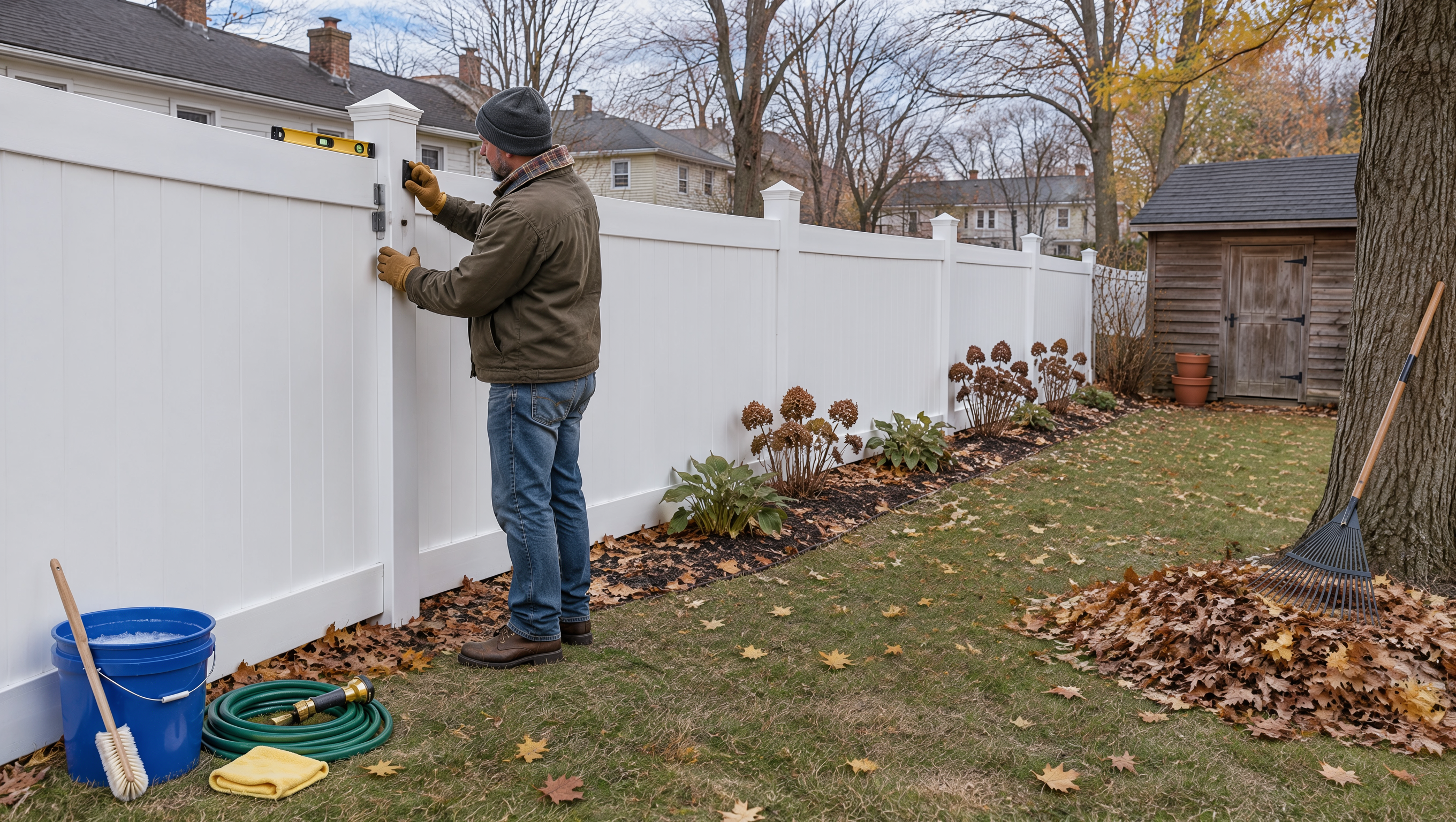
Vinyl fencing is relatively low maintenance, but fall is still the right time to inspect posts, panels, gates, hardware, drainage, and areas exposed to snow or wind. For Monroe, WI, homeowners, a simple pre-winter checklist can help catch small problems before freezing temperatures, ice, and heavy snow make them harder to address.
Why Vinyl Fence Maintenance Still Matters
Vinyl fencing does not need regular staining or painting, which makes it easier to maintain than some other materials.
But it is not maintenance-free.
Posts can shift, panels can loosen, gates can sag, and impact damage can create cracks.
Winter conditions can make these problems more noticeable.
In Monroe, homeowners should pay attention to:
Snow
Ice
Strong wind
Freeze-thaw cycles
Heavy rain
Road salt
Snow removal activity
A quick fall inspection can help prevent small issues from turning into larger repairs.
Start With a Full Fence Walkthrough
Walk the entire fence line before winter.
Look for:
Leaning posts
Cracked panels
Loose sections
Gaps
Gate problems
Missing caps
Damaged hardware
Compare one section with the next.
If a panel suddenly looks uneven or sits differently from the surrounding fence, something may have shifted.
Check Fence Posts for Movement
Posts are one of the most important parts of a vinyl fence.
If a post begins leaning or moving, nearby panels can also shift.
Possible causes include:
Soil movement
Poor drainage
Erosion
Storm damage
Impact
Freeze-thaw cycles
Gently check any questionable post for movement.
A loose post should be inspected before the ground freezes.
Look for Cracks in Vinyl Panels
Cracks can develop from impact, age, storms, or temperature changes.
Check around:
Panel edges
Rails
Gate openings
Lower sections
Driveways
Minor surface damage may not always require immediate replacement, but deeper cracks should be monitored.
A damaged panel can flex more under wind or pressure.
Inspect Loose Panels
Vinyl panels should remain securely connected to their posts and rails.
Loose panels may be caused by:
Shifted posts
Damaged rails
Failed connections
Wind
Impact
Do not assume the panel itself is the only problem.
Check the surrounding structure to find the real cause.
Check Fence Alignment
Step back and look down the fence line.
Watch for:
Leaning sections
Uneven panel heights
New gaps
Misaligned posts
Sections pulling apart
Small alignment changes can indicate movement in the posts or ground.
Fall is a good time to identify these issues before winter conditions make them worse.
Inspect Gates Carefully
Gates usually experience more wear than standard fence sections.
Open and close each gate several times.
Check whether it:
Sags
Drags
Sticks
Fails to latch
Swings unevenly
If the gate suddenly feels different, inspect both the hardware and the supporting posts.
Repeated alignment problems can point to a structural issue.
Check Hinges and Latches
Gate hardware should be secure.
Look for:
Loose screws
Worn hinges
Damaged latches
Missing fasteners
Rust on metal components
Loose hardware can cause the gate to sag.
If the hardware looks fine but the gate is still misaligned, check the gate post.
Check Gate Clearance
Ground clearance becomes more important before winter.
A gate that barely clears grass, gravel, or pavement in fall may start dragging once snow or ice builds up.
Check the full opening path.
Pay extra attention near:
Driveways
Walkways
Side yards
Sloped ground
A gate that moves freely now is more likely to stay usable through winter.
Clean Dirt and Organic Buildup
Vinyl is relatively easy to clean, but dirt and organic buildup can collect over time.
Check for:
Mud
Algae
Leaf stains
Surface buildup
A mild cleaning can help keep the fence looking better and make cracks or other damage easier to see.
Avoid assuming discoloration means structural damage.
Sometimes it is simply surface buildup.
Clear Leaves From the Fence Line
Wet leaves can collect around posts and panels during fall.
Clear them from:
Fence bases
Corners
Gates
Low areas
Leaf buildup can hide drainage problems and keep the surrounding ground wet.
Removing debris also makes it easier to inspect the lower part of the fence.
Trim Vegetation Back
Shrubs, vines, weeds, and branches should not press heavily against the fence.
Trim vegetation that:
Rubs on panels
Blocks gates
Covers posts
Hides damage
Overgrown plants can make maintenance difficult.
Branches may also become heavier with snow or ice and fall against the fence.
Inspect Overhanging Branches
Look above the fence as well as along it.
Weak or damaged branches may fall during:
Snow
Ice storms
Strong wind
Trim branches that appear likely to strike the fence.
Preventing impact damage is easier than replacing cracked panels later.
Check Drainage Along the Fence Line
Vinyl does not rot like wood, but drainage still matters because the posts rely on stable ground.
Look for:
Standing water
Mud
Low spots
Soil erosion
Downspout runoff
If water collects around posts, the soil may shift during freeze-thaw cycles.
That can lead to leaning posts and misaligned panels.
Watch for Erosion
Heavy fall rain can wash soil away from post bases.
Look for:
Gaps around posts
Exposed support areas
Small runoff channels
Washed-out soil
Erosion should be addressed before winter.
A post may still look straight while the soil around it is becoming less stable.
Check Areas Near Downspouts
Roof runoff can create repeated moisture problems.
If a downspout sends water toward the fence, inspect nearby posts for:
Mud
Erosion
Standing water
Movement
Redirecting water away from the fence may help reduce future problems.
Drainage should be part of the repair, not treated as a separate issue.
Consider Wind Exposure
Vinyl privacy fencing creates a solid surface.
That means wind can place significant pressure on long fence runs.
Check exposed areas for:
Loose panels
Leaning posts
Cracks
Gate movement
Properties near open spaces may experience more wind pressure.
Fall storms can reveal which sections need attention before winter.
Check After Strong Storms
A storm does not have to knock the fence down to cause damage.
After high wind or heavy rain, inspect for:
Post movement
Loose panels
Cracks
Gate problems
Erosion
Small storm-related changes can become larger after repeated winter weather.
Plan Snow Storage Carefully
Avoid piling large amounts of snow directly against vinyl fencing.
Compacted snow can create pressure on:
Panels
Posts
Gates
It can also block access.
Before winter, decide where snow from driveways and walkways will go.
Keeping heavy snow away from the fence can reduce unnecessary stress.
Protect Fence Areas Near Driveways
Fence sections near driveways may be vulnerable to:
Snowplows
Snowblowers
Vehicles
Salt
Piled snow
Posts and corners can become difficult to see once snow accumulates.
Consider using visible markers near vulnerable sections.
This can help reduce accidental impact.
Check Post Caps
Post caps are easy to overlook.
Inspect for caps that are:
Loose
Cracked
Missing
Damaged
Securing small components before winter can prevent them from being lost during strong wind.
It also keeps the fence looking complete.
Inspect Pool or Pet Enclosures Closely
If the vinyl fence is used for safety or containment, certain repairs should be prioritized.
Check:
Gate latches
Gaps
Loose panels
Post movement
Gate alignment
A cosmetic issue may be able to wait.
A gap affecting a pet enclosure or pool area should be handled sooner.
Know When a Repair Is Needed
Not every problem requires major work.
Repair may be appropriate for:
Loose hardware
Minor gate alignment
One damaged panel
One unstable post
Small connection issues
More extensive repair or replacement may be needed when there is:
Widespread cracking
Several shifting posts
Repeated panel failure
Major storm damage
The full condition of the fence should guide the decision.
Use This Pre-Winter Vinyl Fence Checklist
Before winter, make sure:
Posts are stable
Panels are secure
Cracks are checked
Gates move freely
Hinges and latches work
Ground clearance is adequate
Leaves are removed
Vegetation is trimmed
Drainage is working
Snow storage is planned
Overhanging branches are checked
Fence areas near driveways are visible
This simple review can help reduce winter problems.
Handle Small Problems Before Cold Weather Arrives
Vinyl fencing may require less routine maintenance than wood, but fall inspection is still important.
For Monroe homeowners, checking posts, panels, gates, drainage, vegetation, and snow storage now can help prevent avoidable winter damage.
Dach Fence provides residential and commercial fence repair, replacement, installation, gates, vinyl fencing, wood fencing, chain link fencing, aluminum or ornamental fencing, and other fencing services throughout Illinois and Wisconsin.
If your vinyl fence in Monroe, WI, has loose panels, cracks, gate problems, or shifting posts, contact Dach Fence for a free estimate before winter.
