
Top Commercial Fence Materials for Northern Illinois
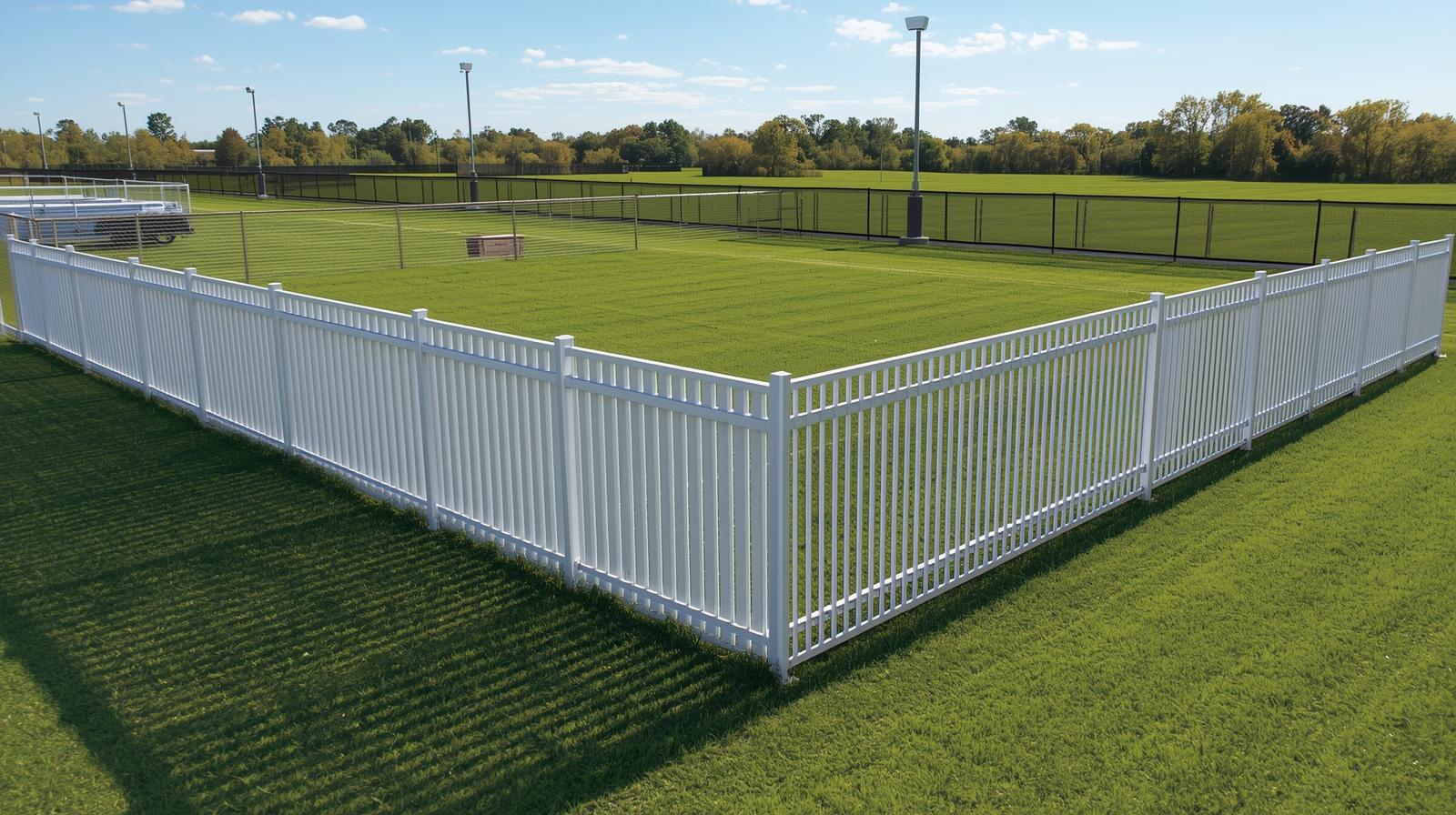
A leaning, rusted fence after a tough Northern Illinois winter isn't just an eyesore—it's a sign of a failed investment. The constant cycle of freezing and thawing, combined with punishing road salt, can quickly destroy a perimeter not built for our climate, turning a security asset into a costly liability.
Choosing the best fence starts with your business objective. Are you focused on securing valuable assets, managing site access, or improving curb appeal? While initial cost is important, the real value lies in the total investment over time. The right choice supports your operational goals and delivers a lasting return by withstanding our region's harsh weather.
Chain-Link, Aluminum, or Steel: Matching the Right Fence to Your Business Goal
Choosing the right material is a balance between your budget, security needs, and desired appearance. For most commercial properties in Northern Illinois, the choice comes down to three workhorse materials: chain-link, aluminum, and steel. Understanding their core strengths will help you identify the best fit for your top priority.
Chain-Link Fence
Best For: Pure function, security, and perimeter definition where visibility is a plus. Ideal for warehouses, utility lots, and construction sites.
Typical Cost: Most affordable.
Maintenance: Very low.
Lifespan: 20+ years.
Aluminum Fence
Best For: Securing a property while enhancing its appearance. It provides an elegant, wrought-iron look without the rust risk. Perfect for office parks, retail centers, and multi-family communities.
Typical Cost: Mid-range.
Maintenance: Virtually none.
Lifespan: 30+ years.
Steel Fence
Best For: Maximum security and impact resistance. When strength is non-negotiable, steel is the answer. It’s used for industrial facilities, data centers, and high-security areas.
Typical Cost: Highest.
Maintenance: Low (modern coatings prevent rust).
Lifespan: 50+ years.
When comparing aluminum vs. steel commercial fencing, think of it this way: steel offers unparalleled strength, making it the top choice for preventing forced entry. Aluminum, while still very strong, provides a high-end look and complete rust immunity, making it a smarter long-term investment where aesthetics and low maintenance are key.
If your needs point toward functional security at the best value, chain-link is likely your starting point. However, not all chain-link is created equal. The strength of the fence depends heavily on the thickness of the wire and the quality of its protective coating.
Not All Chain-Link is Equal: How to Choose a Fence That Resists Bending and Rust
The strength of a chain-link fence comes down to the thickness of its steel wire. This thickness is called "gauge," and counterintuitively, a lower gauge number means a thicker, more durable wire. While lighter-duty fences use 11 or 12-gauge wire, a heavy-duty fence for industrial sites should use 9-gauge or even thicker. This simple detail is the difference between a barrier that bends easily and one that stands up to impact.
Beyond raw strength, the fence's coating is its defense against rust and corrosion from our region's wet winters and road salt. The standard finish is "galvanized," where the steel is dipped in zinc for protection. For maximum longevity and a more polished look, you can opt for a vinyl coating. This adds a sealed layer of colored plastic (typically black or green) over the galvanized wire, offering superior rust prevention and helping the fence blend into the landscape.
Finally, even the best materials will fail if the framework is weak. A true commercial-grade installation requires posts to be set no more than 10 feet apart. Closer spacing creates a tighter, more rigid fence line that is significantly harder to push over, climb, or cut. Combining a low-gauge wire, a quality coating, and proper post installation is the formula for the most durable commercial fence, preventing the need for frequent commercial chain-link fence repair.
Ornamental Fencing: When to Choose Aluminum's Looks vs. Steel's Brute Force
For properties where appearance is as important as security, an ornamental fence delivers a message of quality and permanence. While many picture traditional wrought iron, today’s elegant and secure fences are typically made from either aluminum or steel. The choice between them is a clear trade-off: aluminum’s rust-proof aesthetics versus steel’s unyielding strength.
Aluminum is the champion of low-maintenance beauty. Its greatest advantage is that it simply cannot rust, making it a perfect “set and forget” option for our wet Illinois seasons. An ornamental iron fence for storefronts, office parks, or multi-family communities is often made of aluminum because it provides a lasting, high-end look without the worry of future corrosion or repainting.
When your primary concern is stopping a threat, steel is the answer. As one of the top high-security fence options for businesses, steel is significantly stronger and more resistant to impact or forced entry than aluminum. While steel's historic drawback was its vulnerability to rust, modern finishing techniques have dramatically changed the game.
Instead of simple paint, quality steel fences now receive a Powder Coating. This process involves electrostatically applying a dry powder and then baking it onto the metal, creating a finish that’s much thicker and more durable than liquid paint. This tough shell provides powerful protection against moisture and salt, giving you the brute force of steel without the classic weakness to rust.
The #1 Reason Commercial Fences Fail in Northern Illinois (And How to Prevent It)
You can invest in the strongest steel or the most durable vinyl, but if your fence is leaning or sagging after just a few winters, the problem isn't the material—it's what’s happening underground. Our region's freeze-thaw cycles exert incredible force on any structure set in the ground, and a poorly installed fence post doesn't stand a chance. This is the single biggest threat to the longevity of your investment.
When the ground freezes deep, the water trapped in the soil expands and pushes upwards with immense power. This force, known as Frost Heave, will grip your fence posts and slowly push them out of the earth, breaking concrete footings and making the entire fence line unstable. This is why you see wavy chain-link fences and ornamental gates that no longer align. It’s not a sign of a cheap fence, but of an improper installation.
To guarantee a lasting structure, professional fence installation services must place every post below this point of ground-level movement. For any commercial fence installation services in Northern Illinois, that depth is non-negotiable: the Frost Line is at 42 inches. Setting posts in concrete footings at a minimum of 42 inches deep is the only way to ensure that frost heave can’t destroy your fence from below. Before you hire a contractor for an industrial fence installation near Chicago, asking "How deep are you setting the posts?" is the most important question you can ask.
More Than a Barrier: Choosing the Right Gate for Business Operations
A fence defines your property, but the gate dictates its daily function. The wrong choice can create logistical bottlenecks and security gaps, while the right one streamlines your operations. These are the three main types of gates used in commercial fencing, each with distinct advantages based on your property's layout and traffic needs.
The most familiar option is a Swing Gate, which opens inward or outward like a standard door. While simple and effective for low-traffic areas, it requires a large, clear arc to operate. In a busy lot, this swing path can temporarily block parking spots or interfere with maneuvering trucks.
When interior space is at a premium, a Sliding Gate offers an improvement. It moves sideways along a track installed on the ground, requiring very little depth to open or close. However, for properties in Northern Illinois, that ground track can become a significant liability, easily getting clogged with ice, snow, or debris.
For this reason, the premier choice for most heavy-duty industrial sites is the Cantilever Gate. It functions like a sliding gate but without the ground track. Instead, it’s suspended and counter-balanced by rollers on the fence posts, allowing it to glide effortlessly above snow, ice, and dirt. This design delivers the most reliable performance for secure business perimeters in our challenging climate.
Navigating Permits and Zoning for Your Commercial Fence
One of the first questions property managers ask is, "do I need a permit for a commercial fence in Illinois?" For nearly all business applications, the answer is yes. Unlike a small residential project, a commercial fence is considered a significant structure. The building permit process isn't a hassle to be avoided; it's a critical checkpoint that ensures your installation meets local safety and construction standards, protecting your investment and your liability.
These permits are tied directly to local zoning ordinances, which are the specific rules your city or county has for construction. These regulations, not just your preference, will dictate key aspects of your project. For example, zoning laws for business fences in Cook County might limit fence height next to a public road or specify how far it must be from the property line. This ensures your new fence doesn't obstruct visibility for traffic or violate municipal code.
A key factor in how to choose a commercial fence contractor is finding one who manages this entire process for you. A reputable partner will prepare the necessary drawings, submit the permit application, and coordinate with city inspectors, ensuring your project is fully compliant from start to finish.
Your 5-Point Checklist for Hiring the Right Northern Illinois Fence Contractor
You now understand how business goals connect to fence materials and why proper installation is critical for withstanding a harsh Northern Illinois winter. The final step is turning this knowledge into a lasting investment by selecting the right partner.
Here is your action plan for choosing a commercial fence contractor. Ask every potential installer these five questions:
Are you fully licensed and insured to work in my specific city/county?
How deep will you be setting the posts, and will they be set in concrete?
Based on my goals, what material, gauge, and finish do you recommend, and why?
Does your quote include all costs, including permit fees, dirt hauling, and cleanup?
Can you provide addresses of 2-3 similar local projects you've completed recently?
Their answers will instantly tell you who has the expertise your project deserves. You're not just buying a fence; you are now equipped to hire a partner and secure your property with confidence.
