
Storm Damage Fence Repair for Businesses
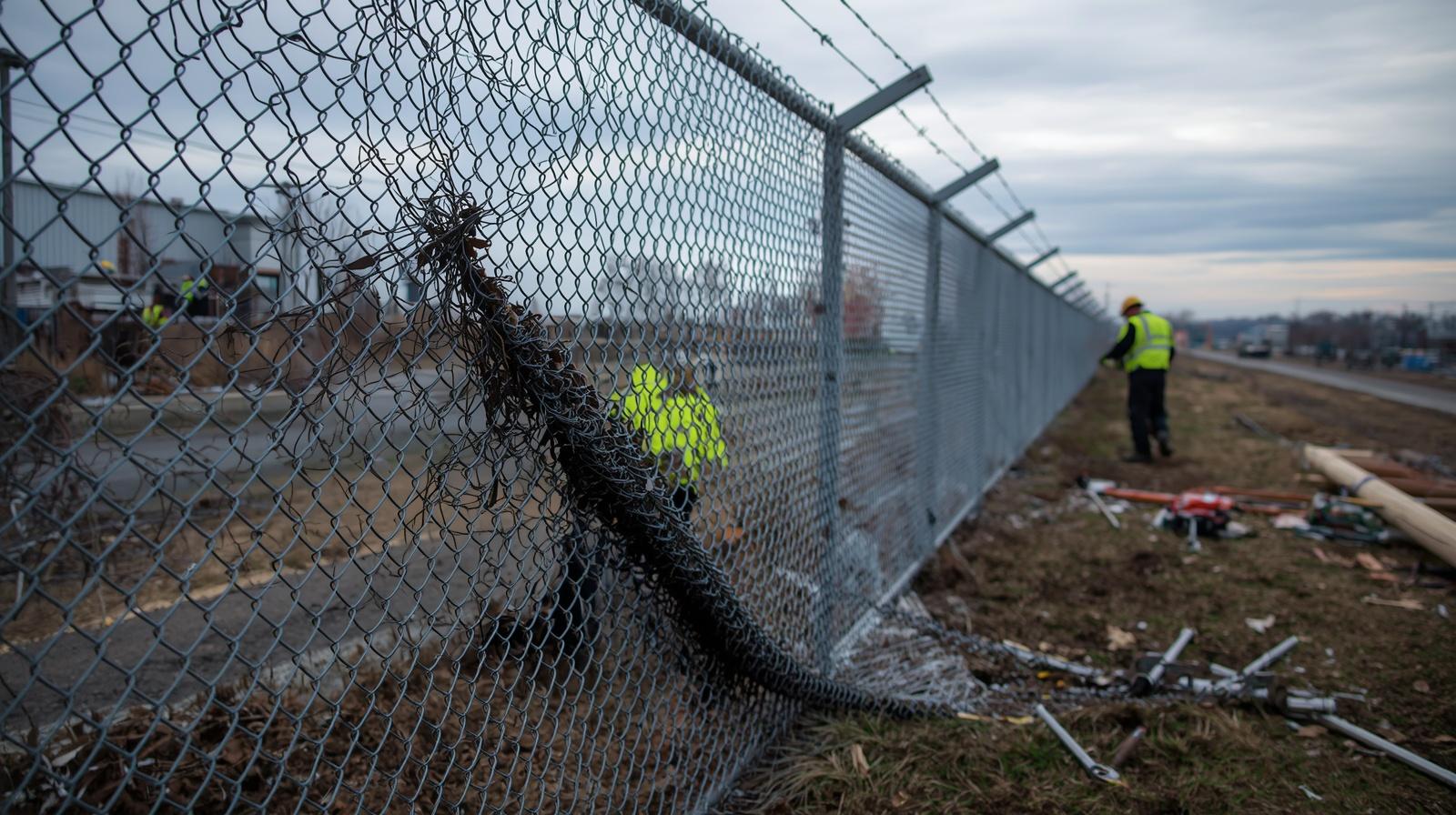
The storm has passed, but the risk to your business is just beginning. A broken fence is more than an ugly inconvenience; it's a wide-open invitation for theft and a serious liability risk. What happens in the first 24 hours after discovering storm damage often determines how quickly—and cost-effectively—your business can recover. Confronting a twisted perimeter where a secure fence used to stand can be overwhelming, but this guide provides a step-by-step action plan for securing your property and starting the recovery process correctly.
Step 1: Secure Your Site and Mitigate Liability Immediately
A damaged fence is an open invitation for liability. Before making any calls, your first priority is to protect staff, customers, and your business from immediate physical and legal risks. Follow these three critical safety actions before you do anything else.
Immediate Safety Actions:
Visually inspect for downed power lines. Never touch a wire or a metal fence it may be contacting. If you see this hazard, stay far away and call your utility company immediately.
Block access. Use caution tape or temporary orange fencing to create a clear perimeter around the entire damaged area.
Post warnings. Print and place simple “DANGER - KEEP OUT” signs on your temporary barrier.
These actions demonstrate due diligence and are your first line of defense against accidents. Once the area is safely cordoned off, you can move on to the next task.
Step 2: Properly Assess and Document Fence Damage for Your Insurance Claim
With the area secured, build a strong case for your insurance claim. It’s crucial to look beyond cosmetic scrapes and identify structural failures. A leaning post, for example, signals an underground problem with its concrete footing—the very foundation of your fence’s stability. Ignoring this is like patching a wall when the building’s foundation is cracked; the problem will only worsen and lead to a total collapse.
Your phone is the best tool for this job. Capture the damage from three distances: a wide shot showing the entire affected perimeter, medium shots of each broken panel, and detailed close-ups of specific failure points like snapped brackets or cracked concrete footings. This provides undeniable proof of the storm’s force.
To add powerful context, simply walk the fence line while recording a voice memo describing what you see. This simple post-storm inspection creates a real-time narrative of the damage and provides the detailed record needed to decide whether a simple repair will suffice or if a full replacement is the smarter investment.
Step 3: Repair vs. Replace? A Simple Cost-Benefit Analysis
With the damage documented, you face a critical budget decision. Think of your fence like a delivery truck; pouring money into constant repairs for an old, unreliable vehicle is often more expensive over time than investing in a new one. The same logic applies here.
A straightforward guideline is the "25% Rule." If more than a quarter of your total fence line has been damaged, a full replacement is often the more cost-effective option. The labor and material costs to fix a storm-damaged industrial fence piece-by-piece, match aging sections, and reinforce adjacent weak spots can quickly approach the price of a new installation.
The fence’s age and overall condition are also critical. Spending money to patch up a five-year-old vinyl fence makes sense. However, investing that same amount into a 20-year-old chain-link fence showing widespread rust is a poor use of capital, as another section will likely fail in the next storm.
Finally, view a potential replacement as an opportunity to upgrade to a stronger, more secure fence that can reduce future maintenance and better protect your assets.
Step 4: Navigating Your Commercial Insurance Claim for Fence Damage
Fence damage is often covered by commercial property insurance. Policies typically pay for damage from specific, listed events—known as named perils—such as windstorms, hail, or falling trees. If the storm directly caused the damage, you likely have a solid basis for a claim.
Before filing, however, consider your policy deductible. This is the fixed amount your business pays out-of-pocket before insurance contributes. If your total repair cost is less than or close to this amount, filing a claim may not be financially worthwhile, as it can sometimes lead to future premium increases.
To find this number, locate your policy’s declarations page. This one-page summary, usually at the front of your documents, lists your exact property damage deductible. Knowing this figure before you call your agent or get quotes from fence repair services puts you in control.
Step 5: How to Hire a Reputable Contractor for Commercial Fence Restoration
It's vital to seek out fence repair services that specialize in commercial projects, not residential ones. A commercial contractor understands the higher stakes for your business, from liability standards to the heavy-duty materials required to protect your assets.
Be wary of the lowest bid. A quote that seems too good to be true often signals inferior materials or omits critical costs like site cleanup, leading to expensive surprises. A reputable partner will always provide a detailed, line-item quote that separates costs for labor, materials, and debris removal.
To validate your choice, get clear answers to these three questions:
Can you provide current proof of general liability and worker’s compensation insurance?
Is full debris removal and site cleanup included in the total price?
What is the warranty on both your materials and labor?
Beyond Repair: An Opportunity for Resilience
You now have a clear path forward to turn chaos into a controlled action plan. This situation is also a strategic opportunity. Instead of a simple chain-link fence post-storm repair, consider the best commercial fence materials for high winds. Options like ornamental steel or specialized vinyl allow wind to pass through, reducing future risk and the need for intensive industrial fence maintenance after severe weather.
A storm may have tested your perimeter, but it has revealed your capability. You are no longer just fixing a problem; you are making a long-term investment in your property's security and value, turning an urgent repair into a permanent upgrade.
