
Security Fence Planning in Evansville, WI: Gates, Access and Perimeter Needs
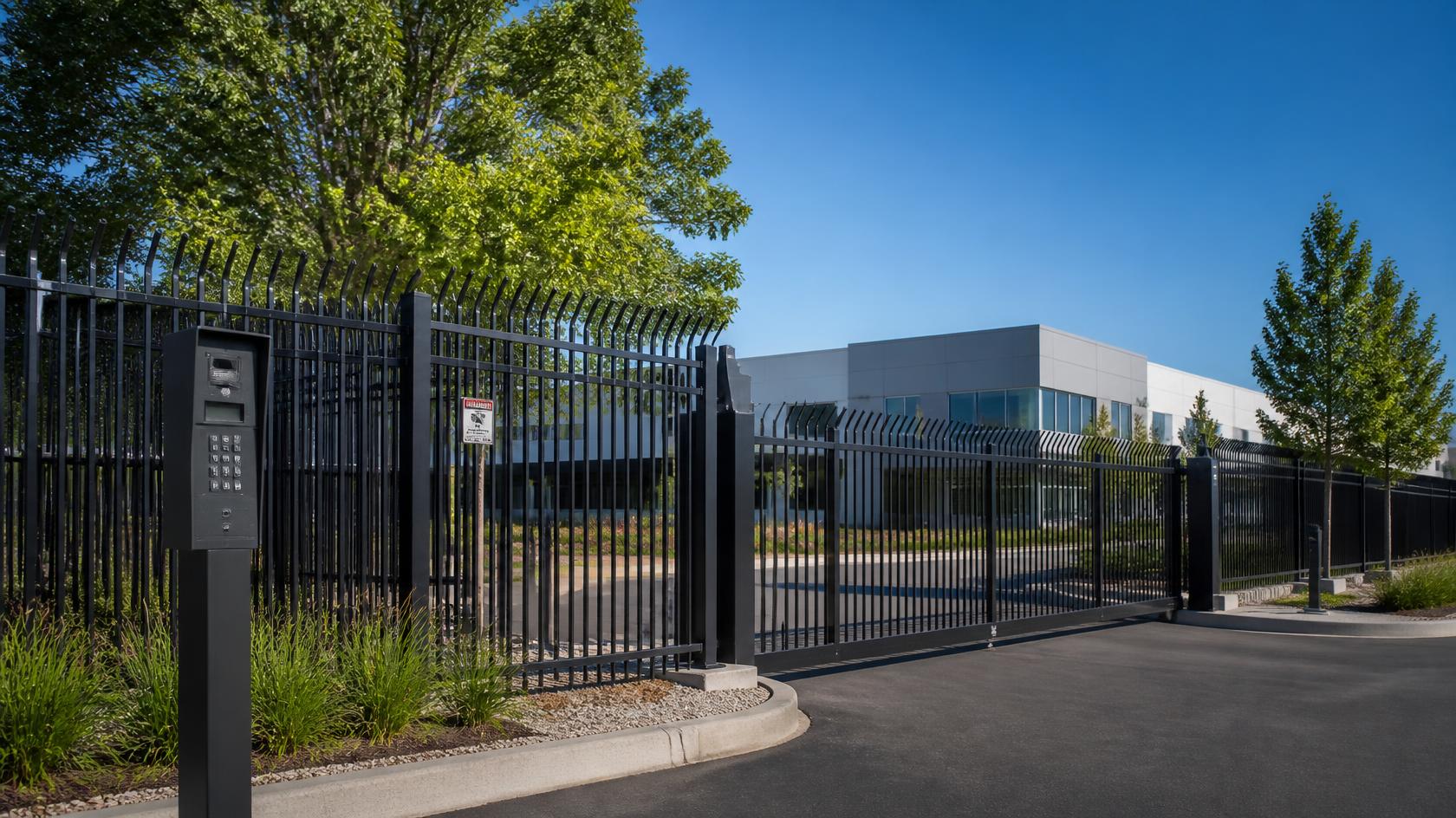
A good security fence in Evansville, WI should do more than create a boundary. Property owners should plan the perimeter around vehicle access, pedestrian entrances, storage areas, visibility, gate width, access control, drainage, and future use. The right layout helps improve security without making daily access unnecessarily difficult.
Start With What Actually Needs Protection
Security fence planning should begin with the property, not the material.
Before deciding on chain link, ornamental fencing, privacy panels, or gates, identify the areas that need the most control.
These may include:
Equipment
Work vehicles
Trailers
Outdoor inventory
Utility areas
Storage yards
Employee-only areas
Service zones
Dumpsters
Parking areas
Not every property needs the same level of security around every boundary.
A business may need stronger controls around outdoor storage while keeping customer-facing areas more open and welcoming.
Divide the Property Into Security Zones
Instead of treating the entire site the same, think in zones.
Public Areas
These may include:
Main entrances
Visitor parking
Office entrances
Customer walkways
These areas often benefit from clear visibility and easy navigation.
Restricted Areas
These may include:
Equipment yards
Employee-only spaces
Utility equipment
Storage areas
Service entrances
These zones may need stronger fencing and controlled gates.
High-Control Areas
Certain locations may require even more limited access, such as:
Valuable equipment storage
Fleet parking
Sensitive utility areas
Secured outdoor inventory
Creating different security zones can reduce unnecessary fencing while improving control where it matters most.
Choose Fence Materials Based on the Area
One fence material does not have to be used throughout the entire site.
Different materials can serve different purposes.
Chain Link for Practical Security
Chain link fencing is often used for:
Storage yards
Equipment areas
Vehicle lots
Utility zones
Larger perimeters
It provides:
Open visibility
Practical coverage
Compatibility with wide gates
Lower wind resistance than solid fencing
Visibility through the fence may also make it easier to monitor activity around the site.
Ornamental Fencing for Visible Entrances
Aluminum or ornamental fencing can work well near:
Office entrances
Public-facing property lines
Visitor areas
Landscaped sections
It can create a clear boundary while maintaining open sightlines and a more finished appearance.
For some properties, ornamental fencing near the front combined with chain link farther back provides a practical balance.
Privacy Fencing for Selected Areas
Some spaces may benefit from screening.
Examples include:
Dumpsters
Service areas
Equipment
Outdoor materials
Selected storage zones
Wood, vinyl, or privacy-screened chain link may be appropriate depending on the site.
Solid fencing should be planned carefully around driveways and intersections because it can reduce visibility.
Plan the Perimeter Around Real Movement
A security fence should work with everyday traffic.
Look at how:
Employees arrive
Customers enter
Delivery trucks move
Maintenance crews access the property
Waste collection is handled
Emergency vehicles may enter
A fence layout that ignores these patterns can create congestion or require gates to remain open longer than necessary.
The most secure layout is often one that supports efficient movement rather than constantly fighting against it.
Gate Location Matters as Much as Fence Location
Gate placement should follow the site's natural traffic flow.
Vehicle gates should connect logically with:
Driveways
Parking lots
Loading areas
Storage yards
Service roads
Avoid locating a gate where vehicles must make unnecessarily difficult turns.
Poor gate placement can lead to damaged posts, longer wait times, and frequent alignment problems.
Make Vehicle Gates Wide Enough
Gate width should be based on the largest vehicles expected to use the entrance.
Consider:
Work trucks
Delivery vehicles
Trailers
Maintenance equipment
Snowplows
Emergency vehicles
Also consider turning space.
A gate can be wide enough on paper but still difficult to use if trucks cannot approach it at a practical angle.
Choose the Right Gate Type
Different entrances may need different gate designs.
Swing Gates
Swing gates may work well where there is enough open space for the gate leaves.
Sliding Gates
Sliding gates move parallel to the fence and can be useful where swing clearance is limited.
Cantilever Gates
Cantilever gates operate above the driveway without relying on a ground track.
This can be useful where gravel, debris, snow, or ice could interfere with a track-based system.
The right gate should fit the available space and expected traffic.
Separate Vehicle and Pedestrian Access When Practical
Employees and visitors should not always need to use the same opening as trucks.
Dedicated pedestrian gates can help:
Reduce conflicts with vehicles
Improve employee access
Control entry points
Guide visitors toward the correct area
Pedestrian entrances should connect naturally with:
Sidewalks
Parking areas
Main doors
Employee routes
Gate placement should make sense for how people actually move through the property.
Plan Access Control Before Installation
If the property requires controlled entry, include access-control needs during the initial planning process.
Possible systems may include:
Keypads
Card readers
Remote controls
Intercoms
Automatic gate operators
Employee credentials
Planning these systems early makes it easier to account for:
Electrical needs
Equipment locations
Vehicle waiting areas
Manual release access
Backup operation
Adding access control after the fence is already installed can require more modifications.
Think About How Long Gates Stay Open
Security can be reduced when gates remain open longer than necessary.
Consider:
Delivery frequency
Shift changes
Vendor access
Customer traffic
Service vehicles
A high-traffic entrance may need a different setup from a gate used only a few times per day.
Understanding traffic volume can help determine whether manual or automatic gate operation makes more sense.
Preserve Visibility Around Entrances
Security fencing should not create new blind spots.
Review sightlines near:
Driveways
Parking exits
Pedestrian crossings
Road-facing corners
Loading areas
Open fencing may be more appropriate near active entrances.
Solid privacy sections can often begin farther inside the property where screening is more important than visibility.
Check the Entire Property Boundary
Fence placement should be based on reliable property information.
Do not automatically assume:
Existing fences
Curbs
Pavement edges
Landscaping
Mowing lines
mark the legal property boundary.
Review available survey information, known markers, easements, shared access, and public rights-of-way before construction.
A security fence placed incorrectly may need to be relocated later.
Locate Underground Utilities
Fence posts require digging, so underground utilities should be considered early.
Potential systems include:
Electrical service
Gas lines
Water
Sewer
Communication cables
Commercial and larger properties may also have private underground lines serving:
Lighting
Cameras
Detached buildings
Drainage
Gate equipment
Utility locations may affect parts of the fence route.
Include Drainage in Security Planning
Drainage problems can affect both fence stability and gate operation.
Look for:
Standing water
Soft soil
Erosion
Parking lot runoff
Downspout discharge
Low areas
Water collecting around posts can contribute to soil movement.
At gates, standing water may freeze during winter and interfere with access.
Good security planning should account for these site conditions before installation.
Think About Wisconsin Winter Access
A security fence needs to remain functional in every season.
Before finalizing gates, review:
Snowplow routes
Snow-storage areas
Gate swing paths
Sliding gate travel
Pedestrian access
Emergency entrances
Avoid placing snow-storage areas directly against gates, posts, access-control equipment, or long sections of fence.
Winter usability should be part of the layout from the beginning.
Protect the Fence From Vehicle Damage
Security fencing near busy traffic areas may be vulnerable to impact.
Pay extra attention to:
Tight corners
Loading areas
Trailer routes
Parking edges
Gate entrances
Giving vehicles adequate turning space can help reduce accidental damage.
Gate posts and access-control equipment should also be positioned where they are less exposed to traffic whenever practical.
Plan for Emergency and Service Access
Security should not make essential access unnecessarily difficult.
Consider how the site will accommodate:
Emergency responders
Utility providers
Maintenance crews
Waste collection
Contractors
Secondary gates may be helpful on larger properties.
Make sure these entrances remain functional and are included in future maintenance inspections.
Think About Future Property Changes
A security fence may remain in place for many years.
Ask whether the property may eventually need:
Larger delivery vehicles
More employee parking
Expanded outdoor storage
Additional equipment
New buildings
Another entrance
Planning enough gate width and preserving possible future access points can reduce costly modifications later.
Review the Entire Project Scope Before Installation
A security fence estimate should clearly identify what is included.
Review:
Fence material
Height
Total footage
Vehicle gates
Pedestrian gates
Gate hardware
Access-control equipment
Existing fence removal
Site preparation
Special installation conditions
Comparing complete project scopes is more useful than looking only at the total price.
Review Applicable Requirements
Security fence requirements may depend on property use, height, placement, and location.
Before installation, review applicable considerations involving:
Setbacks
Fence height
Driveway visibility
Utility access
Public rights-of-way
Emergency access
Gate placement
Addressing these details during planning can help prevent redesigns later.
Plan Your Evansville Security Fence With Dach Fence
Effective security fencing should protect important areas while keeping everyday access practical for employees, customers, deliveries, service vehicles, and emergency responders.
Dach Fence installs residential and commercial chain link, wood, vinyl, aluminum, ornamental, temporary, and security fencing. The team also provides fence repair, replacement, dumpster enclosures, vehicle and pedestrian gates, and access-control solutions.
Contact Dach Fence for a free estimate and practical recommendations for planning security fencing, gates, and access at your Evansville, WI property.
