
Residential Fence Installation in Byron, IL: Wood, Vinyl & Aluminum Options
Byron homeowners have good options when it comes to residential fencing — wood, vinyl, and aluminum each bring different strengths depending on the property, the goal, and the maintenance commitment the homeowner is willing to make. Illinois winters add an important filter to that decision. This guide walks through what each material offers and what to expect from the installation process. Dach Fence serves residential customers throughout Byron and the surrounding northern Illinois area.
Fencing in Byron: Small Town, Real Considerations
Byron is a smaller community along the Rock River in Ogle County, and it has the character that comes with that — established residential streets close to the water, newer subdivisions on the outskirts, and a mix of lot sizes that range from compact in-town properties to larger parcels on the rural edge of the village.
That variety matters for fence planning. A compact in-town lot has different site conditions than a half-acre property on a newer street, and both look different from a riverfront property where moisture exposure is a daily reality. The right fence for any of these properties starts with understanding what the site actually demands.
Byron's location in northern Illinois also means the same seasonal cycle that affects the entire region applies here: wet springs, humid summers, wind-driven storms in the warmer months, and winters that push frost deep into the ground. Any residential fence going into the soil here needs to account for freeze-thaw cycles from the post footings up.
Local permit requirements through the City of Byron apply to most fence installations, including height limits and setback rules that vary by zoning district. Confirming those requirements before selecting a fence height or placement is a step worth taking early — it takes time to get right and no time at all to get wrong.
Wood Fencing: Classic Appeal With a Maintenance Commitment
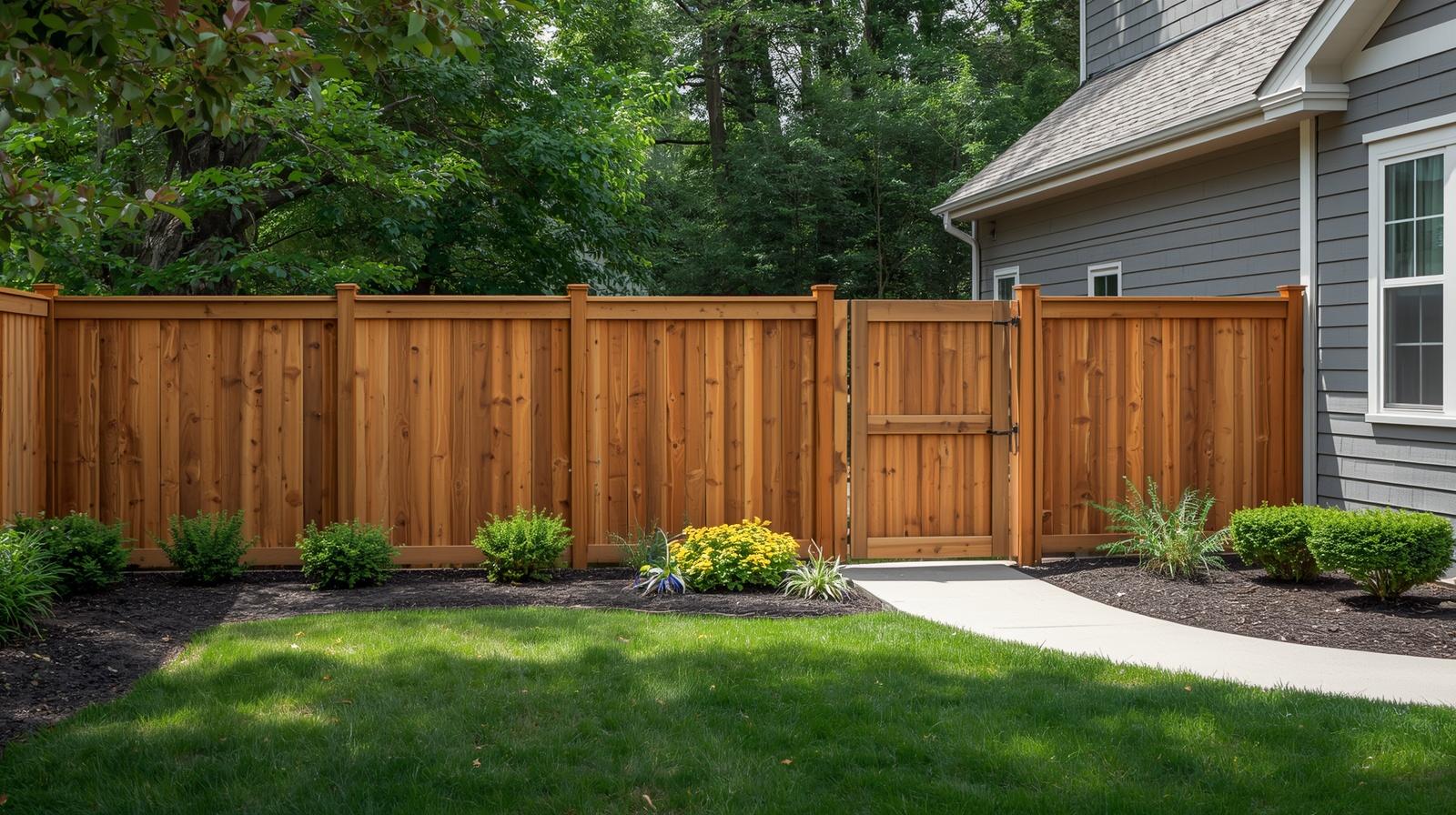
Wood fencing is a natural fit for Byron's older residential neighborhoods, where traditional aesthetics and the character of established streets matter. A well-built wood privacy fence adds genuine warmth to a property that vinyl and aluminum simply don't replicate — there's a reason it remains one of the most requested styles even as lower-maintenance alternatives have grown in popularity.
Species That Work in Northern Illinois
Not all wood holds up equally in Byron's climate. The two practical choices for this region are cedar and pressure-treated pine.
Cedar is the premium option. It has natural oils that resist moisture and insect damage without chemical treatment, takes stain and sealant well, and holds its dimensional stability through the temperature swings that cause lesser wood to warp and crack. A cedar fence that gets regular maintenance can last 20 years or more in northern Illinois.
Pressure-treated pine is the more affordable alternative. The treatment process forces preservatives into the wood to resist rot and insects, making it a durable choice for ground contact and outdoor exposure. It's widely available, cost-effective across larger projects, and holds up well when properly maintained.
Styles and Applications
Wood's versatility is one of its genuine advantages. Board height, picket profile, cap style, and spacing can all be customized to match the home and the neighborhood. Common residential styles include:
Privacy fencing — solid boards installed edge to edge for full visual screening. The most popular choice for backyard installations where privacy from neighbors or the street is the goal.
Semi-privacy fencing — boards with small gaps between them that reduce visibility without completely blocking airflow or light. A good middle ground for properties where some openness is preferred.
Shadowbox fencing — alternating boards on either side of the rail, creating a finished appearance from both sides. Commonly used on property lines shared with neighbors.
Picket fencing — the classic open style for front yards and garden borders. More decorative than functional for privacy, but effective for defining space and adding curb appeal.
What Wood Requires From the Homeowner
The honest conversation about wood fencing is about maintenance. In northern Illinois, wood needs sealing or staining on a regular cycle — every two to three years is the standard guideline, though south-facing sections with high sun exposure or sections near standing water after snowmelt may need attention sooner.
Skipping maintenance cycles doesn't just affect appearance. Unprotected wood absorbs moisture through wet springs and humid summers, and that moisture creates the conditions for rot — starting at board bases where contact with the ground or splash-back from rain is highest, and at post bases where wood meets concrete. Once rot sets into a post, the post needs to come out. Prevention through regular sealing is far less expensive than replacement.
For Byron homeowners who are committed to that maintenance cycle, wood is a rewarding choice. For those who aren't, vinyl or aluminum will serve them better over the long run.
Vinyl Fencing: Low Maintenance Without Sacrificing Appearance
Vinyl has become the dominant choice in Byron's newer subdivisions, and the reasons aren't complicated. It looks clean and finished, comes in styles that suit most residential applications, and asks very little of the homeowner after installation. No painting, no sealing, no staining — an occasional rinse with a garden hose is about all it needs.
How Vinyl Holds Up in Byron's Climate
The main climate concern with vinyl in northern Illinois is cold-weather brittleness. Cheaper vinyl formulations lose flexibility as temperatures drop and can crack under impact — a branch falling on the fence, a hard hit from a snow blower, or the stress of ice accumulation on a privacy panel are all scenarios where inferior vinyl fails. Quality vinyl from an established manufacturer maintains flexibility in cold and holds up through repeated freeze-thaw cycles without cracking, fading, or warping.
The other cold-weather consideration is snow load on privacy panels. Unlike open fences that let wind and snow pass through, solid vinyl privacy panels catch the full weight of accumulated snow. Proper post sizing and concrete footings at the correct depth carry that load without panel deflection or post movement.
Vinyl Styles for Residential Properties
Vinyl fencing is available in a range of profiles that work for different parts of a residential property:
Privacy panels — the most popular residential choice. Full-height boards installed with no gaps for complete visual screening. Available in a range of heights and cap styles.
Semi-privacy panels — similar to wood semi-privacy, with spacing between pickets for partial visibility and improved airflow.
Picket fencing — a cleaner, maintenance-free version of the classic wood picket style. Popular for front yards and garden borders.
Ranch rail — open horizontal rail fencing commonly used on larger Byron-area properties and rural lots where a boundary marker is needed without a full privacy fence.
Pool Enclosures
Vinyl is a common choice for pool enclosures in Byron. Illinois building codes require specific fence heights around residential pools and self-closing, self-latching gate hardware for safety compliance. Vinyl pool fencing meets those requirements cleanly and holds up well in the moisture-heavy environment around a pool.
Aluminum Fencing: Low Maintenance, Long Life, and the Right Look for the Right Property
Aluminum fencing occupies a specific niche in Byron's residential market — it's not trying to be a privacy fence, and it's not the most affordable option per foot. What it offers is a clean, classic aesthetic combined with exceptional durability and almost zero maintenance, which makes it the right choice for specific applications where those qualities matter.
Where Aluminum Makes the Most Sense
Aluminum fencing is particularly well-suited to:
Front yards and property borders where visibility is desired and curb appeal matters alongside function
Properties along the Rock River or in low-lying areas where moisture exposure is higher — aluminum doesn't rust, making it far more practical in these conditions than iron or steel
Pool enclosures where Illinois code compliance, moisture resistance, and appearance all need to come together
Garden borders and landscape definition where an ornamental look complements the plantings and hardscape
How Aluminum Compares to Ornamental Iron
Homeowners sometimes ask about ornamental iron fencing when they see aluminum ornamental styles. The appearance can be similar, but the performance in Byron's climate is not. Iron rusts — it requires periodic painting or coating to stay ahead of surface corrosion, and in high-moisture environments near the river or in low-lying yards, that maintenance becomes ongoing. Aluminum doesn't rust at all. It's lighter, easier to install, and performs better over time in northern Illinois conditions without the maintenance iron demands.
Aluminum in Illinois Winters
Aluminum handles freeze-thaw cycles well. It doesn't absorb moisture the way wood does, doesn't expand and contract with temperature changes in ways that stress joints and hardware, and doesn't develop surface corrosion that compromises the finish over time. Gate hardware on aluminum fences is the main thing to monitor seasonally — hinges and latches can stiffen or bind with ice accumulation, and keeping them lubricated before winter extends their service life.
Side-by-Side: Choosing the Right Material for Your Byron Property
Every material has a place — the right choice depends on what the homeowner actually needs:
Wood makes sense when a traditional look matters, the homeowner is willing to maintain it, and customization in style and height is a priority. Cedar is the better long-term investment; pressure-treated pine is the more budget-conscious starting point.
Vinyl makes sense when low maintenance is the top priority, the property is in a newer subdivision with a finished aesthetic, or the goal is a privacy fence that won't require attention year after year. Pay for quality — it shows in how the fence holds up over time.
Aluminum makes sense when the property is near water, the application is a front yard or pool enclosure where visibility and appearance matter, or the homeowner wants a fence that effectively requires no maintenance for its full lifespan.
All three hold up in Byron's climate when installed correctly — with posts set below the frost line, proper concrete footings, and commercial-quality hardware on gates. The material that fails is almost always one that was installed to inadequate specifications, not one that was genuinely the wrong choice for the climate.
What the Installation Process Looks Like
Once material and style decisions are made, the installation process follows a consistent pattern regardless of which material is chosen.
Permits are pulled first. Byron requires a building permit for most fence installations, and height and setback requirements vary by zoning district. Confirming these before starting avoids surprises mid-project.
Utility locates come next. Illinois law requires contacting JULIE before any digging. This applies to every residential fence project regardless of how straightforward the site looks — buried utilities in established Byron neighborhoods don't always run where property owners expect.
Property lines are confirmed before layout. Even in established neighborhoods, it's worth verifying boundaries before stakes go in. A fence installed even a few inches over a property line creates disputes that are expensive to resolve after the fact.
Post setting happens first and drives the rest of the timeline. Posts are dug below the frost line — a minimum of 36 to 42 inches in northern Illinois — and set in concrete. Concrete needs to cure before panels are attached; a professional installer builds that time into the schedule.
Panel, rail, and gate installation follows once footings have cured. The time from post setting to final walkthrough on a standard residential project in Byron is typically one to two days for the physical installation, with the permit and planning phase adding lead time before that.
Get a Free Estimate From Dach Fence
Whether you're planning a cedar privacy fence in an established Byron neighborhood, a low-maintenance vinyl enclosure for a newer subdivision lot, or an aluminum fence along a riverfront property, the right starting point is a conversation about what your property actually needs.
Dach Fence serves residential customers throughout Byron and across northern Illinois and Wisconsin. Every project starts with a free estimate — no pressure, no one-size-fits-all recommendations.
Contact Dach Fence at dachfence.net to schedule your free estimate.
