
Fence Installation Mistakes to Avoid in Beloit, WI
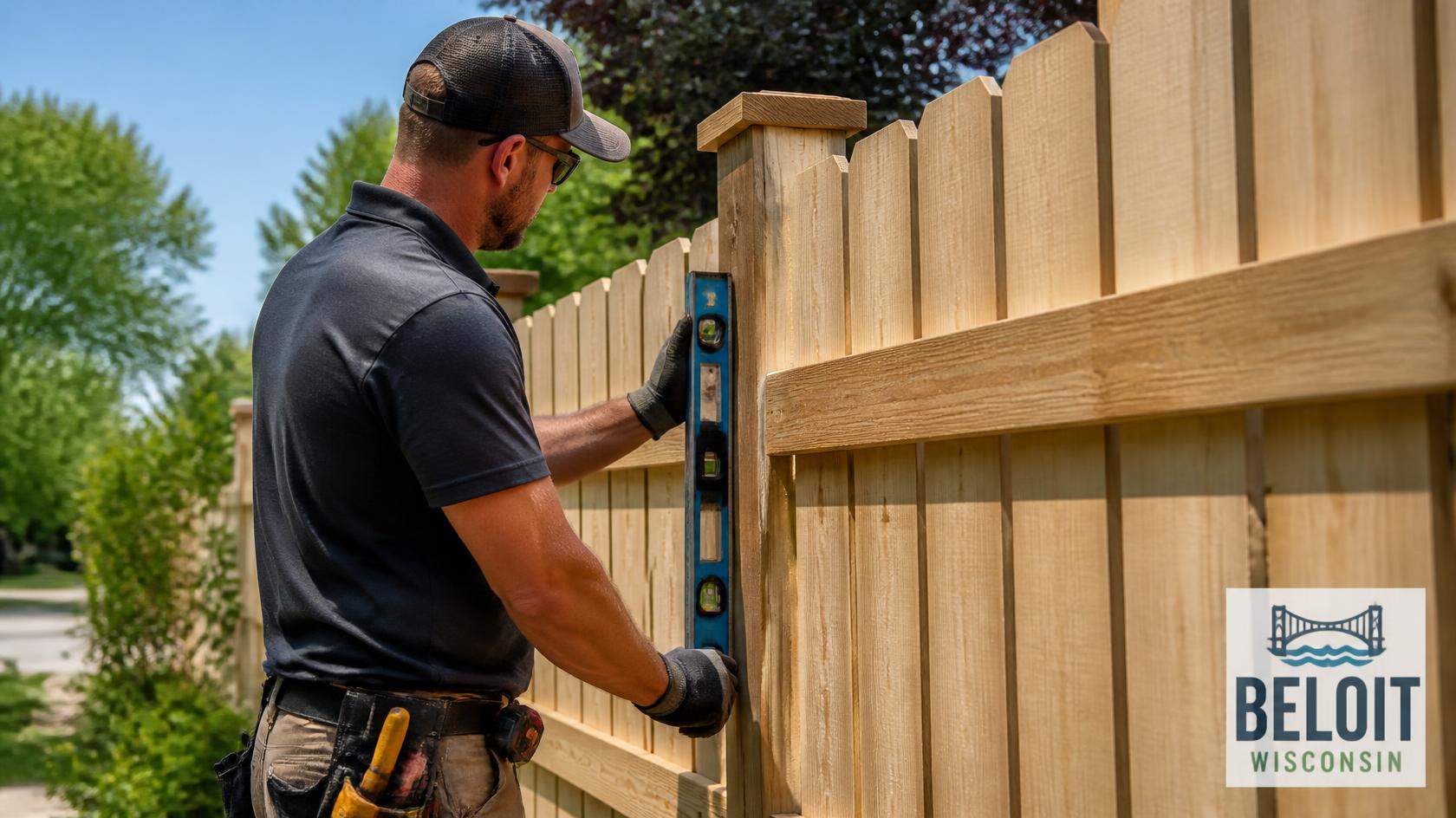
Fence installation mistakes in Beloit, WI often begin before construction starts. Property owners can avoid many problems by confirming boundaries, choosing the right material, planning gates carefully, checking utilities and drainage, accounting for Wisconsin weather, and thinking about long-term maintenance and future access.
Mistake 1: Starting Without a Clear Purpose
A fence should solve a specific property need.
Homeowners may want:
Backyard privacy
Pet containment
Pool safety
Curb appeal
Property separation
Businesses may need:
Perimeter security
Equipment protection
Vehicle control
Outdoor storage
Employee access
Service-area screening
Choosing a fence before defining its purpose can lead to the wrong material, height, or layout.
For example, an open fence may not provide enough privacy, while a solid fence may be unnecessary around an area where visibility is more important.
Mistake 2: Assuming the Property Line Is Obvious
One of the most serious mistakes is installing a permanent fence based only on an existing visual boundary.
Do not automatically assume that a:
Hedge
Tree line
Old fence
Mowing edge
Landscaping border
marks the legal property line.
Review an available survey, known boundary markers, easements, and shared access areas before construction begins.
Resolving boundary questions early is much easier than relocating a completed fence.
Mistake 3: Ignoring Easements
A fence may be inside the property boundary and still interfere with an easement.
Potential concerns include:
Utility easements
Drainage easements
Shared driveways
Public rights-of-way
These areas may need continued access.
Property owners should understand where easements are located before finalizing the fence route or placing gates.
Mistake 4: Forgetting About Underground Utilities
Fence posts require digging.
Underground utilities can include:
Electric service
Gas lines
Water lines
Sewer lines
Communication cables
Private systems may also be present, including irrigation, landscape lighting, drainage pipes, or electrical service to detached structures.
Utility locations can affect post placement and may require changes to portions of the planned layout.
Mistake 5: Choosing a Material Only by Appearance
A fence may look attractive when installed but become frustrating if its maintenance requirements do not match the owner's expectations.
Material selection should consider:
Privacy
Security
Maintenance
Wind exposure
Property use
Long-term appearance
Wood, vinyl, chain link, and ornamental fencing all serve different needs.
The best choice should fit the property rather than simply match a photo or design preference.
Mistake 6: Choosing Wood Without Planning for Maintenance
Wood provides strong privacy and a natural appearance, but it usually needs more care than some alternatives.
Wisconsin weather can contribute to:
Fading
Cracking
Warping
Loose boards
Moisture-related wear
Periodic staining, sealing, and repairs may be needed.
Wood can be an excellent choice, but owners should understand the long-term upkeep before selecting it.
Mistake 7: Using Solid Fencing Everywhere
Full privacy fencing is useful in many locations, but it does not necessarily belong around every part of a property.
Solid wood or vinyl may work well around:
Backyards
Patios
Pools
Private side yards
Open chain link or ornamental fencing may be more appropriate near:
Driveways
Front yards
Commercial entrances
Scenic areas
Active traffic zones
Using different materials where appropriate can improve privacy without unnecessarily blocking views.
Mistake 8: Creating Driveway Blind Spots
Solid fencing placed too close to a driveway can reduce visibility.
Before installation, check sightlines around:
Driveway entrances
Sidewalks
Road-facing corners
Shared access points
Parking lot exits
Drivers should be able to see approaching vehicles and pedestrians.
Open-style fencing may be more suitable in areas where visibility is especially important.
Mistake 9: Placing Gates Where They Look Good Instead of Where They Work
A gate should be placed where people actually need access.
Homeowners should think about movement between:
Driveway and backyard
Garage and side yard
Patio and lawn
Storage areas
Businesses should consider:
Employee entrances
Delivery routes
Loading zones
Equipment yards
Customer access
A visually centered gate may look attractive but become inconvenient if it does not connect to normal traffic patterns.
Mistake 10: Making Gates Too Narrow
Gate width is easy to underestimate.
Residential properties may need room for:
Riding mowers
Utility trailers
Landscaping equipment
Outdoor furniture
Commercial properties may need access for:
Delivery trucks
Work trailers
Maintenance vehicles
Snowplows
Emergency vehicles
Planning only for today's smallest equipment can create problems later.
Gate width should account for future needs as well.
Mistake 11: Ignoring Vehicle Turning Space
A gate can be wide enough but still difficult to use.
Commercial properties should especially consider:
Vehicle length
Trailer length
Turning radius
Approach angle
Nearby curbs
Parking spaces
Buildings
The gate opening and surrounding traffic area should be planned together.
A larger opening will not solve a poor approach angle.
Mistake 12: Overlooking Pedestrian Access
Businesses sometimes focus entirely on vehicle gates and forget how employees or visitors will enter on foot.
Separate pedestrian gates can help:
Reduce interaction with trucks
Improve employee access
Guide customers toward entrances
Reduce unnecessary vehicle gate use
Pedestrian gates should connect naturally with sidewalks, parking areas, and building entrances.
Mistake 13: Ignoring Slopes Until Installation Day
Fence installation becomes more complicated when the planned route crosses uneven ground.
Potential challenges include:
Slopes
Ditches
Low areas
Tree roots
Soft soil
Uneven lawns
Chain link can often follow changing grades effectively.
Wood and vinyl panels may require stepped sections or other adjustments.
Gates generally work best on reasonably level ground.
Mistake 14: Failing to Check Drainage
Drainage can affect both fence stability and gate operation.
Before construction, look for:
Standing water
Roof runoff
Downspout discharge
Drainage channels
Erosion
Soft soil
Snowmelt routes
A fence should not unnecessarily block existing drainage.
Water near posts can affect surrounding soil, while standing water near gates may freeze and create winter operating problems.
Mistake 15: Forgetting About Beloit Winters
Fencing in southern Wisconsin must handle major seasonal changes.
Typical concerns include:
Strong winds
Heavy rain
Severe storms
Snow
Ice
Freeze-thaw cycles
Solid wood and vinyl fencing catches more wind than open chain link or ornamental fencing.
Freeze-thaw movement may also affect soil around posts and change gate alignment.
Weather exposure should be considered when selecting materials and installation methods.
Mistake 16: Leaving No Room for Snow Storage
A new fence can change where snow can be pushed during winter.
Avoid repeatedly piling snow against:
Fence panels
Chain link mesh
Posts
Gates
Commercial properties should pay particular attention to snow storage around:
Parking lots
Loading zones
Driveways
Employee entrances
Automatic and sliding gates also need enough space to operate in winter.
Mistake 17: Forgetting About Pets' Behavior
Fence height is only one part of pet containment.
Homeowners should also consider:
Digging habits
Jumping ability
Pet size
Ground clearance
Gate security
Fence opening size
Some dogs may do better with solid fencing that limits visual distractions.
Others may be well suited to chain link.
Uneven ground should also be checked for gaps beneath the fence.
Mistake 18: Installing Automatic Gates Without Planning Infrastructure
Automatic gates require more planning than a standard manual gate.
Possible components include:
Gate operators
Keypads
Card readers
Remote controls
Intercoms
Installation may also require:
Electrical preparation
Manual release
Backup operation
Emergency access
Winter planning
It is generally easier to include these needs in the original project than to retrofit them later.
Mistake 19: Not Planning for Future Property Changes
A fence can remain in place while the property changes significantly.
Future projects may include:
A shed
Pool
Patio expansion
Larger lawn equipment
Additional parking
Outdoor commercial storage
Larger work vehicles
Building expansion
Planning sufficient gate width and access routes now can reduce expensive modifications later.
Mistake 20: Comparing Estimates by Price Alone
Fence estimates may look similar while including very different work.
Before comparing totals, review whether each estimate includes:
Fence material
Posts and rails
Gates
Hardware
Existing fence removal
Disposal
Site preparation
Specialty features
Automatic gate equipment
A detailed scope makes it easier to understand what the price actually covers.
Mistake 21: Skipping Long-Term Maintenance Planning
Every fence requires some level of care.
Wood may require staining, sealing, board repairs, and gate adjustments.
Vinyl generally needs cleaning and periodic inspection.
Chain link should be checked for:
Bent mesh
Loose ties
Coating damage
Gate alignment
Aluminum and ornamental fencing generally require less routine maintenance but should still be inspected for loose hardware or impact damage.
Regular inspections after storms and winter weather can help catch problems early.
Mistake 22: Forgetting Applicable Requirements
Fence requirements may depend on the property, fence height, location, and intended use.
Before installation, review applicable considerations involving:
Setbacks
Fence height
Driveway visibility
Pool barriers
Utility access
Public rights-of-way
Gate placement
Commercial property use
Addressing these details early can help prevent delays and redesign work.
Avoid Fence Installation Problems With Better Planning
Many fence installation problems can be traced back to decisions made before construction begins.
Confirming boundaries, choosing the right material, planning gates, reviewing drainage, and thinking about future access can make the finished fence more practical and easier to maintain.
Dach Fence installs residential and commercial wood, vinyl, chain link, aluminum, ornamental, temporary, and security fencing. The team also provides fence repair, replacement, pool enclosures, dumpster enclosures, vehicle and pedestrian gates, and access-control solutions.
Contact Dach Fence for a free estimate and practical recommendations for your fence installation project in Beloit, WI.
