
Lake Carroll, IL Fence Installation: Privacy, Security & Property Value
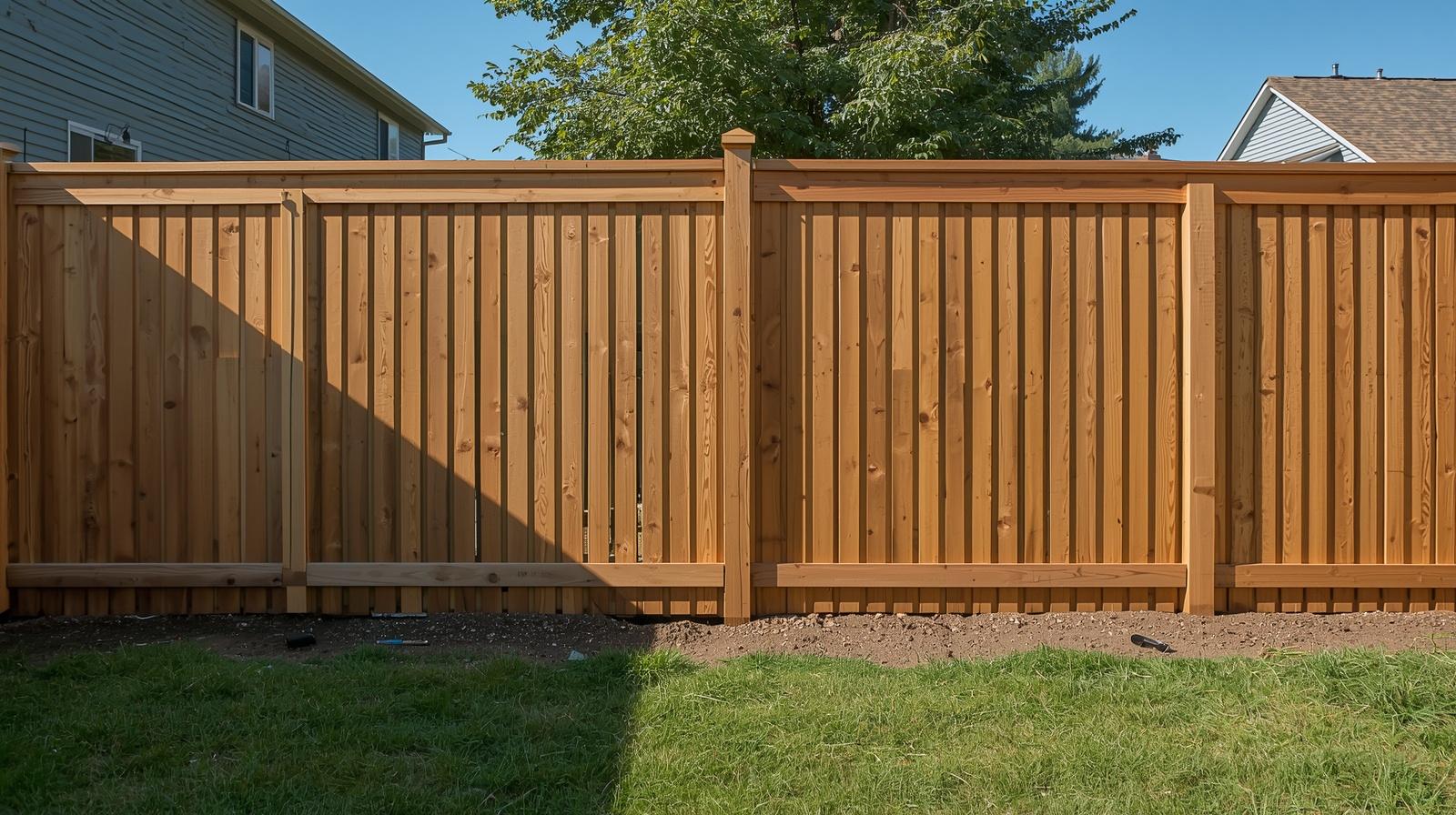
Lake Carroll is a private lakefront community in Carroll County where fencing decisions carry more weight than in a typical residential neighborhood — HOA guidelines, waterfront lot conditions, and the goal of protecting property value all factor into every project. This guide covers what Lake Carroll property owners need to know about fencing for privacy, security, and long-term value. Dach Fence serves residential customers throughout Lake Carroll and the surrounding northwest Illinois area.
Why Fencing at Lake Carroll Is Different
Lake Carroll isn't a standard subdivision. It's a private, gated lakefront community in Carroll County built around a 640-acre lake, and that setting shapes every fencing decision in ways that don't apply to typical residential neighborhoods.
Properties here range from year-round primary residences to seasonal cabins and weekend getaways. Lot sizes, terrain, and proximity to the water vary widely across the community. Some properties sit on level ground away from the shoreline; others are on sloped, wooded lots right at the water's edge. The conditions on any given lot — soil type, moisture exposure, slope, and tree coverage — all affect what kind of fence makes sense and how it needs to be installed to last.
On top of those site-specific variables, Lake Carroll's community structure adds a layer that most residential fence projects don't have: HOA guidelines. The Lake Carroll Association governs what property owners can and can't do with their land, and fencing is among the improvements that typically require association review and approval before installation begins. Getting that step right from the start avoids costly changes after the fact.
HOA Guidelines: The First Step, Not an Afterthought
Before selecting a material, measuring a fence line, or contacting a contractor, Lake Carroll property owners need to review the Lake Carroll Association's current guidelines on fencing. These rules exist to protect the community's aesthetic character and property values — the same goals most property owners have for their own lots.
HOA fencing guidelines typically address:
Approved materials and styles — some communities restrict visible materials to specific options or prohibit certain styles entirely
Height limits — maximum fence heights often differ for front yard, side yard, and rear yard placements
Setback requirements — how far a fence must sit from property lines, easements, and the shoreline
Color and finish restrictions — particularly common in communities where visual consistency matters
Approval process — most HOAs require a written application, site plan, and association board approval before installation
The association's current rules are the governing document — not what a neighbor installed a few years ago, and not general assumptions about what's typical. Rules update over time, and the only way to know what's currently allowed is to consult the most recent version directly.
A fence contractor with experience working in private lakefront communities understands how to help property owners navigate this process. Submitting an application that includes accurate site plans, material specifications, and fence dimensions makes approval faster and smoother.
Privacy Fencing at Lake Carroll: Balancing Seclusion and Community Character
Privacy is one of the most common reasons Lake Carroll property owners look at fencing. Lots in a lakefront community sit close to one another, shared green spaces and pathways mean neighbors pass nearby, and seasonal activity brings more foot traffic through the community than a typical residential neighborhood sees.
A fence that creates genuine privacy without blocking views, overwhelming the natural setting, or conflicting with HOA guidelines requires more thought than a standard backyard privacy fence in a suburban neighborhood.
Wood Privacy Fencing
Wood fencing suits the natural, wooded character of many Lake Carroll lots particularly well. Cedar is the strongest choice for waterfront and near-water properties — its natural moisture resistance gives it an advantage over other species in the damp conditions common to lakefront lots, where ground moisture is higher and humidity off the water accelerates deterioration in unprotected wood.
A shadowbox or board-on-board style gives a finished appearance from both sides of the fence — relevant on shared property lines where the neighbor's view of the fence matters as much as the homeowner's. Semi-privacy styles with planned spacing between boards reduce the visual mass of a wood fence while still limiting direct sightlines.
The maintenance commitment is the honest trade-off. Cedar fences near water need sealing or staining regularly — every two to three years — to stay ahead of the moisture exposure that lakefront lots accumulate. Deferred maintenance on a waterfront wood fence shows faster than the same fence on a dry inland lot.
Vinyl Privacy Fencing
Vinyl is a strong alternative for Lake Carroll property owners who want the privacy of a solid fence without the maintenance demands of wood. It doesn't absorb moisture, doesn't rot, and holds its appearance through years of lakefront weather without painting or sealing.
In a community where many properties are seasonal, low-maintenance materials carry extra practical value. A vinyl fence doesn't need attention between visits the way a wood fence does — there's no concern about a season of moisture exposure doing damage while the property sits vacant.
Quality remains the critical variable. Premium vinyl stays flexible in cold Illinois winters and resists cracking under the impact and weather stress common to lakefront properties. Cheaper vinyl doesn't hold up the same way, and the failure is more visible at a property where appearance and value are closely connected.
Security Fencing at Lake Carroll: Protecting a Property With Real Value
Lake Carroll properties represent meaningful investments, and many of them sit vacant for portions of the year — which creates a security consideration that year-round primary residences don't face in the same way. A fence that defines property boundaries, limits access to the lot, and signals that the property is maintained and monitored addresses real security concerns without turning a lakefront retreat into something that looks fortified.
Defining the Property Perimeter
A fence that clearly defines where a property begins and ends is a basic security measure that also serves a practical purpose in a community where lots sit close together and shared paths run through the area. A defined perimeter reduces casual encroachment, makes the property's boundaries clear to visitors and passersby, and contributes to the overall sense that the property is actively maintained.
Aluminum ornamental fencing is well-suited to perimeter definition at Lake Carroll. It doesn't rust — an important quality for a lakefront property where moisture exposure is constant — and its open design maintains visibility while still creating a clear boundary. It looks intentional and well-maintained without projecting an industrial or unwelcoming aesthetic.
Gate Access for Seasonal Properties
Gates on Lake Carroll properties serve a more deliberate function than they do on typical residential lots. A property that sits vacant between visits benefits from a gate that requires deliberate effort to enter — not a barrier that serious actors couldn't overcome, but a clear signal that the property is controlled and that access requires authorization.
Driveway gates, garden gates, and side access gates all contribute to that perimeter. Hardware quality matters for seasonal properties in particular: a gate latch or hinge that freezes in an Illinois winter, fails after months of disuse, or corrodes from constant moisture exposure becomes a security gap at the moment when the property is most vulnerable.
Chain Link for Utility and Storage Areas
Some Lake Carroll properties include outbuildings, boat storage areas, tool sheds, or utility equipment that benefit from a more utilitarian fence around them — separate from whatever fencing faces the street or neighbors. Chain link is a practical and cost-effective choice for these applications. It's durable, low-maintenance, and can be installed in configurations that secure a specific area without affecting the appearance of the property's main fencing.
How Fencing Affects Property Value at Lake Carroll
In a community where properties are bought and sold on the basis of appearance, setting, and condition, fencing is a visible signal of how well a property has been maintained. A fence that is attractive, well-built, and consistent with the community's character adds to perceived value. One that is weathered, listing, or out of place in the setting does the opposite.
A few principles worth keeping in mind:
Material quality shows over time. A premium cedar fence that has been maintained, or a quality vinyl installation that still looks sharp after ten years, contributes to a property's presentation in a way that a deteriorated or patched fence doesn't. At the point of sale, buyers notice.
Consistency with the community matters. A fence that fits the natural, wooded aesthetic of Lake Carroll — in material, color, and style — reads as an asset. One that looks out of place with the setting or the neighboring properties is a neutral at best and a detractor at worst.
A fence that functions well is worth more than one that doesn't. Gates that latch, panels that are level, posts that are plumb — these details matter to buyers evaluating a property. A fence that is structurally sound and fully functional is part of a well-maintained property. One that needs repair is a line item in a negotiation.
Proper installation protects the investment. A fence installed with correct post depth, proper footings, and quality hardware at Lake Carroll holds its appearance and function across years of lakefront weather. One installed to minimum specs shows wear quickly in a moisture-heavy environment. The installation quality is as important as the material choice.
What Lake Carroll's Environment Demands From Fence Materials
Lakefront properties in northwest Illinois face a combination of conditions that inland residential lots don't:
Higher baseline moisture. Ground moisture near the lake is higher than on properties further from the water. Wood absorbs this moisture through repeated wet-dry cycles. Metal hardware corrodes faster in sustained moisture. Materials and hardware that resist these effects — aluminum, quality vinyl, galvanized or stainless steel hardware — hold up better over time than those that don't.
Illinois freeze-thaw cycles. Carroll County winters are cold, and the freeze-thaw cycle that affects all northern Illinois fencing applies here. Posts need to be set below the frost line — a minimum of 36 to 42 inches — with proper concrete footings. On sloped or wooded lots where soil composition varies, getting post depth right is even more important.
Wind off the water. Lakefront lots without full tree coverage on the water-facing side can experience wind loads that are meaningfully higher than inland properties see. Solid privacy fencing on exposed lots needs post sizing and footing depth that accounts for that additional load.
Wooded lot conditions. Tree roots, uneven ground, and soil variation on wooded lots complicate post installation. A contractor familiar with wooded lakefront properties plans for these conditions rather than discovering them mid-installation.
Getting Started: What the Process Looks Like
For a Lake Carroll property owner, the fence installation process has a few steps that differ from a standard residential project:
Start with the HOA. Review current guidelines, submit the required application with accurate dimensions and material specifications, and get written approval before moving forward. Build in enough lead time for the association's review process — it varies, and rushing this step creates problems.
Confirm property lines. On wooded or sloped lots where original survey markers may be obscured, verifying boundaries before installation prevents placement errors that are expensive to correct.
Contact JULIE. Illinois utility locates are required before any digging, and they apply to lakefront properties the same as any other. Underground electrical service to lakefront cabins and outbuildings, buried propane lines, and other utilities need to be located before posts go in.
Work with a contractor who knows the site type. Wooded, sloped, moisture-heavy lakefront lots have installation challenges that a contractor experienced only with flat suburban residential properties may not anticipate. Asking about experience with similar properties is worth doing before committing.
Get a Free Estimate From Dach Fence
Whether you're adding a privacy fence to a Lake Carroll lot, securing a seasonal property with perimeter fencing and a gated entry, or replacing aging fencing that no longer reflects the quality of the property, Dach Fence brings the experience to plan and install a fence that holds up in lakefront conditions and fits the community's character.
We serve residential customers throughout Lake Carroll and across northwest Illinois and the broader northern Illinois region. Every project starts with a free estimate and a practical conversation about what the property needs.
Contact Dach Fence at dachfence.net to schedule your free estimate.
