
Fence Installation in Davis Junction, IL: Residential & Farm Property Options
Davis Junction is a small Ogle County village surrounded by farmland, and the fencing needs here reflect that — residential lots sit alongside rural parcels and working agricultural land, each with its own requirements. This guide covers what homeowners and farm property owners in Davis Junction should know about materials, planning, and installation. Dach Fence serves residential and agricultural customers throughout Davis Junction and the surrounding Ogle County area.
Fencing in Davis Junction: Where Residential and Rural Meet
Davis Junction is a small village, but it sits at a genuine crossroads between suburban residential life and working rural land. Ogle County farming operations press up close to residential streets, larger parcels blur the line between country property and hobby farm, and the community's character is shaped by that mix of small-town residential and agricultural surroundings.
That blend creates a fencing market that doesn't fit a single template. A homeowner with a standard residential lot on a village street has different needs from a neighbor who runs horses on five acres, and both look different from a working farm operation along one of the county roads outside the village. Getting the right fence for the right property means understanding which category a project falls into — and being honest about the overlap when a property combines elements of more than one.
Northern Illinois weather applies equally across all of it. Ogle County winters push frost well into the ground, spring thaw saturates the soil, and summer storms roll through flat farmland with little to slow them down. Fences that aren't built to handle that cycle — with proper post depth, quality materials, and the right hardware — show the effects quickly.
Permit and Zoning Basics for Davis Junction
Davis Junction falls under Ogle County's zoning jurisdiction for most properties, with the village itself governing lots within the incorporated limits. The distinction matters because city and county zoning rules aren't the same, and the rules that apply depend on exactly where the property sits.
For residential properties within the village limits, a building permit is typically required for fence installation. Height limits, setback requirements from property lines and rights-of-way, and placement near easements or drainage areas all apply. Confirming the specific rules for a given address before selecting fence height or placement is a step worth taking early.
For rural and agricultural parcels outside the village limits, Ogle County zoning governs. Agricultural districts have their own standards, and fencing near public roads or section lines may be subject to county road setback requirements. Properties that sit near the boundary between incorporated and unincorporated areas should confirm which jurisdiction's rules apply before starting a project.
Illinois law requires contacting JULIE — the statewide utility locate service — before any post installation regardless of property type. Even on rural parcels where utilities seem straightforward, underground lines serving rural electric co-ops, drainage tile systems, and other infrastructure can run through areas that aren't always obvious from the surface.
Residential Fencing Options for Davis Junction Homeowners
Wood Fencing
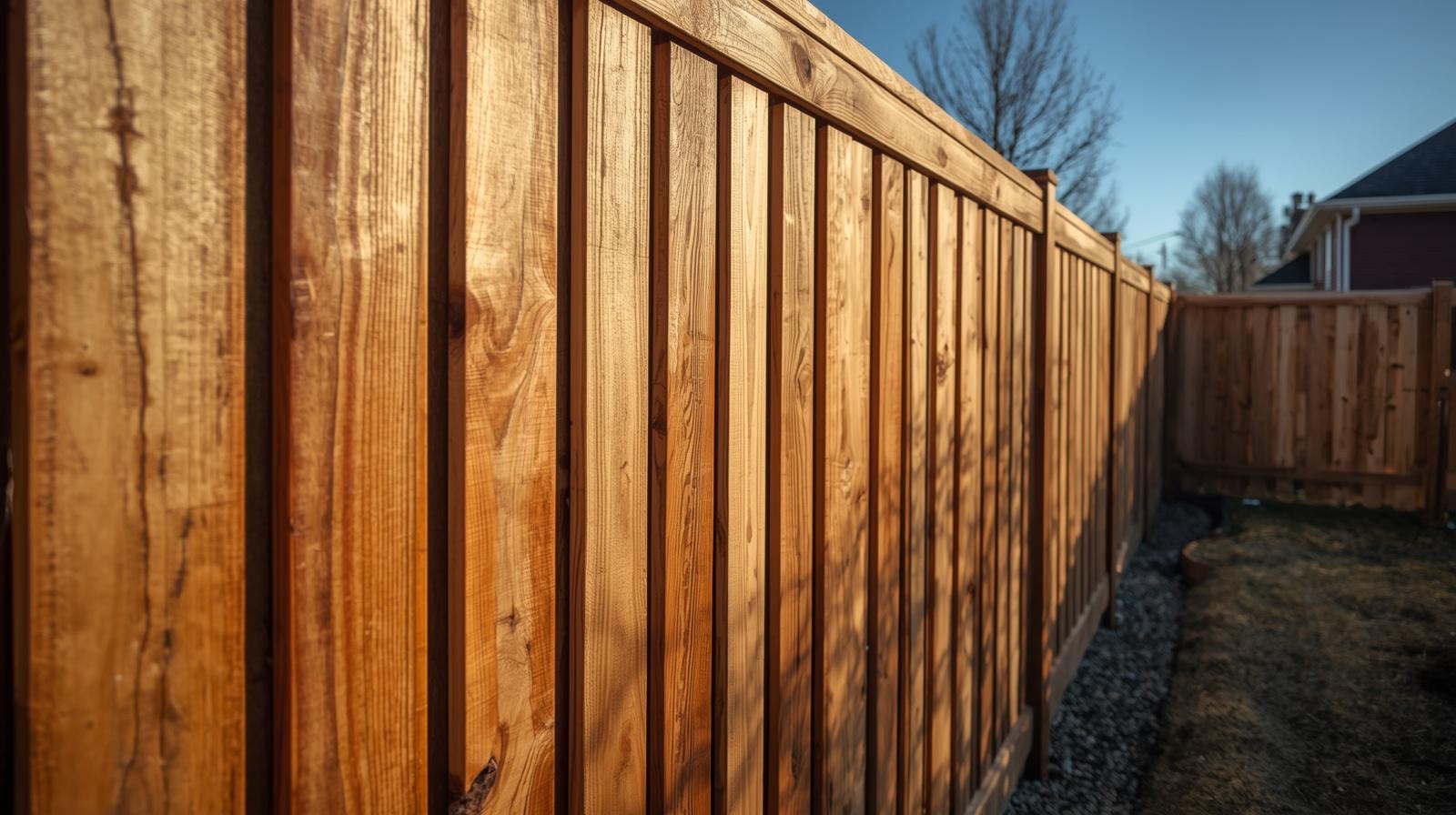
Wood fencing suits Davis Junction's residential character well. The village has the feel of a close-knit rural community where traditional aesthetics fit naturally, and a wood privacy fence or picket fence complements that character in a way that some manufactured materials don't.
Cedar is the best long-term choice for northern Illinois residential wood fencing. Its natural oils resist moisture and insect damage without chemical treatment, and it holds stain and sealant better than most alternatives. Pressure-treated pine costs less upfront and also handles outdoor exposure well when properly maintained — a practical choice for homeowners working within a tighter budget.
The maintenance reality in Ogle County is the same as anywhere in northern Illinois: wood needs sealing or staining on a regular cycle — every two to three years — to hold up against the moisture that accumulates through wet springs and the ground saturation that follows snowmelt. Without it, rot sets in at board bases and post footings faster than most homeowners expect. A wood fence that gets consistent maintenance can last 20 or more years in this climate. One that doesn't will show deterioration well before that.
Wood is the most customizable option available. Board height, profile, cap style, and spacing can all be tailored to fit the home and the lot. For homeowners who want something that looks built for the property rather than installed on it, wood delivers that in ways vinyl and aluminum don't.
Vinyl Fencing
Vinyl is a practical choice for Davis Junction homeowners who want a low-maintenance alternative to wood. It doesn't rot, doesn't need painting or sealing, and holds its appearance through northern Illinois winters without the upkeep wood demands. For families with pets or children who need a reliable backyard enclosure, vinyl privacy fencing is one of the most durable and hassle-free options available.
Quality matters significantly in this climate. Premium vinyl maintains flexibility in cold and resists cracking under impact — relevant in a rural area where wind-driven debris and the occasional branch strike are real possibilities. Cheaper vinyl formulations become brittle in sustained cold and don't hold up the same way through Ogle County winters. Paying for quality on the front end avoids cracked panels and premature replacement on the back end.
Vinyl is available in privacy, semi-privacy, and picket profiles, and it works well across a range of residential applications — backyard enclosures, front yard picket styles, and pool surrounds where low maintenance and code compliance are both priorities.
Aluminum and Ornamental Fencing
Aluminum fencing suits front yards, garden borders, and decorative applications where visibility is preferred and the goal is to define space rather than enclose it. It doesn't rust, handles northern Illinois weather reliably, and requires almost no maintenance through its lifespan.
For Davis Junction properties near drainage features, low-lying areas, or sites that collect standing water after snowmelt — not uncommon in flat Ogle County terrain — aluminum's corrosion resistance makes it a stronger long-term choice than iron or untreated steel ornamental fencing. Properties near drainage ditches or in areas with high water tables see the difference over time.
Farm and Agricultural Fencing in Davis Junction
Farm property fencing around Davis Junction serves purposes that residential fencing doesn't — livestock containment, crop field perimeters, pasture boundaries, equipment yard security, and property line definition across larger acreage. Each application has its own material and specification requirements.
Livestock and Pasture Fencing
Livestock fencing is fundamentally different from residential fencing. The materials, post spacing, wire gauges, and structural requirements all change depending on the animal being contained, the size of the pasture, and the terrain the fence crosses.
Horse fencing is among the most discussed agricultural fencing topics in Ogle County, where horse properties are common. Horses require fencing that is highly visible — they can injure themselves running into low-visibility wire — and strong enough to contain an animal that can put significant pressure on a fence line. Common options include:
Board fencing — traditional wood plank fencing that is highly visible and attractive. Three- or four-board configurations are typical for horse paddocks and pastures. Requires regular maintenance and periodic board replacement.
Vinyl rail fencing — delivers the appearance of board fencing with significantly less maintenance. Holds up well in northern Illinois weather and stays visible without painting.
High-tensile wire with wood or steel posts — cost-effective across large pasture acreage. Proper tensioning and periodic inspection keep it functional over time.
No-climb woven wire — a tight mesh wire that prevents hooves and legs from getting caught. Often used in combination with a top board rail for visibility.
Cattle, sheep, goats, and other livestock have their own fencing requirements based on animal size, behavior, and tendency to test fences. The right configuration depends on the specific animals and the way the land is used.
Field and Property Boundary Fencing
Agricultural field perimeters and property boundary lines on larger Ogle County parcels often call for fencing that covers long runs efficiently without high material or maintenance costs. High-tensile wire fencing and woven wire fencing are the most common choices for this type of application.
Post spacing, wire gauge, and whether posts are steel T-posts or wood line posts all affect the cost per linear foot and the fence's long-term durability. For property boundaries that cross varied terrain — drainage swales, gentle slopes, or areas with heavy seasonal moisture — post selection and installation depth matter more than they do on flat, dry ground.
Equipment and Storage Yard Fencing
Farm operations in the Davis Junction area often need secure perimeter fencing around equipment storage yards, outbuilding clusters, grain handling areas, and other working parts of the property. Chain link is the most practical choice for these applications — it's strong, holds up in all weather conditions, covers larger footprints cost-effectively, and is straightforward to repair if a section is damaged.
Commercial-grade chain link with appropriate post sizing and depth handles the vehicle proximity and general wear that come with working farm environments better than lighter-gauge residential installations. Slide gates or double swing gates sized for farm equipment need to accommodate the largest vehicles that will use them regularly — undersized gates become a daily operational frustration.
Temporary and Rotational Fencing
Farm operations that use rotational grazing or need to temporarily contain animals in different areas benefit from portable electric fencing or temporary panel systems. These aren't permanent installations, but they serve an important function on working farms and are worth mentioning alongside permanent fencing options.
For larger rotational grazing setups, a combination of permanent perimeter fencing and movable interior divisions gives the most operational flexibility.
How Ogle County's Climate and Terrain Affect Fencing
Davis Junction sits in flat Ogle County farmland, and the site conditions here have specific effects on fence performance that are worth understanding before installation.
Frost depth in northern Illinois runs 36 to 42 inches. Posts set above the frost line heave over time as the ground freezes and expands. On flat agricultural land, frost penetration can be more uniform and deeper than on sites with natural insulation from vegetation or slope. Getting post depth right from the start is non-negotiable.
Flat terrain means wind exposure is real. There are no hills or significant tree lines to break the wind on most Davis Junction parcels. Solid privacy fencing catches the full force of summer and fall storms. Proper post sizing, spacing, and concrete footing quality determine how well a fence handles sustained wind loads. This is particularly relevant for wood and vinyl privacy fencing on exposed residential lots.
Drainage patterns on agricultural land. Ogle County farmland is crisscrossed with drainage tile systems that aren't always documented or obvious from the surface. On farm properties, knowing where drainage infrastructure runs before any post installation is important — disrupting a drainage tile line creates problems that go well beyond the fence project itself. JULIE contacts cover public utilities, but private drainage tile on farm parcels requires the property owner's knowledge of where those systems run.
Post-winter inspection matters on farm properties. Larger fence perimeters mean more ground to cover after each winter, and a heaved post or failed section on a livestock fence is a containment problem that can't wait. Building a spring walkthrough into the annual routine — checking post plumb, wire tension, gate function, and any areas where the fence crosses drainage features — keeps small repairs small.
Get a Free Estimate From Dach Fence
Whether you're a Davis Junction homeowner planning a backyard fence on a residential lot or a farm property owner working through the fencing needs of a larger agricultural parcel, the right starting point is an honest conversation about what the property actually requires.
Dach Fence serves residential and agricultural customers throughout Davis Junction, across Ogle County, and into the broader northern Illinois region. Every project starts with a free estimate — and for farm and rural properties, that includes a practical discussion of the agricultural fencing options that make sense for the specific land and use.
Contact Dach Fence at dachfence.net to schedule your free estimate.
