
Fence Gate Maintenance in Beloit, WI: Fixing Hinges and Latches Before Freezing Weather
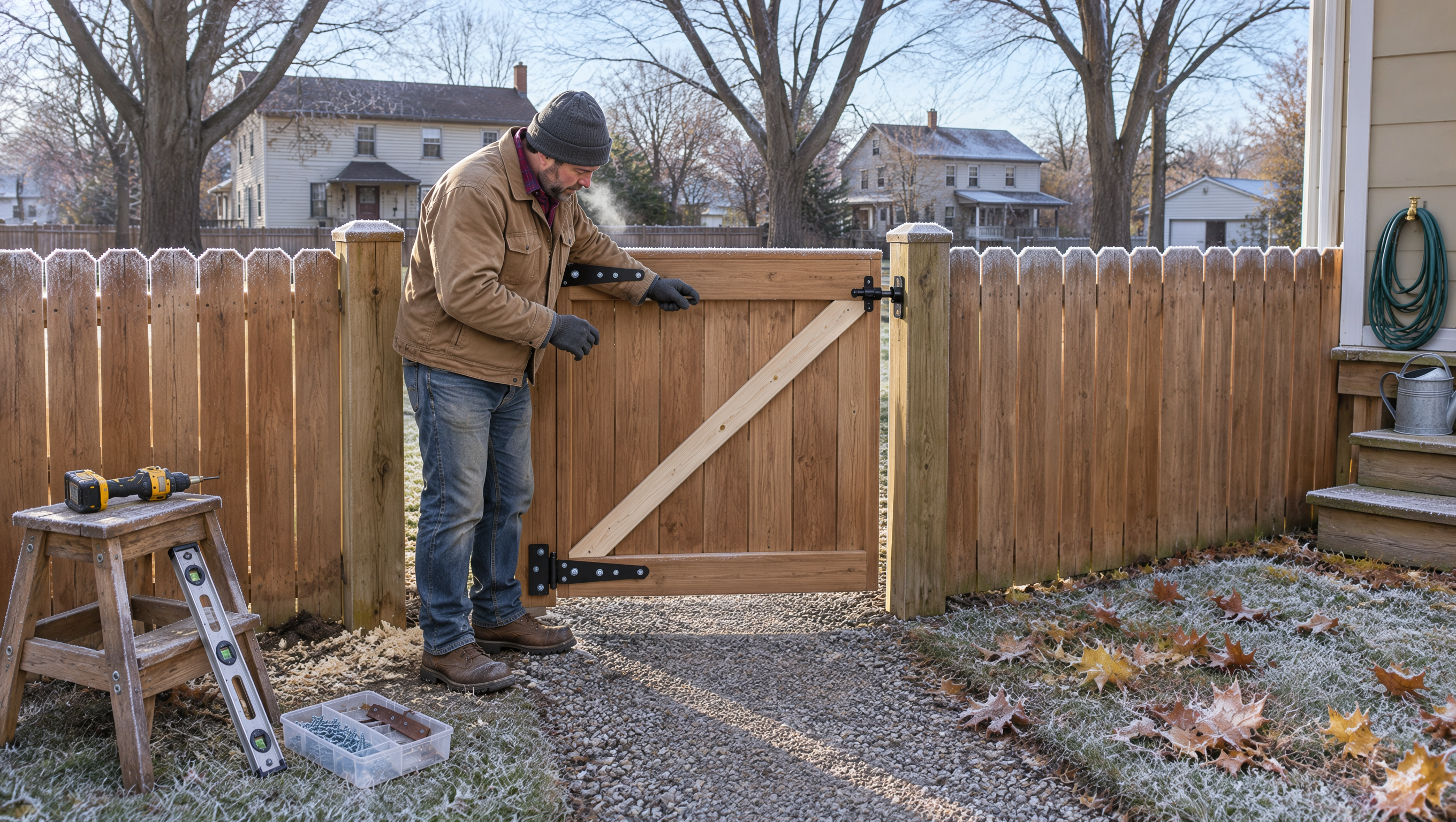
Fence gate maintenance in Beloit, WI, should focus on hinges, latches, gate posts, alignment, ground clearance, and drainage before freezing weather arrives. Small problems such as sagging, loose hardware, or a latch that no longer lines up can become harder to manage once snow, ice, and freeze-thaw conditions set in.
Why Gate Maintenance Matters Before Freezing Weather
Fence gates usually experience more wear than standard fence sections.
Every opening and closing cycle places stress on:
Hinges
Latches
Gate posts
Frames
Fasteners
By November, a gate may already show signs of movement from rain, wind, daily use, or shifting soil.
Once temperatures drop, small alignment problems may become more noticeable.
For Beloit property owners, a pre-winter gate inspection can help keep access reliable through colder weather.
Start With a Full Gate Test
Open and close the gate several times.
Pay attention to whether it:
Drags
Sticks
Sags
Swings unevenly
Fails to latch
Needs to be lifted
A gate should move smoothly without being forced.
If the same problem happens every time, inspect the full gate system instead of adjusting only one piece of hardware.
Check the Hinges First
Hinges carry much of the gate’s weight.
Inspect them for:
Loose screws
Loose bolts
Rust
Bent hardware
Movement around mounting points
Even a small amount of hinge movement can cause the gate to drop out of alignment.
If the hinge repeatedly loosens, check the gate frame and post too.
Tighten Loose Hardware
Loose hardware should be addressed before freezing weather.
Check:
Screws
Bolts
Brackets
Hinge connections
Gate stops
If the surrounding material is still sound, tightening may solve a minor issue.
If hardware will not stay secure, the problem may involve the post, frame, or damaged material around the connection.
Look for Rust and Corrosion
Metal gate hardware can be exposed to moisture and road salt.
Check:
Hinges
Latches
Locks
Bolts
Gate frames
Post bases
Surface rust may be minor.
Deeper corrosion can weaken moving parts and should be evaluated before winter adds more moisture and salt exposure.
Test the Latch
A latch should close without forcing the gate into position.
Look for:
Misalignment
Loose fasteners
Bent hardware
Difficulty engaging
If the latch no longer lines up, the latch itself may not be the real problem.
The gate, post, or frame may have shifted.
Check Locks Too
If the gate has a lock, test it several times.
Make sure it:
Engages fully
Releases smoothly
Remains aligned
For commercial or security-sensitive gates, reliable locking should be treated as a priority.
A gate that closes but cannot lock properly may create a bigger issue than a cosmetic fence problem elsewhere.
Look for Gate Sagging
Sagging is one of the most common gate problems.
Signs include:
One corner sitting lower
Uneven gaps
The latch missing the receiver
The bottom scraping the ground
Possible causes include:
Loose hinges
Weak gate posts
Frame movement
Worn hardware
The underlying cause should be identified before repeated latch adjustments are made.
Inspect the Gate Posts
Gate posts carry more stress than ordinary fence posts.
Check them for:
Leaning
Movement
Rot
Corrosion
Soil erosion
A small post shift can change the alignment of the entire gate.
If the gate keeps going out of adjustment, the post may be the real problem.
Check the Ground Around Gate Posts
Look closely at the base of each gate post.
Watch for:
Mud
Standing water
Soil gaps
Erosion
Exposed concrete
Wet or unstable soil can contribute to post movement.
Freeze-thaw cycles may make this worse as temperatures move above and below freezing.
Review Drainage Around the Gate
Gate entrances often collect water.
Check for:
Low spots
Downspout runoff
Mud
Standing water
Water crossing the opening
Once freezing weather arrives, this water can turn to ice.
That may reduce clearance, create slippery access, and make gate operation more difficult.
Check Ground Clearance
A gate that barely clears the ground in fall may begin dragging in winter.
Reduced clearance can come from:
Snow
Ice
Frost movement
Gravel shifting
Check the entire swing or sliding path.
Adequate clearance helps keep the gate functional as conditions change.
Clear Leaves and Debris
November leaves can collect under and around gate openings.
Remove:
Leaves
Twigs
Mud
Gravel buildup
Other debris
Debris can cause temporary dragging and may hide drainage or clearance problems.
Wet leaves can also freeze into a hard layer later.
Inspect Wood Gates
Wood gates should be checked for:
Rot
Warping
Loose boards
Cracks
Frame movement
Pay extra attention near:
Hinges
Latches
Bottom rails
Post connections
A warped or rotted gate may not stay aligned even after the hardware is adjusted.
Inspect Vinyl Gates
Vinyl gates should remain square and properly supported.
Look for:
Cracks
Loose components
Frame movement
Post shifting
If the gate becomes difficult to latch, inspect the whole opening before assuming the latch itself is faulty.
Inspect Chain Link Gates
Chain link gates may develop problems from:
Heavy use
Vehicle impact
Post movement
Storm damage
Check for:
Bent frames
Loose fabric
Worn hinges
Latch problems
Driveway and commercial gates deserve extra attention before winter.
Check Sliding Gates Carefully
Sliding gates need a clean and level travel path.
Remove:
Leaves
Gravel
Mud
Branches
Other debris
Inspect:
Rollers
Guides
Tracks
Fasteners
The gate should move smoothly through its full range.
Binding or jerking may become worse once snow and ice arrive.
Watch for Wind Damage
Strong fall winds can put extra stress on gate hardware.
Solid wood and vinyl gates may catch more wind than open chain link designs.
After a storm, check for:
New sagging
Loose hinges
Frame movement
Post shifting
A gate that suddenly operates differently after wind should be inspected before winter.
Check for Vehicle Impact
Gates near driveways or commercial entrances may be exposed to minor impact.
Look for:
Scrapes
Bent frames
Leaning posts
Hardware movement
Even a small bump can affect alignment.
If one side of the opening has been hit, inspect the entire gate system.
Plan Snow Storage
Think about where snow will go before winter is fully underway.
Avoid piling snow around:
Hinges
Latches
Swing paths
Sliding paths
Gate posts
A mechanically sound gate can still become unusable if snow is regularly pushed into its path.
Mark Gate Posts Near Plow Areas
Gate posts can become harder to see after snowfall.
Visible markers may help protect posts near:
Driveways
Parking lots
Commercial entrances
This can reduce accidental snowplow damage.
It is especially useful for posts close to regular plow routes.
Residential Gate Priorities
Homeowners should prioritize gates that affect:
Pet containment
Pool access
Backyard security
Driveway access
A gate that no longer latches should receive attention before minor cosmetic issues.
Reliable closure matters more once snow and ice arrive.
Commercial Gate Priorities
Businesses should focus on:
Vehicle gates
Employee entrances
Security gates
Service access
A gate that drags or fails to lock can affect both security and daily operations.
High-use gates should be inspected more often than low-traffic openings.
Repair or Replace?
Repair may be practical when the problem is limited to:
Loose hinges
A latch
Worn hardware
Minor sagging
One unstable post
Replacement may be more practical when there is:
Severe frame damage
Widespread rot
Major corrosion
Repeated alignment problems
Multiple failing components
The full gate system should be evaluated before deciding.
Use a Pre-Freezing Weather Checklist
Before colder conditions settle in, confirm that:
Hinges are secure
Latches align correctly
Locks work
Posts are stable
The frame is straight
Ground clearance is adequate
Drainage is working
Debris is cleared
Snow storage is planned
Gate posts are visible
This simple check can help prevent avoidable winter access problems.
Fix Hinges and Latches Before Winter
Gate maintenance is easier when small problems are handled before snow and ice arrive.
For Beloit property owners, November is a good time to inspect hinges, latches, posts, frames, drainage, and ground clearance so gates remain easier to use through freezing weather.
Dach Fence provides residential and commercial gate repair, fence repair, replacement, installation, wood fencing, vinyl fencing, chain link fencing, aluminum or ornamental fencing, temporary fencing, and access control when relevant.
If your fence gate in Beloit, WI, is sagging, sticking, or no longer latching properly, contact Dach Fence for a free estimate.
