
Commercial Security Gate Repair in Milton, WI: What Cold Weather Can Expose
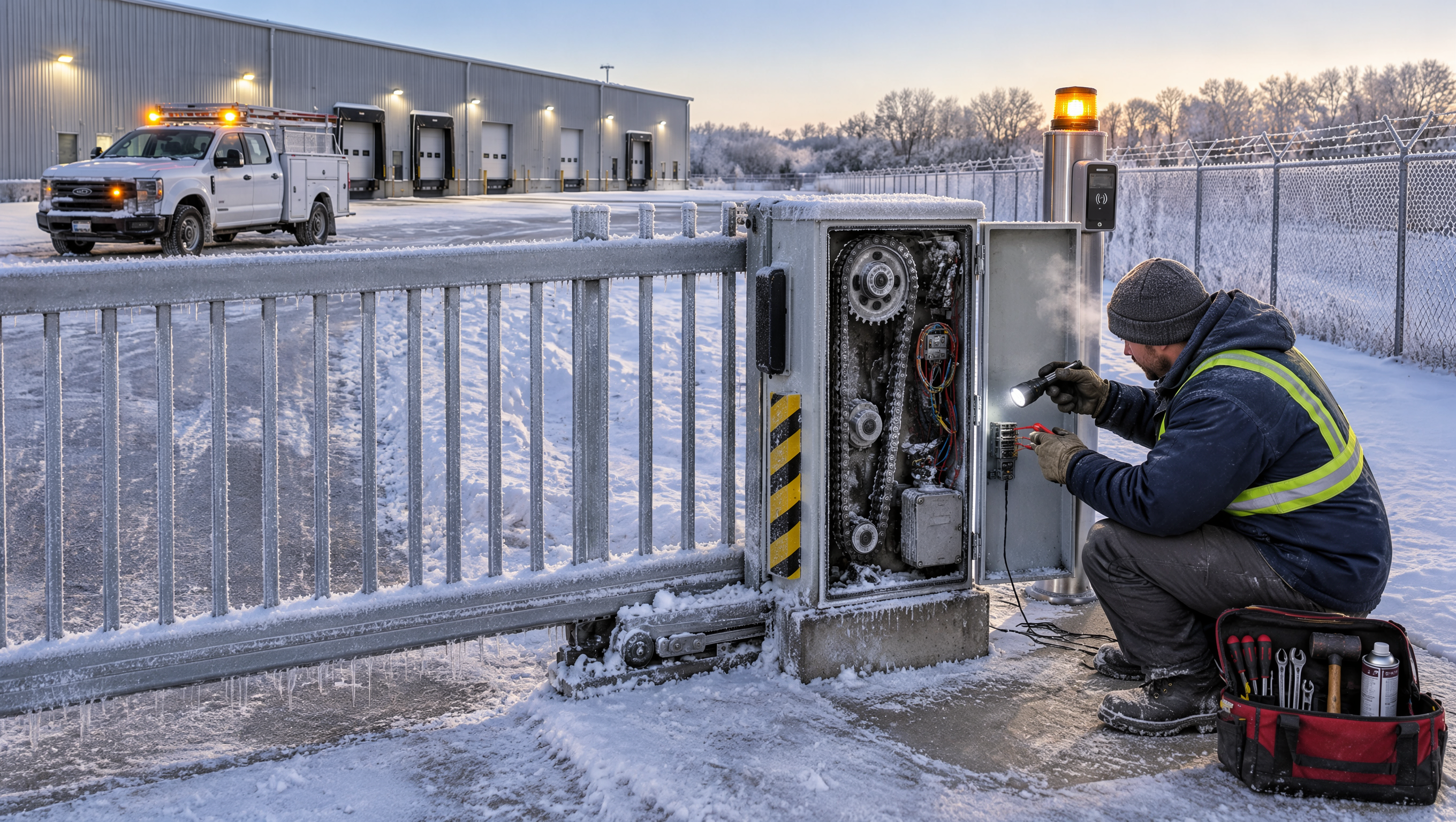
Cold weather can expose commercial security gate problems in Milton, WI, including poor alignment, dragging, stiff hardware, post movement, access-control issues, and reduced ground clearance. Fall and early winter are good times to inspect the full gate system before snow, ice, and freeze-thaw conditions make small problems harder to manage.
Why Cold Weather Can Reveal Gate Problems
A commercial security gate may work well through summer and then begin acting differently once temperatures drop.
Cold weather does not always create the problem by itself.
Instead, it can make existing issues easier to notice.
Common examples include:
Gates that begin dragging
Latches that stop lining up
Posts that shift
Rollers that move less smoothly
Hardware that feels stiff
Access-control systems that struggle because the gate is binding
For Milton businesses, these are signs that the full gate system should be inspected.
Start With Gate Alignment
Alignment is one of the first things to check.
Open and close the gate several times and look for:
Uneven gaps
Sagging
Dragging
The gate pulling to one side
Latch misalignment
A gate that no longer sits square in the opening may have a problem with the frame, hinges, rollers, or supporting posts.
Check Gate Posts for Movement
Gate posts support more weight and repeated stress than standard fence posts.
Cold weather may make existing movement more obvious.
Inspect for:
Leaning
Movement at the base
Soil gaps
Corrosion
Impact damage
If the post has shifted, the gate may no longer close or latch correctly.
Adjusting only the hardware may provide a temporary fix if the real issue is structural.
Watch for Freeze-Thaw Ground Movement
Wet ground can move as temperatures rise and fall around freezing.
This may affect the area around:
Gate posts
Sliding tracks
Pavement edges
Gravel entrances
Look for:
Raised ground
Sunken areas
Soil movement
Cracks near the entrance
Even a small change in ground height can affect gate clearance.
Check Ground Clearance
A gate that barely clears the ground during mild weather may begin dragging once conditions change.
Reduced clearance can come from:
Frost movement
Snow
Ice
Gravel shifting
Mud freezing
Check the entire travel path, not just the closed position.
This is especially important for wide commercial gates.
Inspect Hinges on Swing Gates
Swing gates depend on stable hinges and posts.
Check for:
Loose bolts
Rust
Bent hardware
Worn connections
Cold weather can make an already stiff or misaligned gate more difficult to operate.
If the hinges keep loosening, inspect the gate post and frame too.
Inspect Rollers on Sliding Gates
Sliding gates rely on smooth travel.
Check:
Rollers
Guides
Tracks
Supporting hardware
Look for:
Debris
Gravel
Ice buildup
Uneven movement
Worn components
A sliding gate that starts jerking, binding, or stopping partway through its path should be evaluated before winter conditions worsen.
Keep Sliding Paths Clear
The travel path should remain clear at all times.
Remove:
Leaves
Gravel
Mud
Snow
Ice
Other debris
Small obstructions can create extra resistance.
That resistance may place additional strain on gate hardware and operators.
Check Latches and Locks
Security gates need reliable closure.
Inspect:
Latches
Locks
Strike plates
Fasteners
A latch that suddenly stops aligning may indicate:
Gate sagging
Post movement
Frame distortion
Ground movement
Do not assume the latch itself is the only problem.
Review Gate Frames
The frame should remain straight and structurally sound.
Look for:
Bending
Twisting
Cracks
Loose joints
Vehicle impact, repeated use, or wind can weaken the frame before cold weather makes the misalignment obvious.
A damaged frame may continue to create latch and operator problems even after hardware is adjusted.
Check for Rust and Corrosion
Commercial gate hardware is often exposed to moisture and road salt.
Inspect:
Hinges
Rollers
Latches
Locks
Frames
Post bases
Bolts
Surface rust may be manageable.
Deeper corrosion can weaken moving components and should be evaluated before the gate sees heavier winter use.
Inspect Access-Control Equipment
Some commercial gates include:
Keypads
Card readers
Automatic operators
Remote entry systems
Vehicle access controls
If the gate itself is dragging or misaligned, access-control equipment may appear to be the problem even when the real issue is mechanical.
Always confirm that the physical gate moves correctly first.
Watch for Operator Strain
An automatic operator should not have to force a gate through resistance.
Warning signs may include:
Slower movement
Uneven travel
Repeated stopping
Difficulty completing a cycle
These symptoms may point to:
Misalignment
Dragging
Roller problems
Debris
Ground movement
Mechanical resistance should be addressed before it puts more stress on the access system.
Check Drainage Around the Entrance
Drainage problems can become more noticeable once temperatures drop.
Look for:
Standing water
Mud
Runoff
Low spots
Water crossing the gate path
Once that water freezes, it may interfere with gate movement or create unsafe access.
Drainage should be part of the repair review, not treated as a separate issue.
Inspect Pavement and Gravel Areas
Commercial gates often cross:
Asphalt
Concrete
Gravel
Mixed surfaces
Cold weather can reveal movement or unevenness in these areas.
Check for:
Raised edges
Cracks
Ruts
Loose gravel
These changes can reduce clearance and affect both swing and sliding gates.
Look for Vehicle Impact
Security gates are often located where vehicles turn, back up, or enter narrow spaces.
Inspect for:
Scrapes
Bent frames
Leaning posts
Damaged hardware
Even a minor collision can create alignment problems that become more obvious in cold weather.
If one side of the entrance has been hit, inspect the entire gate opening.
Review Snowplow Routes
Snow removal equipment can create new risks around security gates.
Before winter, identify:
Plow routes
Gate posts
Controls
Sliding paths
Snow storage areas
Avoid placing snow directly against gate hardware or access-control equipment.
Gate posts should remain visible even after snow accumulates.
Keep Snow Away From the Gate Opening
Snow buildup can reduce access and interfere with operation.
Avoid regular snow storage near:
Hinges
Latches
Tracks
Operators
Gate posts
Sliding gates need clear travel space, while swing gates need an unobstructed arc.
Mark Gate Posts and Controls
Commercial entrances can become harder to see during snowstorms.
Visible markers may help protect:
Gate posts
Keypads
Operator housings
Fence corners
This can reduce accidental damage from plows and service vehicles.
Check Pedestrian Security Gates Too
Vehicle gates usually receive more attention, but pedestrian gates matter as well.
Inspect whether they:
Close fully
Latch securely
Have adequate clearance
Remain aligned
An employee entrance that does not close properly can create a security issue even if the main vehicle gate is working.
Look at the Fence Around the Gate
The gate may not be the only part moving.
Inspect nearby:
Posts
Rails
Chain link fabric
Panels
Fasteners
If the surrounding fence has shifted, it may pull the gate opening out of alignment.
Repairing only the gate may not solve the full problem.
High-Use Gates Need Extra Attention
Busy commercial gates may open and close many times each day.
Frequent use can accelerate wear on:
Hinges
Rollers
Latches
Operators
Fasteners
Cold weather can make these developing problems more noticeable.
High-traffic entrances should be inspected more often than low-use gates.
Prioritize Security Problems First
For property managers, the most important issues are those affecting security and access.
Prioritize:
Gates that will not close
Gates that will not lock
Severe dragging
Misaligned vehicle entrances
Damaged access-control areas
Unstable gate posts
Cosmetic issues can usually wait until critical problems are addressed.
Repair or Replace?
Repair may be practical when the issue is limited to:
One hinge
A latch
A roller
Minor post movement
Localized alignment problems
Replacement may be more practical when there is:
Severe corrosion
Major frame damage
Repeated operator problems caused by the gate
Multiple failing components
Ongoing structural movement
The condition of the entire gate system should guide the decision.
Use a Cold-Weather Gate Checklist
Before winter conditions become more severe, confirm that:
Gate posts are stable
The frame is aligned
Hinges or rollers move smoothly
The latch locks correctly
Ground clearance is adequate
Sliding paths are clear
Drainage is working
Access-control equipment is protected
Snow storage is planned
Gate posts are visible
This can help prevent avoidable winter access problems.
Address Gate Problems Before Winter Gets Worse
Cold weather can expose issues that were easy to miss earlier in the year.
For Milton businesses, a gate that begins dragging, sticking, misaligning, or straining its operator should be inspected before snow, ice, and freeze-thaw conditions make the problem harder to manage.
Dach Fence provides commercial gate repair, fence repair, replacement, installation, chain link fencing, wood fencing, vinyl fencing, aluminum or ornamental fencing, temporary fencing, and access control when relevant.
If your commercial security gate in Milton, WI, is not operating correctly in colder weather, contact Dach Fence for a free estimate.
