
Commercial Gate Planning in Oregon, IL: Access Control & Security Basics
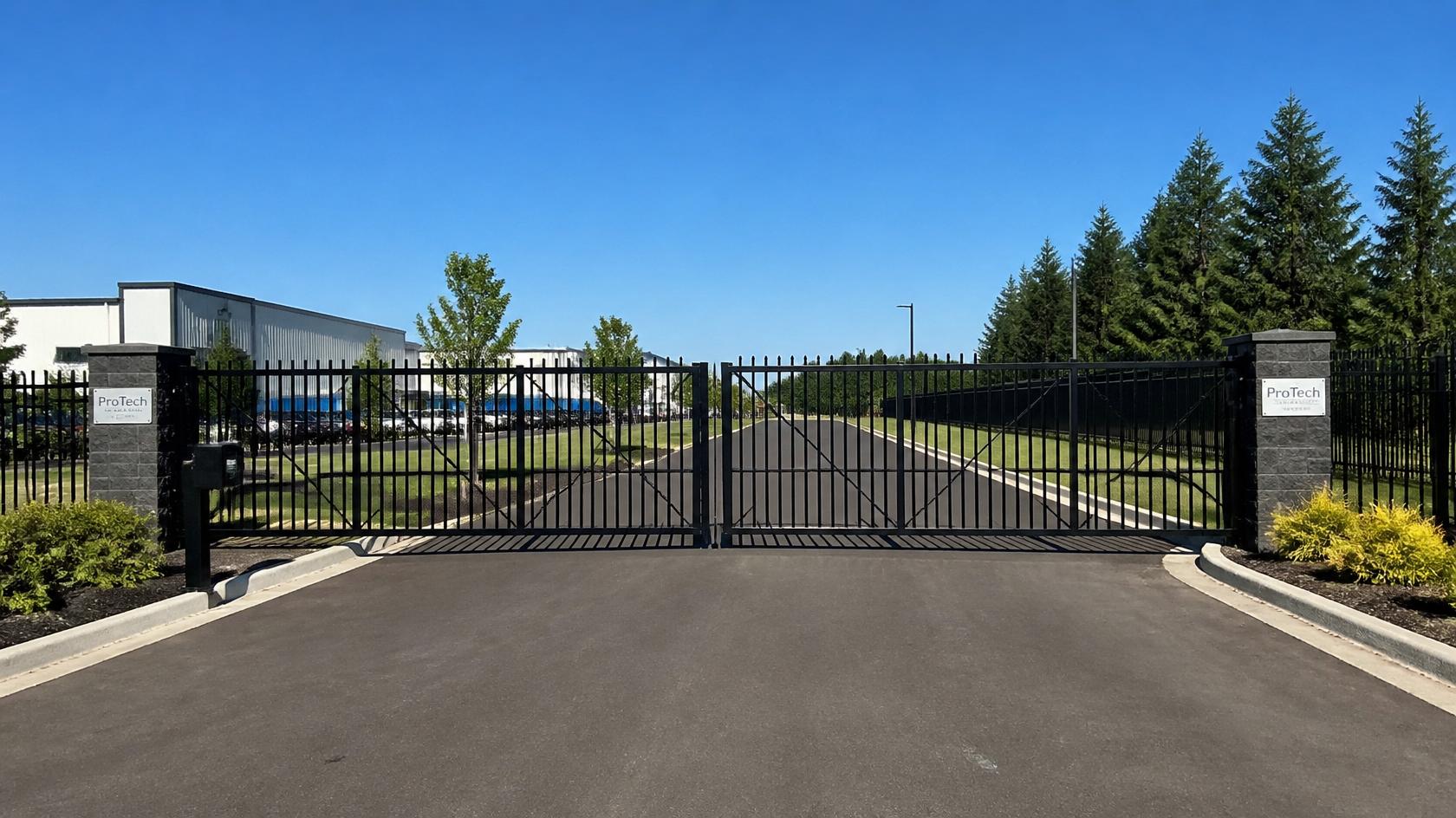
Commercial gate planning in Oregon, IL should focus on access control, security, traffic flow, gate type, permits, materials, and long-term maintenance. A well-planned gate can help businesses protect equipment, manage entry points, support deliveries, and keep daily operations running smoothly.
Why Commercial Gate Planning Matters
A commercial gate is one of the most important parts of a business fence system. The fence creates the boundary, but the gate controls how employees, vendors, customers, tenants, delivery drivers, service vehicles, and equipment move through that boundary.
For businesses and commercial property owners in Oregon, IL, gate planning should begin before installation. A gate that is too narrow, poorly placed, difficult to lock, or not built for daily use can create problems for security and operations.
The right gate should protect the property while still allowing practical access. It should fit the fence layout, traffic flow, access control needs, and daily business use.
Start with the Main Purpose of the Gate
Before choosing a gate style or access control system, business owners should define what the gate needs to do.
Commercial gates may be used for:
Employee access
Delivery entry
Equipment movement
Storage yard security
Service vehicle access
Dumpster pickup
Customer or tenant access
Restricted area control
After-hours security
Emergency access
A gate for an equipment yard has different needs than a gate for a dumpster enclosure, parking lot, office property, warehouse, apartment community, or public-facing entrance. Starting with the purpose helps determine the right gate width, material, lock type, access control option, and location.
Plan the Gate Around Daily Use
A commercial gate should work with the way the property is used every day. If the gate is not planned around daily operations, it may slow down the business instead of improving security.
Before installation, review:
Where vehicles enter and exit
Where employees park or enter
How deliveries are received
Whether trucks or trailers need turning space
Where service vehicles need access
Whether customers or tenants use the area
Whether equipment needs to move through the gate
Whether the gate affects loading areas
Whether emergency access is still practical
A gate should be placed where it supports normal movement. If vehicles need to stop at the gate, there should be enough space so they do not block traffic, parking areas, driveways, or service routes.
Manual Gates vs. Access Control
Not every commercial gate needs automated access control. Some properties only need a manual gate with a strong lock. Others need a controlled entry system to manage who can enter and when.
Manual gates may work well for:
Lower-traffic storage areas
Dumpster enclosures
Service spaces
Equipment zones
Restricted areas used by a small team
Access control may be better for properties with frequent employee, vendor, tenant, delivery, or after-hours access needs.
Access control options may include:
Keypad entry
Card reader access
Remote access
Intercom systems
Lockable commercial gates
Controlled vehicle gates
Coordination with existing security systems
Access control should be planned early. The gate, fence, power source, hardware, traffic flow, and security needs should all work together.
Choosing the Right Gate Type
Commercial gates come in different styles. The best choice depends on available space, traffic flow, security needs, and how often the gate will be used.
Swing Gates
Swing gates open inward or outward like a door. They can work well when there is enough open space for the gate panels to move.
Swing gates should be planned around driveway width, ground slope, snow buildup, traffic flow, and vehicle clearance. If the site is tight or the ground is uneven, a swing gate may need extra planning.
Slide Gates
Slide gates move sideways along the fence line. They are often used for commercial properties where vehicle access is important and swing space is limited.
Slide gates may work well for storage yards, equipment areas, parking lots, business entrances, and access-controlled driveways. They need enough side space to open properly, so the layout should be reviewed before installation.
Pedestrian Gates
Pedestrian gates provide walk-in access for employees, tenants, customers, or service workers. They may be used near employee entrances, office buildings, apartment properties, service areas, or restricted zones.
Pedestrian gates should be placed where foot traffic naturally occurs. They should include safe hardware, reliable latches, and clear walkways.
Gate Width and Vehicle Access
Gate width should be based on real daily use. A gate that works for a pickup truck may not work for trailers, delivery trucks, forklifts, mowers, dumpsters, or service vehicles.
Before choosing gate width, consider:
Vehicle size
Trailer access
Delivery truck turning space
Equipment movement
Dumpster pickup
Emergency vehicle access
Snow clearance
Future business needs
If a gate is too narrow, it can cause daily frustration and increase the risk of impact damage. Planning the correct width from the start can help prevent problems later.
Security Planning for Commercial Gates
Commercial gates often play a key role in property security. The gate should match the level of protection the property needs.
Security planning may include:
Gate height
Fence material
Locking hardware
Access control
Visibility into the property
Lighting near the entrance
Number of entry points
After-hours access
Employee and vendor access
A business that stores equipment, vehicles, tools, materials, or inventory outside may need stronger gate hardware and controlled access. A property that mainly wants to organize traffic may need a simpler gate system.
The goal is to create an access point that protects the property without making daily use harder.
Fence Material and Gate Compatibility
The gate should match the fence system and the property’s needs. A strong fence with a weak gate can reduce the overall function of the project.
Common commercial gate materials include:
Chain link gates
Steel-framed gates
Aluminum or ornamental gates
Wood privacy gates
Vinyl privacy gates
Chain link gates are practical for storage yards, equipment areas, and service zones. Ornamental gates may work well near public-facing entrances. Wood and vinyl gates can provide privacy or screening, but wider openings need proper support and strong hardware.
The gate material should match the desired security level, appearance, maintenance needs, and daily use.
Access Control and Traffic Flow
Access control works best when traffic flow is planned correctly. If drivers must stop at a keypad, card reader, or intercom, the gate area needs enough space for safe waiting and turning.
Access control planning should consider:
Where vehicles stop
Whether drivers can reach the keypad or reader safely
Whether the gate opens quickly enough for regular traffic
Whether vehicles can exit safely
Whether pedestrians use the same area
Whether emergency access is maintained
Whether snow or ice could block the entry path
A well-planned access control system should make entry more secure without creating backups or confusion.
Safety Considerations
Commercial gates are heavy-use features. They should be safe for employees, drivers, vendors, visitors, and service providers.
Safety planning may include:
Clear gate opening paths
Proper gate width
Strong hinges or rollers
Reliable latches and locks
Safe pedestrian access
Visibility near driveways
Lighting near gate areas
Snow and ice clearance
Emergency access planning
If vehicles and pedestrians use the same area, the layout should reduce conflicts. In some cases, a separate pedestrian gate may be helpful.
Permit and Site Planning
Commercial gate installation in Oregon should include permit and site planning before work begins. If the gate is part of a new fence, replacement fence, commercial site improvement, access-controlled entry, or security upgrade, property owners should confirm current local requirements.
A useful site plan may include:
Fence and gate location
Gate width
Gate swing or slide direction
Property lines
Driveways and access points
Existing buildings
Parking areas
Storage zones
Dumpster areas
Utility locations
Electrical needs for access control
Commercial gate projects should be reviewed early so the layout, permits, access, and installation plan work together.
Midwest Weather and Long-Term Durability
Commercial gates in Oregon, IL need to handle Midwest weather. Wind, rain, snow, ice, storms, freeze-thaw cycles, and seasonal wear can affect posts, hinges, rollers, tracks, latches, locks, and access control equipment.
Wide gates and solid privacy gates can be affected by wind. Snow and ice can block swing paths or slide tracks. Freeze-thaw cycles can affect gate alignment over time.
A durable gate installation should include strong posts, proper hardware, drainage awareness, and enough clearance for seasonal conditions.
Maintenance After Installation
Commercial gates should be inspected regularly because they move often and experience more stress than fixed fence sections.
Maintenance may include checking:
Gate alignment
Hinges
Rollers
Tracks
Latches
Locks
Posts
Access control hardware
Snow or ice buildup
Impact damage
Small gate issues can become larger security or access problems if ignored. Regular maintenance helps keep the gate safe, secure, and easy to use.
Cost Factors for Commercial Gate Planning
Commercial gate cost depends on more than the gate itself. The layout, hardware, access control, fence connection, and site conditions can all affect the project.
Common cost factors include:
Gate type
Gate width
Gate material
Manual or access-controlled operation
Locks and hardware
Fence connection
Power or electrical needs
Site conditions
Traffic flow requirements
Permit or planning needs
Security level
The most accurate estimate comes from reviewing the property, gate location, business operations, and access needs before installation begins.
Contact Dach Fence for Commercial Gate Planning in Oregon, IL
Commercial gate planning in Oregon, IL should focus on access control, security, gate type, traffic flow, permits, materials, weather, and long-term maintenance. Whether your property needs a manual gate, slide gate, swing gate, pedestrian gate, chain link gate, ornamental gate, access control, commercial fencing, fence repair, or fence replacement, the right plan can make the project more secure and practical.
Dach Fence helps business owners, property managers, and commercial property owners choose gate and fencing solutions built for real use and Midwest weather.
For commercial gate planning and installation in Oregon, IL, contact Dach Fence today for a free estimate. Visit dachfence.net to get started.
