
Commercial Gate Access in Monroe, WI: Preparing for Ice and Cold Weather
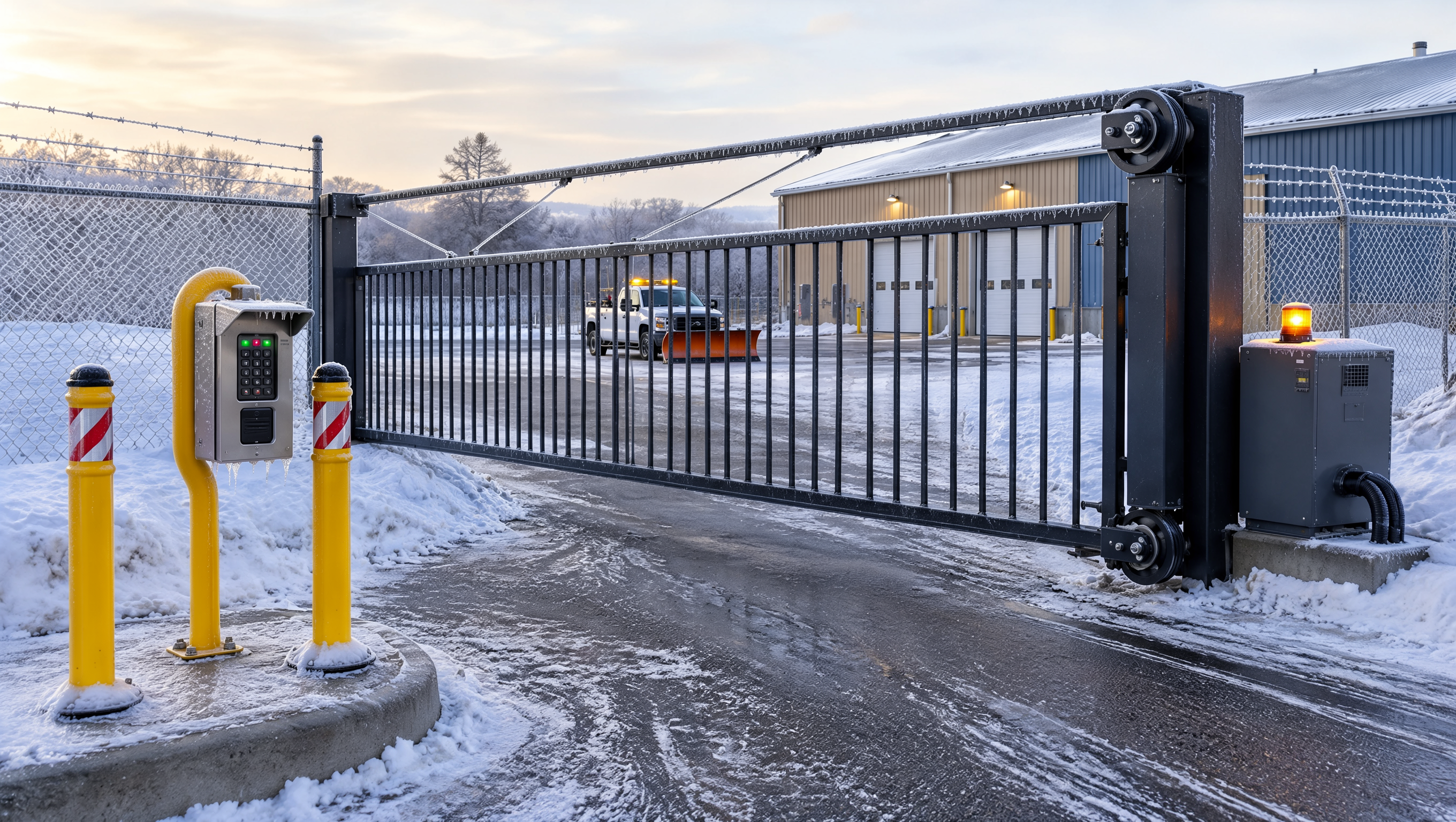
Commercial gate access in Monroe, WI, can become less reliable when ice, snow, frozen ground, and cold-weather debris interfere with movement. Fall is a good time to inspect gate alignment, clearance, hinges, rollers, latches, drainage, access-control equipment, and snow removal routes before winter conditions create access problems.
Why Cold Weather Can Affect Commercial Gates
Commercial gates work harder than most other parts of a fence.
They may open many times a day for:
Employees
Delivery vehicles
Service trucks
Customers
Maintenance crews
Equipment
When winter arrives, even a small problem can become more noticeable.
Snow, ice, frost, frozen gravel, and shifting ground can all affect how smoothly a gate operates.
For Monroe business owners and property managers, fall is the right time to check the full gate system before access becomes more difficult.
Start With a Full Gate Inspection
Open and close each commercial gate several times.
Pay attention to:
Alignment
Clearance
Movement
Noise
Resistance
Latching
A gate should move through its full path without dragging, sticking, or needing to be lifted.
If operation already feels rough in fall, winter conditions may make the problem worse.
Check Gate Alignment
A gate that sits slightly out of position can become harder to use once ice or snow builds up.
Look for:
Sagging
Uneven gaps
A frame that no longer sits square
Latch misalignment
Contact with the ground
Misalignment may come from the gate itself, but it can also be caused by a shifting post.
The full support system should be inspected before adjusting only the latch.
Inspect Gate Posts
Gate posts carry more stress than standard fence posts.
They support moving weight and absorb force every time the gate opens or closes.
Check for:
Leaning
Movement
Soil erosion
Corrosion
Impact damage
Loose support
If a gate repeatedly goes out of alignment, the post may be the real problem.
A stable gate starts with stable supports.
Check Ground Clearance
Ground clearance is one of the most important winter concerns.
A gate that barely clears pavement, gravel, or soil in fall may drag once:
Snow builds up
Ice forms
Gravel shifts
Frost changes the ground surface
Swing gates need enough room through their entire arc.
Sliding gates need a clear and level travel path.
Extra clearance now can make winter access much easier.
Clear the Gate Travel Path
Before winter, remove anything that may interfere with movement.
This includes:
Leaves
Gravel
Mud
Weeds
Small branches
Debris
Sliding gates are especially sensitive to buildup along the travel path.
Snow and ice can combine with existing debris and make the gate difficult to operate.
A clean area is easier to maintain once winter starts.
Inspect Hinges
Swing gates depend on strong hinges.
Check for:
Loose bolts
Bent hinge plates
Rust
Wear
Missing fasteners
A loose hinge can allow the gate to sag.
Cold weather may not create the original problem, but snow and ice can make the effects more noticeable.
If the hinge is pulling away from the gate or post, the surrounding structure should also be inspected.
Check Rollers and Guides
Sliding gates may rely on rollers, tracks, guides, or other moving components.
Inspect for:
Rough movement
Wear
Loose hardware
Debris
Damage
Make sure the gate moves smoothly before winter.
Ice buildup around a gate that is already difficult to move can create operational problems quickly.
Review Latches and Locks
Commercial gates should close and secure consistently.
Check whether:
The latch lines up
The lock works
The gate stays closed
Hardware is secure
A latch problem may be caused by wear, but it may also indicate that the gate or post has shifted.
Do not assume the latch itself is the only issue.
Test Access-Control Equipment
Some commercial gates use systems such as:
Keypads
Card readers
Remote entry
Automatic operators
Vehicle access controls
Fall is a good time to test these components before cold weather arrives.
The physical gate should move smoothly first.
Access-control equipment cannot compensate for a gate that drags, binds, or sits out of alignment.
Keep Access-Control Areas Clear
Snow and ice can block access-control components.
Before winter, make sure there is enough room around:
Keypads
Readers
Sensors
Operators
Control boxes
Avoid creating snow storage areas directly around these components.
Commercial users should be able to reach the system safely even after snowfall.
Check Drainage Around Gate Entrances
Water can become a major winter access problem.
Look for:
Standing water
Low spots
Mud
Parking lot runoff
Downspout discharge
Water that collects in the gate area may freeze.
That can create:
Slippery surfaces
Blocked movement
Frozen hardware areas
Reduced ground clearance
Improving drainage before winter can help prevent repeated icing.
Watch for Ice-Prone Areas
Some gate entrances freeze more easily than others.
Pay attention to sections that remain shaded or collect runoff.
Common trouble spots include:
Low pavement
Gravel entrances
Areas near roof drainage
Slopes
Gate stops
Identifying these areas in fall makes it easier to plan snow and ice management.
Inspect Pavement and Gravel Transitions
Commercial gates often cross different surfaces.
A gate may move from:
Pavement to gravel
Concrete to soil
Asphalt to a sloped area
These transitions can change over time.
Loose gravel or uneven surfaces may reduce gate clearance.
Correcting these problems before winter can help prevent dragging once frost or snow arrives.
Plan Snow Removal Routes
Snow removal should be coordinated with the gate layout.
Before winter, decide:
Where plows will travel
Where snow will be pushed
Which gates need priority access
Where snow piles can be stored
Avoid pushing snow into the gate opening or along a sliding gate's travel path.
A well-functioning gate can still become unusable if snow is stored in the wrong place.
Protect Gate Posts From Snowplows
Gate posts near entrances are vulnerable to impact.
Once snow builds up, they may be harder for plow operators to see.
Consider marking:
Gate posts
Fence corners
Gate stops
Access-control equipment
Visibility can help reduce accidental damage during winter maintenance.
Keep Heavy Snow Away From the Gate
Large snow piles can block movement and put pressure on the gate system.
Avoid placing compacted snow directly against:
Gate frames
Posts
Sliding paths
Fence connections
Melting and refreezing can make snow piles heavier and more difficult to remove.
Planning snow storage before winter is easier than clearing a blocked gate later.
Check for Rust and Corrosion
Metal gate components should be inspected before road salt and winter moisture increase exposure.
Look for corrosion on:
Hinges
Latches
Rollers
Frames
Bolts
Posts
Commercial gates near streets or parking lots may receive more salty runoff.
Surface corrosion should be monitored before it affects moving or structural parts.
Inspect Vehicle Impact Areas
Commercial entrances are exposed to regular traffic.
Check for damage from:
Trucks
Trailers
Forklifts
Service vehicles
Snow removal equipment
Even minor impact can cause:
Bent frames
Leaning posts
Misalignment
Loose hardware
The gate may still open, but repeated movement can make winter operation less reliable.
Review Traffic Flow
Gate access should support how the property operates.
Consider whether vehicles have enough room to:
Approach
Turn
Stop
Enter
Exit
Winter may reduce usable space because snowbanks narrow driving areas.
A gate that works comfortably in fall may feel tighter once snow accumulates near the entrance.
Prioritize High-Traffic Gates
Some gates are more important than others.
Priority entrances may include:
Main employee access
Delivery gates
Loading areas
Emergency access
Equipment entrances
These gates should receive the most careful inspection before winter.
A failure at a rarely used service gate may be inconvenient.
A failure at the main commercial entrance can disrupt operations.
Check Pedestrian Gates Too
Commercial gate planning should not focus only on vehicles.
Pedestrian gates also need:
Proper latching
Ground clearance
Stable posts
Clear walkways
Snow and ice can make narrow access points harder to use.
Keep the area around employee and customer gates clear and safe.
Consider Emergency Access
If a gate is part of emergency or service access, it should remain dependable in winter.
Make sure:
The gate opens fully
Locks function
Snow storage does not block the route
Clearance is adequate
These areas should be included in the property's winter maintenance plan.
Reliable access matters even when the gate is not used every day.
Repair Problems Before the Ground Freezes
Some repairs become more difficult once the ground is frozen.
Fall priorities may include:
Unstable gate posts
Severe sagging
Broken hinges
Misaligned gates
Damaged rollers
Drainage problems
Waiting until the gate becomes unusable can make the repair more disruptive.
Early attention gives property managers more flexibility.
Know When Replacement May Be Better
Not every gate problem should be repaired repeatedly.
Replacement may be worth considering when there is:
Severe frame damage
Multiple failing components
Widespread corrosion
Repeated alignment problems
An outdated gate layout
Older gates may also no longer fit current traffic or access-control needs.
A replacement project can improve both reliability and daily use.
Use a Pre-Winter Commercial Gate Checklist
Before winter, confirm that:
Gate posts are stable
Gates are aligned
Ground clearance is adequate
Hinges and rollers move smoothly
Locks and latches work
Access control functions
Drainage is working
Gate paths are clear
Snow storage areas are planned
High-traffic access points are prioritized
This review can help reduce cold-weather access problems.
Prepare Commercial Gate Access Before Ice Arrives
A commercial gate should remain functional through changing weather, not just during dry fall conditions.
For Monroe business owners and property managers, checking alignment, clearance, hardware, drainage, access control, and snow removal plans before winter can help keep entrances dependable during ice and cold weather.
Dach Fence provides commercial gate repair, fence repair, installation, replacement, chain link fencing, wood fencing, vinyl fencing, aluminum or ornamental fencing, temporary fencing, and access control when relevant.
If your commercial gate in Monroe, WI, is dragging, sagging, difficult to latch, or not ready for winter access, contact Dach Fence for a free estimate before colder conditions arrive.
