
Commercial Fence Installation in Winnebago, IL: What to Consider Before Building
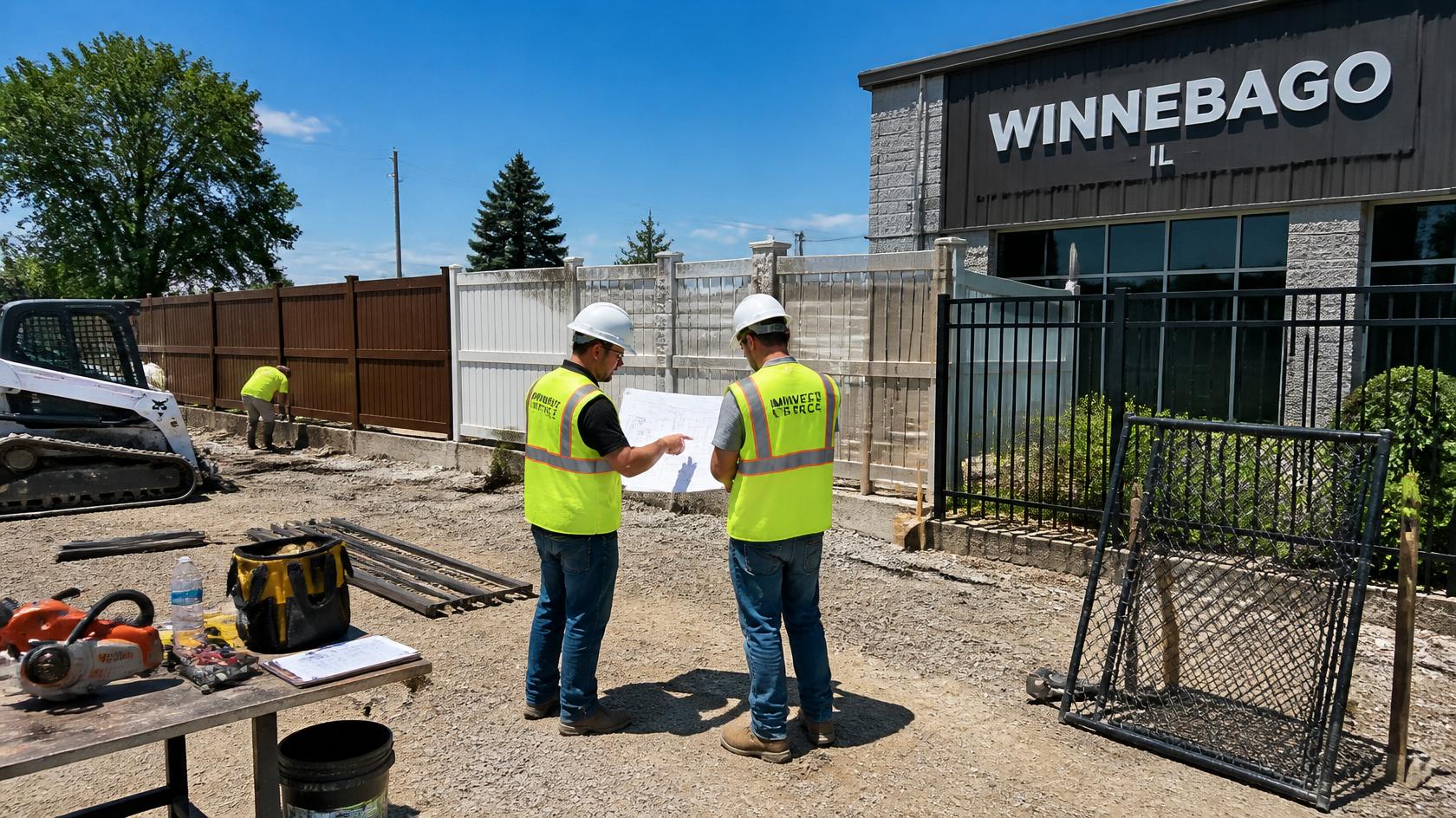
A commercial fence should protect the property without interfering with deliveries, employee access, customer traffic, or emergency routes. Before building in Winnebago, IL, business owners and property managers should consider the site layout, fence material, gates, access control, drainage, permits, Midwest weather, and long-term maintenance costs.
Start With the Purpose of the Commercial Fence
Before choosing a fence style or requesting pricing, clearly define what the fence needs to accomplish.
Commercial fencing can serve several purposes, including:
Controlling access to the property
Protecting equipment, vehicles, or inventory
Separating customer and employee areas
Creating privacy around outdoor operations
Defining property boundaries
Enclosing dumpsters or utility equipment
Improving safety around restricted areas
Securing a construction site temporarily
A decorative fence around an office entrance has different requirements than a security fence around a warehouse or equipment yard. Knowing the main purpose helps determine the appropriate height, material, gate system, and layout.
Some Winnebago businesses need a combination of solutions. For example, ornamental fencing may be used near a public entrance, while chain link fencing protects a storage area behind the building.
Review the Entire Property Layout
Commercial fence planning should begin with a detailed review of the site.
The fence must work with daily business operations rather than create new obstacles. Consider how employees, customers, delivery drivers, maintenance crews, and emergency responders move around the property.
Important site features include:
Parking lots
Driveways and vehicle entrances
Loading docks
Sidewalks
Delivery areas
Fire lanes
Utility equipment
Drainage systems
Landscaping
Snow storage areas
Future building or parking expansion
A fence installed too close to a loading area can make truck movement difficult. A gate placed in the wrong location may cause vehicles to back up into the street or block employee parking.
Planning the complete layout before construction reduces the risk of having to relocate gates or rebuild fence sections later.
Confirm Property Lines and Easements
Property boundaries should be verified before any commercial fence installation begins.
Commercial lots may include shared driveways, utility easements, drainage easements, or access agreements with neighboring properties. Building within one of these areas could interfere with utility work or violate an existing property agreement.
Property owners should review:
Current property surveys
Recorded boundary information
Utility easements
Shared access points
Municipal right-of-way areas
Existing property markers
If the boundaries are unclear, obtaining professional verification before installation is usually less expensive than correcting a fence built in the wrong location.
Choose the Right Commercial Fence Material
The right material depends on the property's security needs, appearance, exposure, and maintenance expectations.
Chain Link Fencing
Chain link is widely used for commercial and industrial properties because it is durable, practical, and suitable for large areas.
Common applications include:
Warehouses
Equipment yards
Manufacturing properties
Storage facilities
Construction sites
Athletic areas
Utility locations
Chain link fencing provides visibility across the property, which can be helpful for security monitoring. Privacy slats or screening may be added when the business needs to reduce visibility from nearby roads or properties.
Galvanized and coated options can provide additional protection against moisture and seasonal wear.
Aluminum and Ornamental Fencing
Aluminum or ornamental fencing is often chosen when appearance is as important as perimeter control.
It works well around:
Office buildings
Apartment communities
Retail properties
Professional facilities
Public-facing entrances
Landscaped commercial spaces
This style creates a polished appearance while maintaining visibility. Aluminum also resists rust, making it a practical option for Illinois properties exposed to rain, snow, and road salt.
Wood Fencing
Wood fencing can provide strong privacy and visual screening around commercial properties.
It may be used for:
Restaurant patios
Apartment outdoor areas
Dumpster enclosures
Mechanical equipment screening
Small business properties
Shared property boundaries
Wood requires more maintenance than chain link or aluminum. Regular staining, sealing, and repairs may be needed due to moisture, snow, sun exposure, and freeze-thaw conditions.
Vinyl Fencing
Vinyl provides privacy with relatively low maintenance. It is commonly used where businesses want a clean, finished appearance without regular painting or staining.
Vinyl may be suitable for:
Dumpster enclosures
Apartment communities
Outdoor customer areas
Office properties
Privacy screening
Proper post installation is especially important in exposed locations because solid panels receive more wind pressure than open fence styles.
Plan Gates Around Daily Traffic
Gate placement is one of the most important parts of commercial fence design.
A gate that is too narrow, opens in the wrong direction, or sits too close to a road can interrupt normal operations. Before selecting a gate, consider the largest vehicle or piece of equipment that must pass through it.
Commercial gate options may include:
Pedestrian gates
Employee entrances
Vehicle gates
Double-swing gates
Sliding gates
Cantilever gates
Service entrances
Emergency access gates
Delivery trucks may need a wider opening and more turning space than standard vehicles. Snowplows, landscaping equipment, trailers, and maintenance vehicles should also be considered.
Frequently used gates need durable hinges, latches, posts, and hardware that can handle repeated operation throughout the year.
Decide Whether Access Control Is Needed
Access control can improve security and make it easier to manage entry to a commercial property.
Depending on the business, a gate may be paired with:
Keypad entry
Card readers
Remote controls
Intercom systems
Automatic gate operators
Timed access
Employee credentials
Security system integration
Automatic systems are useful for apartment communities, storage facilities, warehouses, gated parking areas, and properties with restricted entrances.
The access system should be designed around actual traffic volume. A small employee lot may have different needs than a busy facility receiving multiple deliveries every hour.
Power availability, backup access, emergency operation, and winter performance should also be reviewed during planning.
Account for Winnebago’s Seasonal Weather
Commercial fences in Winnebago must handle changing Midwest conditions throughout the year.
Potential weather concerns include:
Strong wind
Heavy rain
Snow accumulation
Ice buildup
Freeze-thaw cycles
Summer storms
Storm debris
Seasonal soil movement
Wind exposure is especially important on open commercial lots. Solid privacy panels can experience significant pressure during strong winds, so post size, spacing, depth, and footing design must match the fence style and site conditions.
Snow should not be pushed directly against fence panels or gates whenever possible. Repeated pressure from plowed snow can bend materials, damage posts, and prevent gates from opening properly.
Ice can also affect gate hardware, tracks, locks, and automatic operators. Choosing commercial-grade components and planning for seasonal maintenance can reduce winter disruptions.
Review Drainage and Ground Conditions
Water movement and soil conditions can influence fence stability.
Commercial sites often have large paved areas that direct rainwater toward low sections of the property. If water collects around fence posts, it may contribute to erosion, soil movement, corrosion, or premature deterioration.
Before installation, evaluate:
Existing drainage paths
Low areas
Retention or detention areas
Downspout discharge points
Parking lot runoff
Sloped ground
Areas where snow is stored
Soft or disturbed soil
Fence construction should not block drainage systems or redirect water toward neighboring properties.
Uneven ground may also require stepped panels, custom fabrication, grading adjustments, or different installation methods.
Consider Privacy Without Creating Visibility Problems
Some commercial properties need privacy, but complete screening is not always the safest choice.
Full privacy fencing may be helpful around:
Dumpsters
Outdoor storage
Mechanical equipment
Employee break areas
Apartment amenities
Material handling zones
However, visibility may be important near driveways, sidewalks, intersections, and parking lot entrances. Drivers need clear sightlines when entering or leaving the property.
A mixed design can offer a practical solution. Solid fencing may screen sensitive areas, while chain link or ornamental fencing maintains visibility near traffic routes.
Plan Dumpster and Equipment Enclosures Carefully
Dumpster enclosures and equipment screens need to be functional as well as attractive.
The enclosure should provide enough room for:
Waste collection vehicles
Container movement
Gate clearance
Employee access
Snow removal
Routine cleaning
Equipment servicing
Gates must be wide enough for collection crews and strong enough to withstand frequent use. Posts and hardware near dumpster areas often experience more impact than standard fence sections.
Businesses should also consider airflow, drainage, surface conditions, and visibility from customer areas.
Check Permit and Site Requirements
Commercial fencing may be subject to local zoning, building, safety, or visibility requirements.
Before construction, verify rules concerning:
Fence height
Property setbacks
Corner visibility
Gate placement
Public right-of-way areas
Utility access
Pool enclosures
Emergency routes
Signage or security additions
Properties within managed developments may also have architectural or association guidelines.
Reviewing these requirements early helps prevent delays after materials have been ordered.
Understand the Main Cost Factors
Commercial fence pricing depends on more than the total linear footage.
Important cost factors include:
Fence material
Fence height
Coating or finish
Number and size of gates
Automatic gate equipment
Access control components
Ground conditions
Existing fence removal
Site accessibility
Custom fabrication
Privacy screening
Permit requirements
Concrete or pavement work
A lower-cost material is not always the least expensive option over the life of the fence. Maintenance, repair frequency, security needs, and expected service life should be considered alongside the initial installation price.
Build a Realistic Project Timeline
Commercial projects often require more coordination than residential fence installations.
A typical process may include:
Site evaluation and measurements
Review of property boundaries
Material and layout selection
Gate and access control planning
Permit or zoning review
Utility location
Material ordering or fabrication
Site preparation
Fence and gate installation
Access system setup and testing
Final walkthrough
Custom gates, specialty materials, weather delays, or permit reviews may extend the timeline.
Businesses should also plan installation around deliveries, employee schedules, customer access, and other site activity. Temporary fencing may be helpful when an area must remain secure during construction.
Plan for Long-Term Maintenance
Every commercial fence requires some level of inspection and upkeep.
Routine maintenance may include:
Checking posts for movement
Tightening gate hardware
Lubricating hinges and rollers
Inspecting locks and access equipment
Cleaning debris from gate tracks
Repairing storm damage
Removing vegetation from fence lines
Replacing damaged boards or mesh
Touching up protective coatings
After severe wind, heavy snow, ice, or a vehicle impact, the fence should be inspected for structural damage.
Addressing small problems early can help prevent a loose gate, leaning post, or damaged panel from affecting a larger section of the fence.
Get a Free Commercial Fence Estimate from Dach Fence
A successful commercial fence installation begins with careful site planning. Property boundaries, vehicle access, gate locations, security goals, drainage, seasonal weather, and future maintenance should all be considered before construction starts.
Dach Fence installs commercial chain link, wood, vinyl, aluminum, ornamental, temporary, security, and enclosure fencing for businesses and managed properties. Gate and access control options can also be included when the property requires controlled entry.
Contact Dach Fence for a free estimate and practical recommendations for your commercial fence installation in Winnebago, IL.
