
Commercial Fence Inspection After Fall Storms in Fort Atkinson, WI
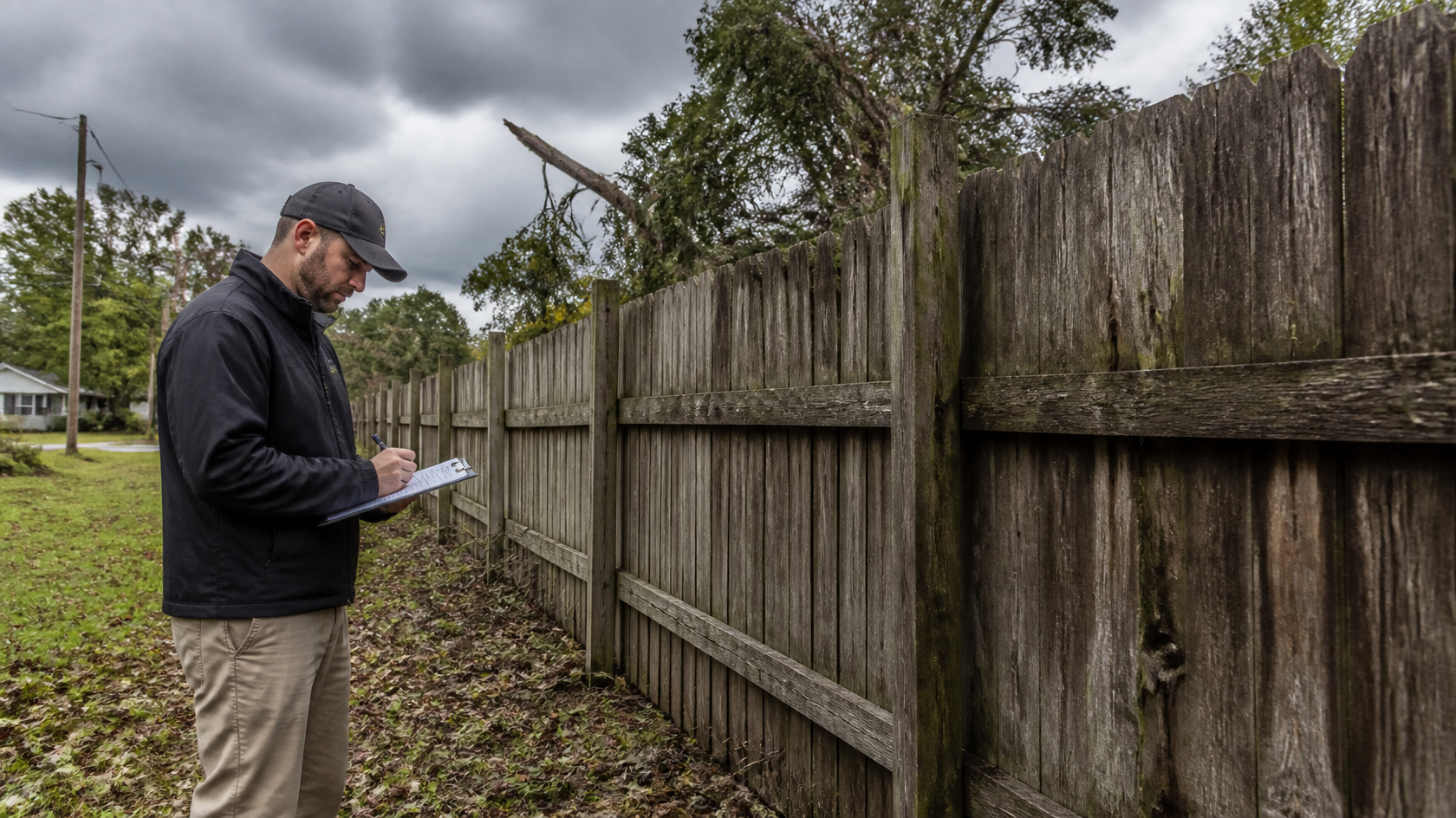
Fall storms can loosen posts, bend rails, damage gates, shift panels, and create drainage problems around commercial fencing. In Fort Atkinson, WI, a post-storm inspection should focus on perimeter security, gate function, impact damage, erosion, access-control areas, and any sections exposed to strong wind or falling branches.
Why Commercial Fences Need a Post-Storm Inspection
Commercial fences often protect more than a property boundary.
They may secure:
Equipment
Storage areas
Parking lots
Service zones
Employee areas
Restricted access points
After a strong fall storm, even minor damage can affect how well the perimeter functions.
For Fort Atkinson business owners and property managers, it is smart to inspect the fence before winter adds more stress through snow, ice, frozen ground, and freeze-thaw cycles.
A section that looks only slightly out of alignment now may become a bigger problem later.
Start With the Full Perimeter
Walk the entire fence line after the storm.
Do not focus only on the section where damage is obvious.
Check:
Posts
Rails
Chain link fabric
Privacy panels
Gates
Hinges
Latches
Locks
Access-control equipment
Storm damage can travel through connected fence sections.
A bent rail or leaning post in one area may have changed tension farther down the line.
Look for Leaning or Loose Posts
Posts are one of the most important areas to inspect.
Strong wind, saturated soil, and impact from debris can cause posts to shift.
Look for:
Leaning
Movement when pushed
Gaps around the base
Erosion
Cracks
Bent metal
Loose concrete
Corner, terminal, and gate posts deserve extra attention because they often carry more structural stress.
If one of these posts moves, a larger section of the fence may be affected.
Check for Soil Erosion
Heavy rain often accompanies fall storms.
Water moving across the property can wash soil away from fence posts.
Watch for:
Exposed concrete
Soil channels
Washed-out areas
Mud around posts
Low spots
Erosion can reduce support even when the fence still looks straight.
If several nearby posts are affected, drainage may be a larger site issue rather than an isolated fence problem.
Inspect Standing Water
Water that remains along the fence line after the storm should not be ignored.
Standing water may develop near:
Parking lots
Downspouts
Sloped areas
Service roads
Low corners
Saturated soil may become less stable.
Later in the season, that same wet ground can freeze and thaw repeatedly.
This can contribute to additional post movement.
Check Chain Link Fabric
Commercial chain link fencing can become loose after strong wind or impact.
Look for:
Sagging
Pulled fabric
Bent mesh
Missing ties
Gaps near posts
Loose tension
Fabric should remain properly secured to posts and rails.
A loose section may reduce perimeter security and can become worse under winter wind or snow pressure.
Inspect Fence Ties and Tension Hardware
Small parts can fail during storms.
Check:
Fence ties
Tension bars
Tension bands
Brace bands
Fasteners
Look for hardware that is:
Bent
Loose
Missing
Broken
Corroded
A missing tie may seem minor, but several failed connections can allow a large section of chain link fabric to move.
Look for Bent Rails
Falling branches and windblown debris can damage top rails.
Inspect for:
Bends
Dents
Loose connections
Separation from posts
Broken fittings
A damaged rail may cause nearby fabric to sag.
If the bend came from a major impact, inspect the surrounding posts too.
Check Privacy Panels
Commercial properties may use wood or vinyl fencing around areas that need more screening.
Inspect wood for:
Loose boards
Cracked rails
Rot
Broken sections
Inspect vinyl for:
Cracks
Loose panels
Shifted sections
Post movement
Solid panels can receive significant wind pressure during storms.
A section that has shifted should be inspected before another storm arrives.
Inspect Gates Immediately
Gates are a major security point.
Open and close every commercial gate several times.
Check whether it:
Sags
Drags
Sticks
Fails to latch
Moves unevenly
Has loose hardware
A storm may shift the gate itself or move one of the supporting posts.
If the latch suddenly no longer lines up, inspect the full gate system before adjusting only the hardware.
Check Gate Posts
Gate posts support more weight than standard line posts.
After heavy wind or saturated ground, inspect them for:
Leaning
Movement
Soil erosion
Corrosion
Impact damage
A small amount of movement can cause a large gate to fall out of alignment.
If the post is unstable, repeated latch adjustments will not provide a lasting fix.
Review Hinges, Rollers, and Latches
Gate hardware should also be checked.
Look for:
Loose bolts
Bent hinges
Damaged rollers
Broken latches
Missing fasteners
Lock problems
Sliding gates should move smoothly through the full travel path.
Swing gates should open without dragging or hitting the ground.
Storm debris should be cleared before testing the gate.
Inspect Access-Control Equipment
Some commercial fences include:
Keypads
Card readers
Gate operators
Remote entry
Vehicle access systems
Storms may affect both the equipment and the physical gate.
Check whether the gate moves smoothly before focusing on electronic components.
Also clear away:
Leaves
Branches
Mud
Standing water
Access-control equipment should remain visible and accessible heading into winter.
Check for Fallen Branches
Trees near the perimeter should be inspected after storms.
Remove branches resting on:
Fence fabric
Panels
Rails
Gates
Even if a branch did not break the fence, its weight may have bent or loosened components.
Also look for damaged limbs still hanging above the fence.
Those may fall during the next wind or snow event.
Inspect Vehicle and Equipment Areas
Storms can make already busy commercial areas more vulnerable.
Check fencing near:
Loading docks
Parking areas
Service roads
Equipment zones
Dumpster areas
Windblown debris or emergency vehicle movement may cause impact damage.
These sections should be reviewed closely because even a small gap can affect security.
Look for Damage Near Corners
Fence corners carry more tension than straight sections.
After a storm, inspect corner posts for:
Leaning
Twisting
Loose fittings
Soil movement
Hardware failure
If a corner post shifts, both adjoining fence runs may be affected.
This can create visible sagging or loose fabric on two sides.
Check Fence Ends and Terminal Posts
Terminal posts should remain stable and upright.
Look for:
Pulling
Leaning
Loose hardware
Soil erosion
Tension loss
Chain link fences rely heavily on terminal posts to maintain fabric tension.
Damage here may affect a long section of the perimeter.
Review Drainage Paths
Fall storms can expose drainage patterns that are easy to miss during dry weather.
Watch where water flows after rain.
Look for runoff from:
Parking lots
Roofs
Driveways
Slopes
If water regularly flows toward the fence, erosion may continue with each storm.
A lasting repair may need to address the drainage source as well as the damaged fence.
Inspect Low Areas Before Winter
Low spots may collect water and debris.
These areas deserve extra attention before freezing temperatures arrive.
Check for:
Soft ground
Mud
Standing water
Fence movement
Gate clearance issues
Once temperatures drop, these areas may freeze unevenly.
That can create additional movement around posts and gates.
Check for Wind Damage on Privacy Screening
Chain link fences with privacy slats or screening can experience more wind pressure.
After a storm, inspect whether the screening is:
Torn
Loose
Pulling away
Flapping
Causing rails to move
Privacy additions increase resistance to wind.
If the underlying fence was already weak, a storm may expose that problem quickly.
Prioritize Security Gaps
Not all repairs have the same urgency.
Higher-priority issues include:
Gates that do not lock
Large openings
Loose chain link fabric
Leaning terminal posts
Broken panels around restricted areas
Access-control problems
If the fence protects equipment or controlled spaces, address these areas first.
Cosmetic damage can usually wait until the security issues are handled.
Document the Damage
For larger commercial properties, it can help to document what you find.
Take photos and note the location of:
Bent rails
Loose posts
Gate problems
Erosion
Storm debris damage
This can make it easier to prioritize repairs and compare conditions after future storms.
It also helps property managers communicate clearly about the areas that need attention.
Decide Whether Repair Is Enough
Storm damage does not always require full replacement.
Repair may be practical when damage is limited to:
One bent rail
A few loose ties
One unstable post
Gate hardware
A small damaged panel section
Replacement may make more sense when there is:
Widespread post failure
Large sections out of alignment
Multiple gate problems
Extensive storm impact
Repeated structural damage
The full condition of the perimeter should guide the decision.
Prepare the Fence for Winter After Repairs
Once storm damage is handled, use the inspection as an opportunity to prepare for winter.
Check:
Snow storage areas
Plow routes
Gate clearance
Drainage
Fence visibility near driveways
A repaired fence can still be damaged later if heavy snow is pushed directly against it or gates become blocked.
Fall storm repair and winter planning should work together.
Use a Post-Storm Commercial Fence Checklist
After severe fall weather, confirm that:
Posts are stable
Rails are straight
Fabric and panels are secure
Gates operate smoothly
Locks and latches work
Access control is functional
Drainage is working
Fallen branches are removed
Security gaps are closed
Snow removal areas are planned
A structured inspection can help keep small problems from becoming larger ones.
Protect the Perimeter Before Winter
Fall storms can expose weaknesses in a commercial fence quickly.
For Fort Atkinson businesses and property managers, checking posts, rails, gates, fabric, panels, drainage, and access-control areas after severe weather can help maintain a secure perimeter before winter begins.
Dach Fence provides commercial fence repair, replacement, installation, gates, chain link fencing, wood fencing, vinyl fencing, aluminum or ornamental fencing, temporary fencing, and access control when relevant.
If your commercial fence in Fort Atkinson, WI, was damaged by fall storms or needs a full perimeter inspection, contact Dach Fence for a free estimate before winter.
