
Commercial Fence Inspection in Edgerton, WI: Winter Readiness for Business Properties
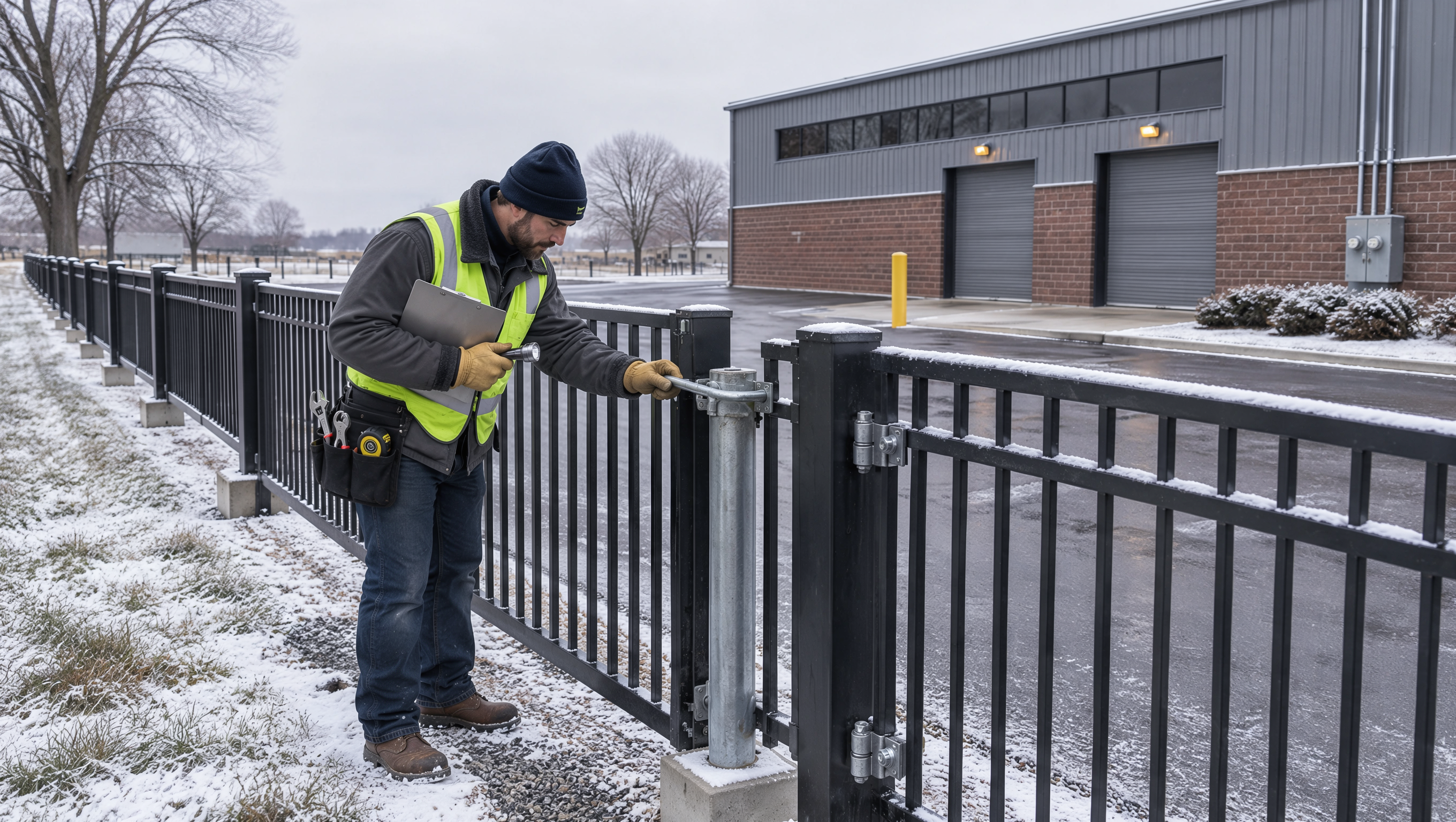
A commercial fence inspection in Edgerton, WI, should focus on posts, gates, rails, chain link fabric, panels, hardware, drainage, access points, and snow removal areas before winter. Property managers can reduce avoidable cold-weather problems by identifying weak sections now and prioritizing repairs that affect security or daily operations.
Why Winter Readiness Matters
Commercial fencing often supports several important functions at once.
It may help protect:
Equipment
Parking areas
Storage zones
Employee entrances
Service areas
Restricted spaces
Once snow, ice, road salt, and freeze-thaw conditions arrive, small problems can become harder to see and more difficult to repair.
For Edgerton businesses, a pre-winter inspection is a practical way to review the perimeter before colder weather creates additional stress.
Start With the Full Perimeter
Walk the entire fence line instead of checking only the main entrance.
Look for:
Leaning posts
Loose fabric
Bent rails
Cracked panels
Large gaps
Rust
Gate problems
Soil erosion
Long commercial fence runs can hide damage behind buildings, equipment, or landscaping.
A full walkaround helps identify problems before snow covers lower sections.
Check Posts for Stability
Posts support the entire fence system.
Inspect for:
Leaning
Movement
Corrosion
Rot
Impact damage
Soil gaps
Corner, terminal, and gate posts deserve extra attention because they often carry more structural stress.
If one post shifts, nearby rails, panels, or chain link fabric may also move.
Review Soil Conditions Around Posts
The ground can reveal early signs of future fence movement.
Look for:
Mud
Erosion
Standing water
Exposed concrete
Soil pulling away from posts
Wet soil may become less stable during repeated freezing and thawing.
If several nearby posts are moving, drainage may be contributing to the problem.
Inspect Chain Link Fabric
Commercial chain link should remain tight and secure.
Look for:
Sagging
Loose ties
Bent mesh
Bottom gaps
Separation near terminal posts
Loose fabric can create a weak point in the perimeter.
If tension has changed, inspect the supporting posts and hardware before simply tightening the mesh.
Check Tension Hardware
Inspect:
Tension bars
Tension bands
Brace bands
Fence ties
Bolts
Look for hardware that is:
Loose
Missing
Bent
Corroded
Small connection problems can allow a larger section of fence to move during wind or snow.
Inspect Rails
Top rails and other structural connections should remain straight and secure.
Check for:
Bending
Separation
Loose fittings
Impact damage
Bent rails are common near:
Parking areas
Loading zones
Service roads
Equipment yards
If one rail was hit, inspect the surrounding posts and fabric too.
Test Every Gate
Commercial gates usually receive more wear than standard fence sections.
Open and close each gate several times.
Watch for:
Sagging
Dragging
Sticking
Uneven movement
Latch problems
Lock problems
A gate that already operates poorly may become harder to use after snow and ice reduce clearance.
Inspect Gate Posts
Gate posts carry extra weight and repeated movement.
Check for:
Leaning
Movement
Corrosion
Erosion
Vehicle impact
If a gate no longer lines up correctly, the post may be the underlying issue.
Adjusting only the latch may not provide a lasting fix.
Check Hinges, Rollers, and Latches
Gate hardware should remain secure and move smoothly.
Inspect:
Hinges
Rollers
Latches
Locks
Gate stops
Fasteners
Sliding gates should move freely through their full travel path.
Swing gates should not drag or require lifting.
Worn hardware should be addressed before winter use becomes more difficult.
Review Access-Control Areas
Some commercial properties use:
Keypads
Card readers
Automatic gate operators
Remote entry systems
Vehicle access controls
The physical gate should operate correctly before relying on the access-control system.
If the gate is binding or dragging, it may place unnecessary strain on the operator.
Keep controls clear of leaves, snow storage areas, and impact zones.
Check Gate Clearance
Ground clearance can change as temperatures fall.
A gate that barely clears gravel or pavement now may start dragging after:
Frost movement
Snow accumulation
Ice
Gravel shifting
Check the entire swing or sliding path.
Reliable winter access depends on enough clearance.
Review Drainage Near Gates
Gate entrances often collect runoff.
Inspect for:
Standing water
Mud
Low areas
Pavement runoff
Once temperatures fall, this water may freeze and interfere with access.
Drainage problems can also contribute to post movement over time.
Inspect Parking Lot Edges
Fence sections near parking lots often face more wear.
Look for:
Vehicle impact
Bent posts
Scraped rails
Salt exposure
Snowplow damage
Even minor contact can weaken the structure without causing immediate collapse.
These sections should receive closer attention before winter.
Check Loading and Service Areas
Loading zones may have frequent truck and equipment movement.
Inspect fencing near:
Loading docks
Delivery areas
Dumpster enclosures
Service entrances
Storage areas
These locations may experience more impact damage and gate wear.
Repairs affecting security or access should be prioritized.
Look for Rust and Corrosion
Metal fencing and hardware may be exposed to moisture and road salt.
Inspect:
Post bases
Rails
Hinges
Latches
Gate frames
Fasteners
Minor surface rust may be manageable.
Deeper corrosion affecting structural parts should be evaluated before winter increases exposure.
Inspect Wood Privacy Sections
Commercial properties may use wood around:
Service areas
Employee zones
Dumpster enclosures
Storage spaces
Check for:
Rot
Loose boards
Weak rails
Leaning posts
Wet leaves should not remain piled against wood.
Clear debris so lower sections can dry and remain visible.
Inspect Vinyl Privacy Sections
Vinyl sections should be checked for:
Cracks
Loose panels
Uneven alignment
Gate problems
Post movement
Solid vinyl panels can receive significant wind pressure.
Any loose or shifting section should be reviewed before winter storms arrive.
Review Ornamental Sections
Aluminum or ornamental fencing may be used near customer-facing or landscaped areas.
Inspect for:
Bent pickets
Loose rails
Post movement
Gate hardware problems
These sections may also be near pedestrian traffic, so loose or damaged components should be addressed.
Clear Leaves and Vegetation
Leaves, vines, weeds, and brush can hide problems along the fence line.
Remove debris from:
Post bases
Gates
Lower fence sections
Drainage areas
Clearing vegetation makes it easier to spot:
Rust
Rot
Erosion
Bottom gaps
It also helps prepare the perimeter for snow.
Check Overhanging Branches
Branches near the fence may become heavier under snow or ice.
Look for:
Dead limbs
Cracked branches
Branches resting against the fence
Falling limbs can damage posts, rails, panels, and gates.
Addressing obvious tree hazards can reduce avoidable winter repairs.
Plan Snow Removal Routes
Winter fence readiness should include snow removal planning.
Review:
Plow routes
Snow storage areas
Gate entrances
Fence corners
Access-control equipment
Avoid pushing heavy snow directly against the fence.
Compacted snow can place pressure on fabric, panels, posts, and rails.
Keep Snow Away From Gates
Gate openings should remain clear.
Large snow piles can:
Block vehicle access
Restrict pedestrian movement
Cover latches
Obstruct controls
Reduce visibility
Sliding gates also need their entire travel path kept clear.
Mark Vulnerable Posts and Corners
Posts near driveways and parking areas may become difficult to see after snowfall.
Visible markers can help protect:
Gate posts
Corners
Terminal posts
Fence ends
This can reduce accidental snowplow or vehicle damage.
Review Pedestrian Access
Vehicle gates are not the only concern.
Inspect pedestrian gates near:
Employee entrances
Customer areas
Walkways
Restricted spaces
Make sure they:
Close fully
Latch properly
Have adequate clearance
Sit on stable posts
Winter access should remain reliable for both vehicles and people.
Prioritize Security Problems First
Not every issue needs immediate repair.
Higher-priority problems include:
Gates that do not lock
Large perimeter gaps
Loose chain link fabric
Unstable terminal posts
Damaged access-control entrances
Openings near equipment or storage
Cosmetic concerns can usually wait until structural and security problems are addressed.
Decide Between Repair and Replacement
Repair may be practical when damage is limited to:
One post
A bent rail
Loose fabric
Gate hardware
A localized damaged panel
Replacement may be more practical when there is:
Widespread corrosion
Multiple failing posts
Repeated gate problems
Extensive impact damage
Large sections out of alignment
The condition of the full perimeter should guide the decision.
Use a Winter Readiness Checklist
Before winter, confirm that:
Posts are stable
Rails are secure
Chain link fabric is tight
Panels are intact
Gates operate smoothly
Latches and locks work
Access control is functioning
Drainage is reviewed
Vegetation is cleared
Snow storage areas are planned
Vulnerable posts are visible
This gives property managers a clear starting point for winter preparation.
Prepare the Perimeter Before Winter Conditions Set In
A commercial fence inspection should focus on the parts of the system that affect security, access, and everyday operations.
For Edgerton businesses, November is a practical time to review posts, gates, hardware, drainage, traffic areas, and snow removal plans before winter conditions make problems harder to manage.
Dach Fence provides commercial fence repair, replacement, installation, gates, chain link fencing, wood fencing, vinyl fencing, aluminum or ornamental fencing, temporary fencing, and access control when relevant.
If your commercial fence in Edgerton, WI, needs inspection, maintenance, or repair before winter, contact Dach Fence for a free estimate.
