
Commercial Fence Inspection in Edgerton, WI: What to Review Before Winter
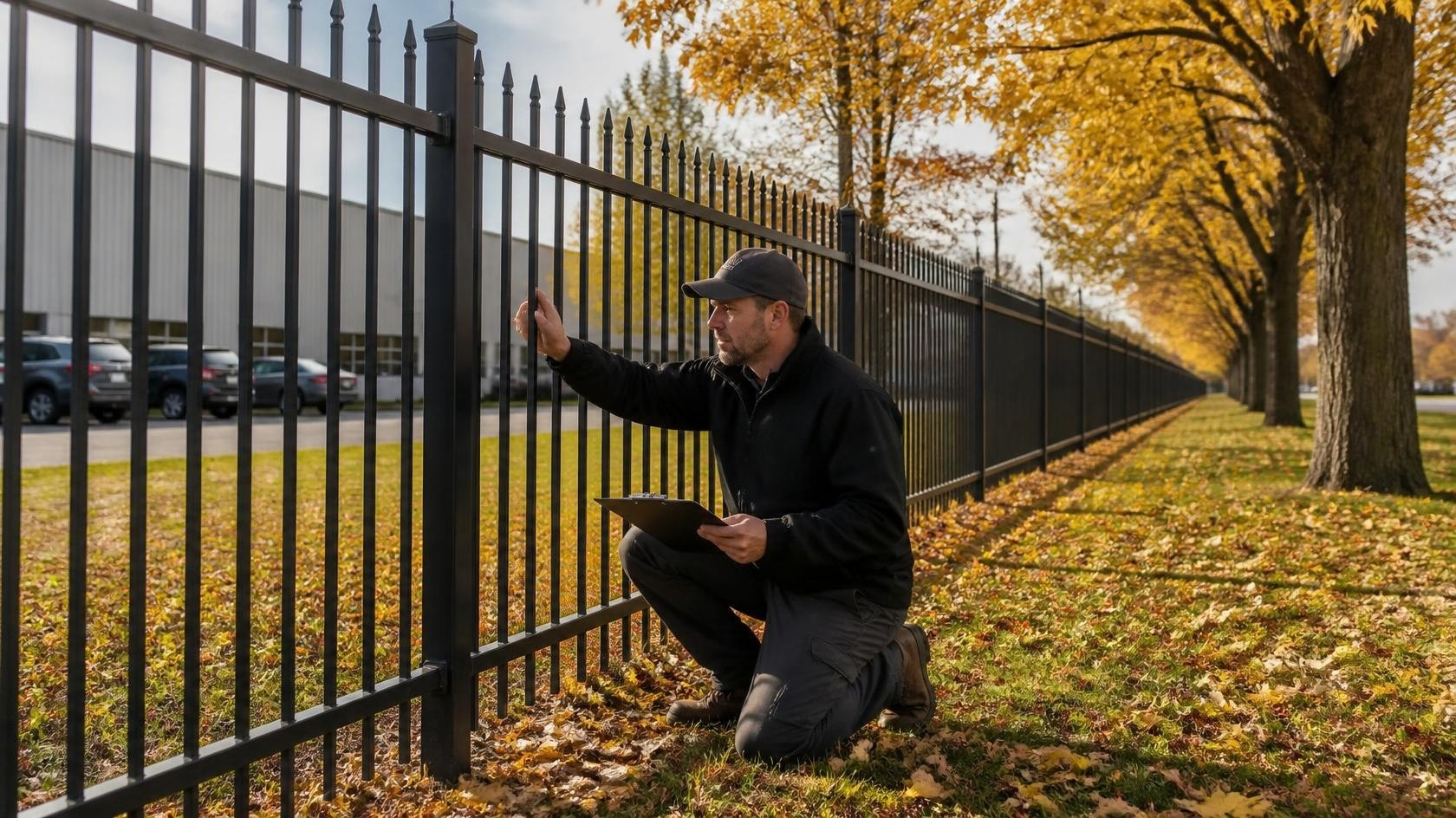
Before winter arrives in Edgerton, WI, commercial property owners should inspect fence posts, mesh or panels, gates, hardware, access-control equipment, drainage, and snow-storage areas. Fall inspections can uncover small problems before snow, ice, and freeze-thaw conditions make them harder to access or more disruptive to daily operations.
Why a Fall Commercial Fence Inspection Matters
Commercial fencing does more than mark a property line.
It may help protect:
Equipment
Vehicles
Outdoor storage
Utility areas
Loading zones
Employee-only spaces
Service areas
A fence that looks acceptable from a distance can still have loose hardware, unstable posts, gate problems, or openings that reduce security.
Fall is a practical time to complete a full perimeter review before winter weather limits visibility and access.
Start With a Full Perimeter Walk
Walk the entire fence line rather than checking only the main entrance.
Look for:
Leaning sections
Bent posts
Loose panels
Sagging chain link
Open gaps
Damaged rails
Missing hardware
Areas affected by vegetation
Inspect both sides where access allows.
Problems near rear storage areas or secondary boundaries can be easy to miss during normal business activity.
Check Fence Posts Carefully
Posts support the entire fence system.
Inspect them for:
Leaning
Movement at ground level
Corrosion
Cracking
Rot on wood components
Exposed footing material
Soil erosion
One unstable post may affect several connected sections.
Multiple leaning posts may indicate a broader issue involving drainage, impact damage, aging footings, or soil movement.
Inspect Chain Link Mesh and Rails
Chain link is commonly used around commercial properties because it provides security while maintaining visibility.
Check for:
Bent mesh
Sagging
Holes
Loose ties
Damaged tension components
Bent top rails
Pay attention to the bottom edge as well.
Openings near ground level may reduce security or allow animals to enter restricted areas.
Review Privacy and Screening Sections
Some commercial properties use privacy fencing or screened chain link around:
Dumpsters
Equipment
Materials
Service areas
Inspect these sections for:
Loose panels
Cracks
Broken boards
Damaged slats
Leaning posts
Solid fencing catches more wind than open chain link.
Exposed sections should be checked carefully after fall storms.
Test Every Vehicle Gate
A commercial fence is only as useful as its entrances.
Open and close each vehicle gate.
Look for:
Sagging
Dragging
Difficulty latching
Uneven movement
Loose hinges
Bent frames
Post movement
A gate that is already difficult to operate in fall may become more troublesome when snow or ice reduces clearance.
Inspect Sliding Gate Components
Sliding gates need a clear and properly aligned travel path.
Check:
Rollers
Tracks
Guides
Gate frames
Supporting posts
Hardware
Remove leaves, gravel, and other debris from the operating area.
Track-based systems deserve extra attention because snow and ice may interfere with movement during winter.
Check Cantilever Gates
Cantilever gates operate above the driveway and do not rely on a ground track.
Even so, inspect:
Roller assemblies
Supporting posts
Frame alignment
Hardware
Travel clearance
A shifting support post can affect the entire gate system.
Test Automatic Gate Operation
Automatic gates should be tested before colder weather arrives.
Watch for:
Slow movement
Gate stopping unexpectedly
Failure to fully open
Failure to fully close
Unusual sounds
Intermittent operation
Do not assume every problem is caused by the operator.
Physical gate alignment, post stability, or hardware may also contribute.
Review Access-Control Equipment
Commercial entrances may use:
Keypads
Card readers
Remotes
Intercoms
Employee credentials
Test the systems used regularly by employees and visitors.
Also review:
Manual release procedures
Backup operation
Emergency access
A gate that operates mechanically but cannot reliably receive access commands can still create a serious operational problem.
Inspect Pedestrian Gates
Pedestrian gates are often used frequently but may receive less maintenance attention than vehicle gates.
Check:
Hinges
Latches
Closers
Locks
Alignment
Ground clearance
Make sure the gate closes securely without requiring excessive force.
Employee and visitor entrances should remain easy to use during winter.
Look for Vehicle Impact Damage
Commercial fences near traffic areas can be damaged by:
Trucks
Trailers
Forklifts
Employee vehicles
Landscaping equipment
Inspect posts and gates near:
Loading areas
Parking spaces
Driveways
Storage yards
Look for dents, scrapes, bent frames, or shifted footings.
Even a minor impact can affect alignment.
Pay Attention to Snowplow Areas
Winter maintenance equipment creates another potential risk.
Identify where plows will operate near:
Fence corners
Gate posts
Parking lot edges
Access-control equipment
Make sure the fence remains visible and there is enough operating room.
Repeated snowplow impacts can damage posts, rails, gates, or automatic equipment.
Review Drainage Before Freezing Weather
Fall rain can reveal water problems that may affect fencing during winter.
Look for:
Standing water
Soft soil
Erosion
Parking lot runoff
Roof drainage
Downspout discharge
Water collecting around posts or gate areas may contribute to instability or freezing problems.
Drainage should be part of the maintenance plan when recurring water is present.
Watch for Soil Erosion
Runoff can gradually remove soil around fence posts.
Signs include:
Exposed concrete
Gaps around footings
Washed-out soil
Posts that move when pressure is applied
Adding soil may not be enough if runoff continues.
Identify the source of erosion before making a permanent repair.
Consider Freeze-Thaw Movement
Wisconsin winter conditions can involve repeated freezing and thawing.
Where posts or soil are already unstable, seasonal movement may affect:
Fence alignment
Gate operation
Ground clearance
Footing stability
A fall inspection gives property owners a chance to identify these weak areas before colder conditions arrive.
Plan Snow Storage Around the Fence
Snow piles should be planned before the first major storm.
Avoid repeatedly pushing heavy snow against:
Fence panels
Chain link mesh
Gates
Posts
Access-control equipment
Large piles can create unnecessary pressure on fencing.
They can also block emergency or service entrances.
Keep Gate Paths Clear
Snow storage should not interfere with:
Swing gate areas
Sliding gate travel
Pedestrian entrances
Delivery routes
A gate may work perfectly during fall but become unusable if snow is stored in its operating path.
Coordinate snow-removal plans with the fence and gate layout.
Check Vegetation Along the Perimeter
Fall is a good time to trim:
Vines
Brush
Tall weeds
Low branches
Heavy vegetation can:
Hide fence damage
Add weight
Trap moisture
Interfere with gates
Branches hanging over the fence may also create damage during snow or ice events.
Inspect Areas After Fall Storms
Strong winds and rain can create damage that is not immediately obvious.
After significant weather, check for:
New leaning
Loose posts
Bent rails
Damaged privacy screening
Gate changes
Fallen branches
Storm damage should be addressed before winter adds another layer of stress.
Check Secondary and Emergency Entrances
Do not inspect only the gate used every day.
Secondary gates may be needed for:
Emergency responders
Utilities
Maintenance
Waste collection
Service contractors
A rarely used entrance can develop rust, vegetation buildup, or alignment problems without anyone noticing.
Open and close these gates during the fall inspection.
Prioritize Security Problems First
Not every issue needs the same level of urgency.
Problems that deserve faster attention include:
Gates that will not close
Broken locks
Open mesh
Leaning posts
Large gaps
Damaged automatic gate systems
Cosmetic issues may sometimes wait.
Anything that compromises security, access, or structural stability should move higher on the repair list.
Decide Between Repair and Replacement
Localized problems may often be repaired.
Examples include:
One bent post
Small mesh damage
Worn gate hardware
Individual rails
Loose tension components
Replacement may deserve consideration when:
Many posts are failing
Corrosion is widespread
Large sections are damaged
Major repairs keep recurring
The current layout no longer works
A full inspection helps determine the practical scope.
Keep a Simple Maintenance Record
Commercial properties can benefit from documenting:
Repair locations
Gate issues
Repeated impact areas
Drainage problems
Hardware replacement
A maintenance record can reveal patterns over time.
For example, a gate that needs repeated adjustment may indicate a deeper post or footing issue.
Reinspect During Winter
Fall preparation is only the first step.
After:
Heavy snow
Ice
Strong winds
Major temperature changes
check high-use gates and previously repaired sections.
Early attention can prevent small winter problems from becoming more expensive spring repairs.
Prepare Your Edgerton Commercial Fence With Dach Fence
A commercial fence inspection before winter can reveal loose hardware, gate problems, damaged posts, security gaps, drainage concerns, and other issues before snow and ice make them harder to address.
Dach Fence provides commercial fence repair, replacement, and installation for chain link, wood, vinyl, aluminum, ornamental, temporary, and security fencing. The team also works with vehicle gates, pedestrian gates, dumpster enclosures, and access-control systems.
Contact Dach Fence for a free estimate if your commercial fencing or gates in Edgerton, WI need inspection or repair before winter.
