
Commercial Fence and Gate Maintenance in Brodhead, WI: Pre-Winter Guide
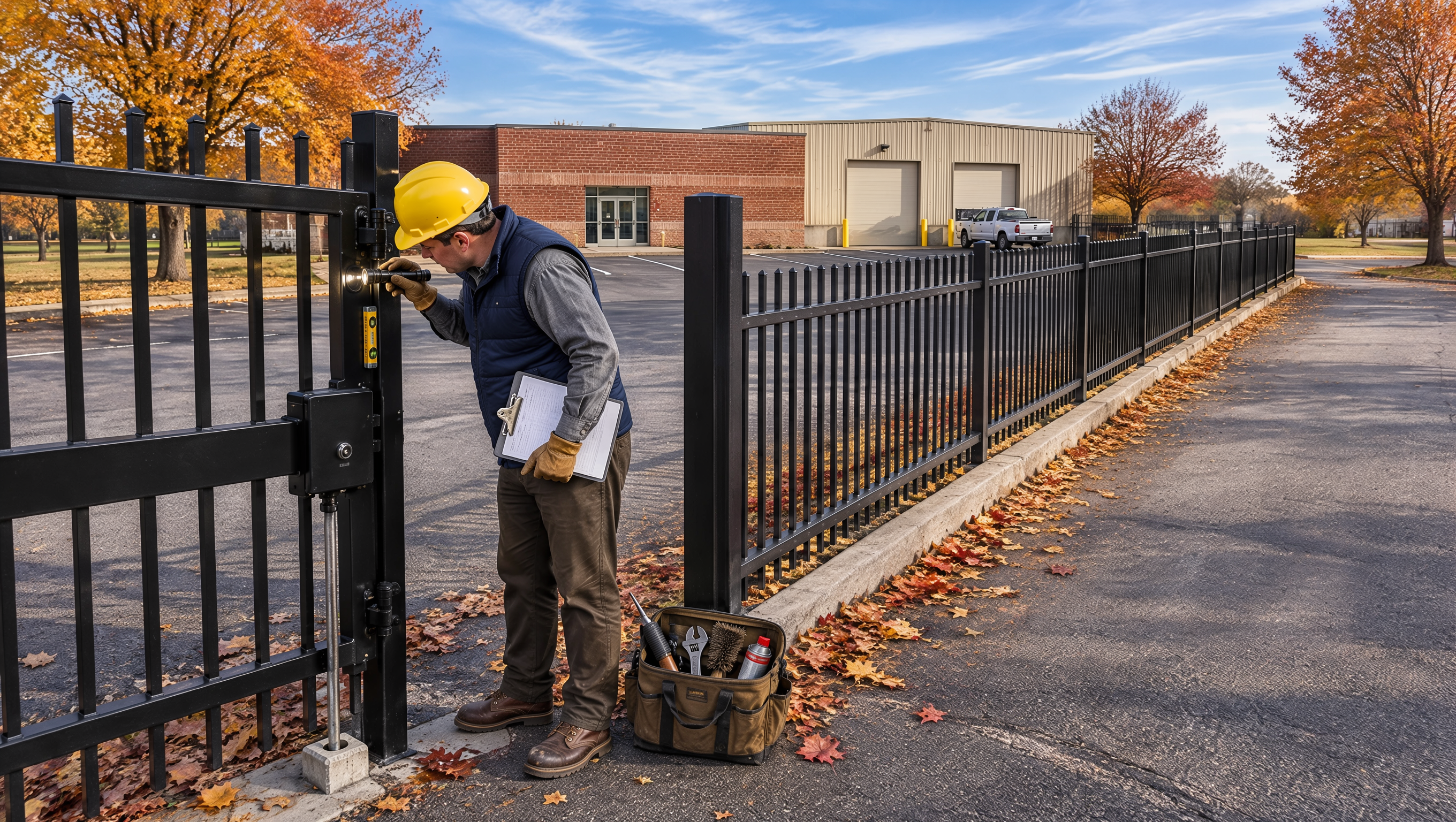
Before winter, Brodhead, WI, property managers should inspect commercial fence posts, rails, fabric or panels, gates, hardware, drainage, and snow removal areas. Small issues such as loose chain link, gate misalignment, corrosion, or unstable posts can become harder to manage once snow, ice, and freeze-thaw conditions arrive.
Why Pre-Winter Maintenance Matters
Commercial fencing often supports security, traffic flow, and daily property access.
It may help protect:
Equipment
Storage areas
Parking lots
Loading zones
Employee entrances
Service areas
Winter adds new stress from snow, ice, road salt, frozen ground, and snow removal equipment.
A pre-winter inspection gives Brodhead businesses a chance to address weak areas before they affect operations.
Start With the Entire Perimeter
Walk the full fence line rather than checking only the main entrance.
Look for:
Leaning posts
Loose chain link
Bent rails
Cracked panels
Bottom gaps
Rust
Gate problems
Drainage issues
Long commercial fence runs can hide damage behind equipment, buildings, or landscaping.
Check Posts for Stability
Posts support the rest of the fence system.
Inspect them for:
Leaning
Movement at the base
Corrosion
Rot
Soil gaps
Vehicle impact
Corner, terminal, and gate posts deserve extra attention because they often carry more structural stress.
If one of these posts moves, nearby fence sections may lose alignment or tension.
Review Soil Around Post Bases
Ground conditions can reveal problems before the fence itself looks badly damaged.
Check for:
Erosion
Mud
Standing water
Exposed concrete
Soil pulling away from posts
Wet soil can become less stable.
Freeze-thaw cycles may make existing movement more noticeable throughout winter.
Inspect Chain Link Fabric
Chain link fencing should remain tight and secure.
Look for:
Sagging
Loose ties
Bent mesh
Gaps near posts
Lifted bottom sections
Loose fabric may reduce perimeter security.
If tension has changed, inspect nearby posts and hardware before simply tightening the mesh.
Check Chain Link Hardware
Inspect:
Tension bars
Tension bands
Fence ties
Brace bands
Bolts
Look for loose, missing, bent, or corroded components.
Small hardware failures can allow a larger section to loosen during wind or snow.
Inspect Rails
Rails should remain straight and securely connected.
Check for:
Bends
Separation
Loose fittings
Impact damage
Fence sections near driveways, parking areas, loading zones, and service roads may be more vulnerable to vehicle contact.
If one rail was hit, inspect the nearby posts and fabric too.
Test Every Gate
Commercial gates often experience more wear than standard fence sections.
Open and close each gate several times.
Watch for:
Sagging
Dragging
Sticking
Uneven movement
Latch problems
Lock problems
A gate that already struggles in November may become harder to use after snow and ice arrive.
Check Gate Posts
Gate posts support both fence tension and gate weight.
Look for:
Leaning
Movement
Corrosion
Soil erosion
Impact damage
A shifting gate post can create repeated alignment problems.
If the latch stops lining up, inspect the supporting post before adjusting only the hardware.
Inspect Hinges, Rollers, and Latches
Gate hardware should move smoothly and remain secure.
Check:
Hinges
Rollers
Latches
Locks
Fasteners
Gate stops
Sliding gates should move freely along the entire path.
Swing gates should not need to be lifted or forced.
Worn hardware is easier to address before snow and ice interfere with access.
Review Access-Control Equipment
Some commercial gates include:
Keypads
Card readers
Automatic operators
Remote entry systems
Vehicle access controls
The physical gate should operate correctly before access-control equipment is tested.
If the gate is dragging or binding, it may place unnecessary strain on the operator.
Keep controls clear of leaves, snow piles, and impact zones.
Check Gate Clearance
Winter can reduce the available space around a gate.
A gate that barely clears the ground may start dragging after:
Snow buildup
Ice
Frost movement
Gravel shifting
Check the full swing or sliding path.
Enough clearance helps keep entrances usable during colder weather.
Inspect Drainage Around Gates
Gate entrances often collect water.
Look for:
Standing water
Mud
Pavement runoff
Low areas
Erosion
Once temperatures fall, standing water may freeze and interfere with gate operation.
Poor drainage may also contribute to movement around gate posts.
Look for Corrosion
Metal fencing and hardware may be exposed to moisture and road salt.
Inspect:
Post bases
Rails
Hinges
Latches
Gate frames
Fasteners
Pay extra attention near roads, driveways, and parking lots.
Surface rust may be manageable, but deeper corrosion affecting structure should be evaluated before winter.
Check Parking and Traffic Areas
Commercial fence sections near vehicle traffic deserve closer attention.
Inspect areas near:
Parking spaces
Drive aisles
Loading docks
Dumpster areas
Service entrances
Even a minor vehicle impact can bend a post or rail without causing immediate collapse.
The surrounding section should still be checked.
Review Loading Zones
Loading areas combine frequent traffic with regular gate use.
Check:
Gate alignment
Corner posts
Rails
Hardware
Chain link tension
Problems in these areas can affect both security and daily deliveries.
They should usually rank high on the maintenance list.
Inspect Privacy Sections
Some commercial properties use wood or vinyl for screening.
Common locations include:
Dumpster enclosures
Service areas
Employee spaces
Storage areas
Wood should be checked for rot, loose boards, and weak rails.
Vinyl should be checked for cracks, loose panels, and post movement.
Solid sections also receive more wind pressure than open chain link.
Clear Leaves and Vegetation
Fall debris can hide lower fence problems.
Remove:
Leaves
Vines
Weeds
Branches
Brush
Clearing the fence line makes it easier to identify:
Rust
Rot
Bottom gaps
Erosion
It also keeps gates and drainage areas easier to maintain.
Check Overhanging Branches
Branches near the perimeter may become heavier under snow or ice.
Look for:
Dead limbs
Cracked branches
Branches already touching the fence
Falling limbs can damage posts, rails, gates, and panels.
Obvious hazards should be addressed before winter storms.
Plan Snow Removal Routes
Fence maintenance should include snow removal planning.
Review:
Plow routes
Gate entrances
Fence corners
Snow storage areas
Access-control equipment
Avoid pushing heavy snow directly against the fence.
Compacted snow can place pressure on posts, rails, panels, and chain link fabric.
Keep Snow Away From Gates
Gate openings should remain clear throughout winter.
Large snow piles can:
Block vehicle access
Restrict pedestrian movement
Cover hardware
Obstruct controls
Sliding gates also need their full travel path kept clear.
Mark Vulnerable Posts
Fence posts and corners can become difficult to see once snow accumulates.
Visible markers may help protect:
Gate posts
Terminal posts
Fence corners
Fence ends
This can reduce accidental snowplow or vehicle damage.
Check Pedestrian Gates
Vehicle gates often get most of the attention, but pedestrian entrances matter too.
Make sure they:
Close fully
Latch properly
Have enough clearance
Sit on stable posts
Employee and customer access should remain reliable during winter.
Prioritize Security Issues First
Not every problem needs immediate repair.
Higher-priority issues include:
Gates that do not lock
Large perimeter gaps
Loose chain link fabric
Unstable terminal posts
Broken access points
Damage around equipment or storage
Cosmetic concerns can usually wait until structural and security problems are addressed.
Repair or Replace?
Repair may be practical when damage is limited to:
One post
One bent rail
Loose fabric
Gate hardware
A small damaged panel section
Replacement may be more practical when there is:
Widespread corrosion
Multiple failing posts
Repeated gate problems
Extensive vehicle damage
Large sections out of alignment
The full perimeter should be evaluated before deciding.
Use a Pre-Winter Maintenance Checklist
Before winter, confirm that:
Posts are stable
Rails are secure
Chain link fabric is tight
Panels are intact
Gates operate smoothly
Locks and latches work
Access control is functioning
Drainage is reviewed
Corrosion is checked
Vegetation is cleared
Snow storage areas are planned
This gives property managers a clear list of priorities.
Prepare the Fence and Gates Before Winter
Commercial fence and gate maintenance should focus on keeping the property secure and accessible.
For Brodhead businesses, November is a good time to inspect posts, rails, gates, hardware, drainage, traffic areas, and snow removal routes before winter conditions make small problems harder to manage.
Dach Fence provides commercial fence repair, replacement, installation, gates, chain link fencing, wood fencing, vinyl fencing, aluminum or ornamental fencing, temporary fencing, and access control when relevant.
If your commercial fence or gate in Brodhead, WI, needs pre-winter maintenance or repair, contact Dach Fence for a free estimate.
