
Choosing the Right Commercial Gate for Wisconsin
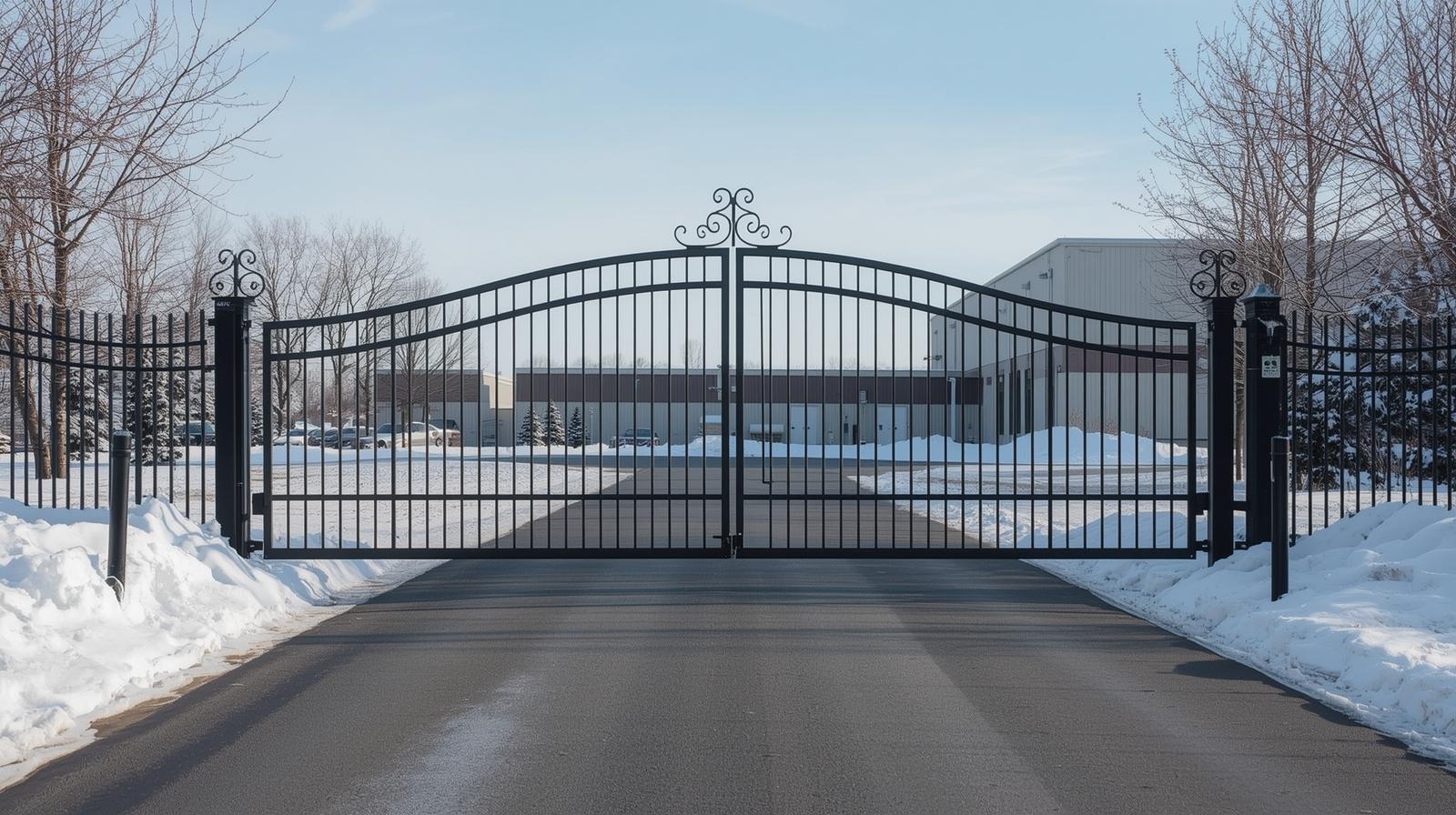
Imagine it’s 6 a.m. after a heavy snowfall, and your delivery trucks can’t get in because your new gate is frozen shut. A commercial gate in Southern Wisconsin is supposed to solve security problems, not create costly new ones from ice and snow. A system that fails in winter isn't just an inconvenience; it's a direct hit to your operations and budget.
To prevent this, see your gate not as one piece of metal, but as a complete system. Every reliable installation has three critical parts: the gate panel itself, the operator that acts as the system's engine, and the access controls that tell it when to open. Most failures happen when these components are mismatched for the job or the climate. A cohesive system is the best way to ensure year-round reliability and realize the full benefits of an automated gate without the winter headaches.
Your Gate System Has 3 Parts: The Gate, The Motor, and The 'Keys'
When you picture a commercial gate, you're likely thinking of the Gate Panel. This is the physical barrier itself, often made of strong steel for security or lighter-weight aluminum. The panel is the 'body' of your system, defining its look and strength. Whether you choose a swing gate vs. a sliding gate depends on your property's layout, but all panels serve this basic role.
Of course, a gate panel is just a heavy fence until you add the Gate Operator. Think of the operator as the engine—the powerful motor that reliably opens and closes the gate, day after day. For a busy commercial site, the operator's durability is paramount. Skimping on the motor is a common and costly mistake, which is why professional commercial gate services focus on matching the right operator to the gate's weight and expected usage.
Finally, Access Controls are the 'keys' that tell the operator what to do. This might be a simple keypad for employees, a long-range remote for delivery trucks, or a sensor that automatically opens the gate for exiting vehicles. These three parts must work together seamlessly, but the type of gate panel you choose is the most critical defense against Wisconsin's weather.
Why a Cantilever Gate is Your Best Defense Against Wisconsin Snow
A classic swing gate, which opens like a door, is a winter liability waiting to happen in Southern Wisconsin. To open one after a heavy snowfall, you must shovel a clear path for its entire 90-degree arc. An employee frantically shoveling at 6 a.m. is not an efficient access plan, and a gate blocked by a frozen snowbank is a security risk.
This is why most durable commercial installations in our region use a cantilever gate. This type of slide gate is brilliantly engineered for harsh weather. Instead of swinging outward, it glides sideways, suspended above the driveway on a robust roller system mounted to posts off to the side. There is no track on the ground that can get jammed with ice, packed snow, or gravel. It essentially ‘floats’ over the mess, allowing it to open and close reliably no matter the conditions.
Choosing a cantilever design is the single most important decision for ensuring your gate works when you need it most. It dramatically reduces winter-related failures and the costly downtime that follows.
Matching Your Gate's 'Engine' to Your Business's Pace
You wouldn’t put a lawnmower engine in a semi-truck, and the same logic applies to your gate. The operator's power is measured in usage cycles—the number of times it’s engineered to open and close per day without burning out. A basic operator might handle 25 cycles, which is fine for a single home but would quickly fail at a commercial property.
For a busy property like a logistics hub in Milwaukee or a multi-family community in Madison, traffic never really stops. This demands a continuous duty operator. These are the best commercial gate operators for cold climates because they are built like industrial machinery, designed to run constantly without overheating. They provide the day-in, day-out reliability a business needs, ensuring your automatic gate opener doesn't become a bottleneck.
Investing in the right operator for your specific traffic volume is the surest way to prevent breakdowns. A gate installation expert will analyze your traffic flow to recommend an operator that guarantees long-term, safe performance.
The Gate Safety Law That Protects Your Business from Lawsuits: UL 325 Explained
A powerful gate operator is useless if it isn't safe. Every automated gate installation in the country must follow a safety standard called UL 325. It's the official rulebook for preventing a multi-ton gate from closing on a vehicle or a person. This is a critical requirement for all security gate systems for industrial parks, apartment complexes, and commercial properties. Following this standard is fundamental to protecting people and your business from liability.
To meet this standard, your system must have at least two different types of safety devices. A professional installer will typically recommend a combination of these two primary systems:
Photo-Eyes: An invisible beam of light that spans the gate opening. If a car, pallet, or person breaks the beam while the gate is closing, the gate will immediately stop or reverse.
Reversing Edges: A pressure-sensitive rubber strip along the closing edge of the gate. If it makes contact with an obstruction, it signals the operator to reverse direction instantly.
For a business owner, compliance is your primary defense against devastating accidents and lawsuits. The benefits of automated gate systems for security are completely undermined if the system creates a safety hazard. This is why relying on professional commercial gate services is non-negotiable. A certified technician ensures these safety measures are installed and tested correctly, giving you peace of mind that your property is both secure and safe.
Smarter Access: How to Control Who Enters Your Property (and When)
A keypad is a start, but an effective gate system must manage different types of traffic. The best access control solutions for commercial properties layer technologies for security and convenience. For staff, many businesses use Radio-Frequency Identification (RFID) key fobs or cards. An employee simply presents their fob to a reader, which is quick, secure, and allows you to easily grant or revoke access for individuals.
For visitors or delivery drivers, a Telephone Entry System is invaluable. These units allow a visitor to find and call a specific office or tenant directly from the gate. The person inside can then speak with the visitor and press a button on their phone to grant entry. This provides controlled access without a dedicated guard, making it ideal for multi-tenant security gate systems for industrial parks and apartment complexes.
To improve traffic flow, a vehicle loop detector is the professional standard for exiting. This wire, buried in the pavement, automatically senses an approaching vehicle and signals the gate to open for a "free exit." Combining these tools creates a seamless and secure traffic management system. Reliable Milwaukee commercial gate repair services are critical for keeping these sensitive electronics running through Wisconsin's weather.
The Hidden Foundation of a Reliable Gate: Beating Wisconsin's Frost Heave
In Wisconsin, the ground itself can be a threat. Every winter, moisture in the soil freezes and expands, pushing the ground upward with incredible force. This phenomenon, called frost heave, is the number one enemy of any outdoor structure. It can push posts out of alignment until the gate grinds, sticks, or refuses to close, trapping vehicles in or out.
To win the battle against frost heave, you have to go below it. The most critical, yet unseen, part of a heavy duty driveway gate installation is the foundation. Both the gate posts and the operator pad must be anchored in substantial concrete footings that extend below the local frost line—the maximum depth the ground freezes. In Southern Wisconsin, that line is typically 48 inches deep, ensuring the base of your posts rests in stable, unfrozen soil year-round.
Ask potential installers: "How deep do you pour your footings?" Any reputable commercial fence and gate contractors near Madison, WI, will know this four-foot requirement by heart. An installer who gets this detail right understands that a gate built to last starts from the ground up.
Your Next Step to a Secure, Reliable Commercial Gate
A successful commercial gate installation in Southern Wisconsin is a complete system where the panel, operator, safety features, and foundation are all matched to your site, your traffic, and our demanding climate. This knowledge is your best tool for making a smart investment instead of a costly mistake. Use what you've learned to vet potential partners with this simple checklist.
Questions to Ask Your Gate Installer:
What gate type do you recommend for our snowy climate?
How will you ensure the footings prevent frost heave?
What operator usage cycle do we need for our traffic?
How will you meet UL 325 safety standards?
The right gate installation services won't just sell you a product; they will design a solution. By asking these questions, you can ensure your gate is built for lasting security and reliability.
