
Chain Link Fence Repair Before Winter in Orfordville, WI: Common Weak Points
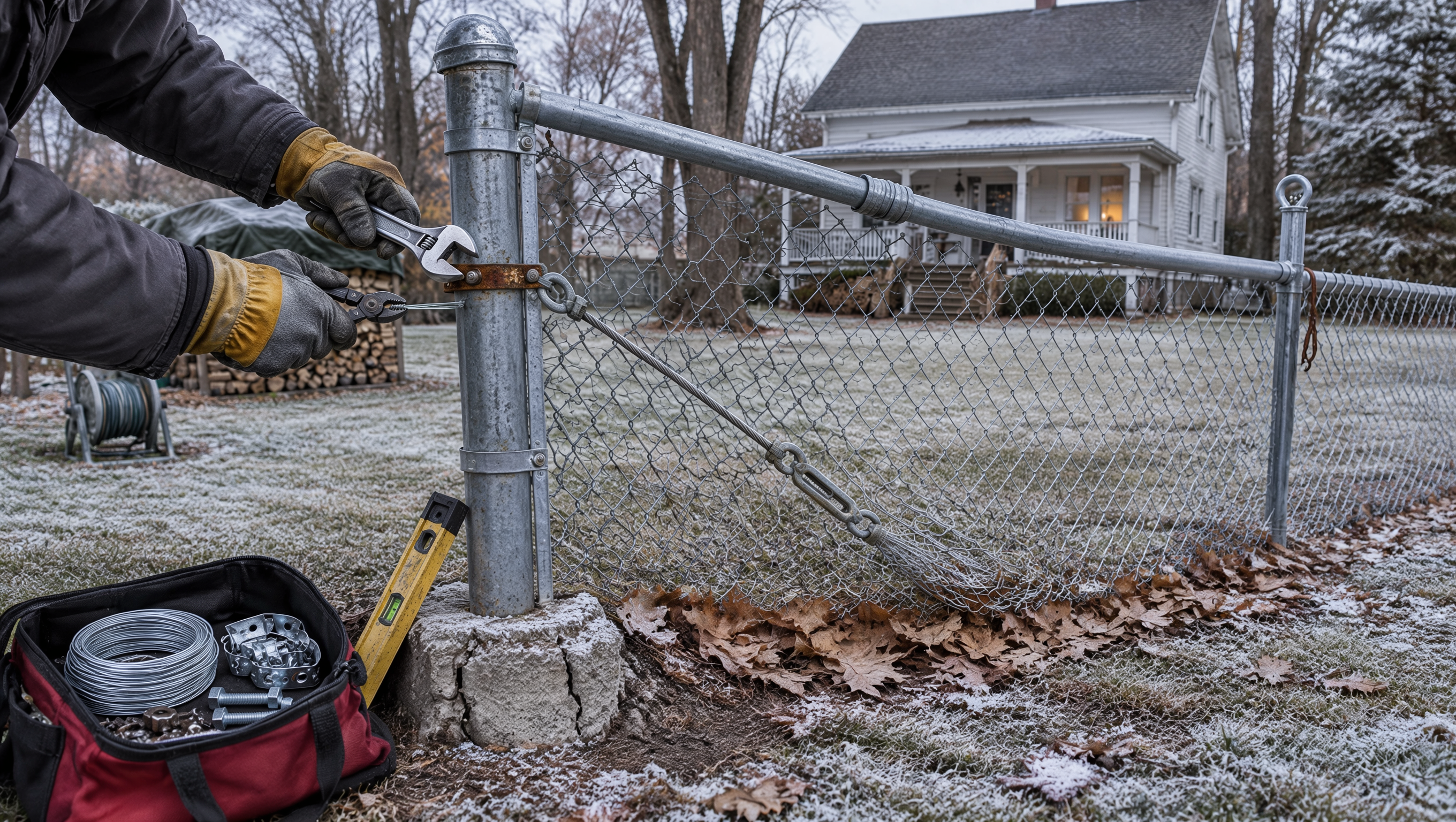
Before winter, Orfordville, WI, property owners should inspect chain link fence posts, rails, fabric tension, ties, gates, hardware, and drainage. Common weak points can become harder to manage once snow, ice, road salt, and freeze-thaw conditions arrive.
Why Chain Link Fences Need a Pre-Winter Check
Chain link fencing is durable and practical, but it still depends on several connected parts working together.
Problems may develop from:
Wind
Heavy rain
Soil movement
Vehicle impact
Gate use
Corrosion
Falling branches
By November, small issues may already be visible.
A pre-winter inspection gives homeowners and property managers time to address them before snow covers lower sections or frozen ground makes repairs more difficult.
Start With the Posts
Posts are one of the most important parts of the fence.
Check for:
Leaning
Movement at the base
Corrosion
Soil gaps
Impact damage
If one post shifts, the surrounding chain link fabric and rails may also lose alignment.
Corner, terminal, and gate posts deserve extra attention because they usually carry more tension.
Check for Soil Movement Around Posts
Look closely at the ground around each post.
Watch for:
Mud
Erosion
Standing water
Exposed concrete
Soil pulling away from the base
Wet ground can become less stable.
Freeze-thaw cycles may make existing movement worse once colder weather settles in.
Inspect Chain Link Fabric Tension
The fabric should remain tight and evenly supported.
Look for:
Sagging
Loose sections
Gaps near posts
Bent mesh
Lifted bottom edges
If the fabric has lost tension, inspect the posts and hardware around it.
The issue may not be limited to the mesh itself.
Check Fence Ties
Fence ties secure the chain link fabric to rails and posts.
Look for ties that are:
Missing
Loose
Bent
Corroded
A few failed ties may allow the fabric to move more in strong wind.
Replacing small hardware before winter can help prevent a larger section from loosening.
Inspect Tension Bands and Bars
Terminal sections rely on tension hardware to keep the fence secure.
Check:
Tension bands
Tension bars
Brace bands
Bolts
Look for looseness, rust, or damage.
Weak hardware can affect the tension of an entire section.
Check Top Rails
Top rails help keep the fence aligned.
Inspect for:
Bending
Separation
Loose connections
Impact damage
Bent rails are common near:
Driveways
Parking areas
Service lanes
Equipment zones
If a rail was hit, check the nearby posts and fabric too.
Look for Bottom Gaps
Walk along the base of the fence and look for openings.
Bottom gaps may be caused by:
Erosion
Uneven ground
Lifted fabric
Soil washout
Animal activity
These gaps may affect pet containment or perimeter security.
They are much easier to inspect before snow covers the ground.
Check for Rust and Corrosion
Chain link fencing and hardware can be exposed to moisture and road salt.
Inspect:
Post bases
Rails
Fence ties
Gate frames
Hinges
Latches
Surface rust may be minor, but deeper corrosion affecting structural parts should be evaluated.
Areas near roads and driveways deserve extra attention.
Test Every Gate
Gates often show problems before the rest of the fence.
Open and close each gate several times.
Check whether it:
Sags
Drags
Sticks
Swings unevenly
Fails to latch
A gate that is already difficult to use in fall may become worse once snow and ice reduce clearance.
Inspect Gate Posts
Gate posts carry extra weight and repeated stress.
Look for:
Leaning
Movement
Corrosion
Erosion
Impact damage
If the gate no longer aligns correctly, the supporting post may be the real problem.
Adjusting only the latch may not solve the issue.
Check Hinges and Latches
Gate hardware should stay secure and move smoothly.
Inspect:
Hinges
Latches
Locks
Bolts
Gate stops
Look for looseness, rust, or bending.
If the hardware keeps shifting, inspect the gate frame and post too.
Review Ground Clearance
Winter can reduce the space beneath a gate.
A gate that barely clears the ground may begin dragging after:
Frost movement
Snow buildup
Ice
Gravel shifting
Check the full swing or sliding path.
Enough clearance can help keep the gate usable through winter.
Inspect Sliding Gates Carefully
Sliding gates need a clear travel path.
Remove:
Leaves
Gravel
Mud
Branches
Other debris
Check rollers and guides for smooth movement.
If the gate already binds or jerks, the problem may become worse once snow and ice arrive.
Check for Vehicle Impact
Chain link fencing near driveways or parking areas is more vulnerable to impact.
Look for:
Bent posts
Dented rails
Scraped gate frames
Sudden alignment changes
Even minor contact can weaken the fence without causing it to fall.
Inspect the surrounding section carefully.
Look for Storm Damage
Fall storms can create problems through wind, heavy rain, or falling branches.
After strong weather, check for:
Leaning posts
Loose fabric
Bent rails
Gate movement
Soil erosion
Fallen branches can also damage several components at once.
Do not wait until winter to inspect visible storm damage.
Review Drainage Along the Fence Line
Standing water can affect post stability.
Look for:
Low spots
Mud
Downspout runoff
Erosion
Water collecting near gate areas
If several posts are shifting in the same wet section, drainage may be contributing.
Repair planning should address both the fence and the surrounding ground.
Clear Leaves and Vegetation
Fall debris can hide weak points.
Remove:
Leaves
Vines
Weeds
Brush
Fallen branches
This makes it easier to spot:
Rust
Bottom gaps
Erosion
Loose hardware
Keeping the fence line clear also makes winter inspections easier.
Check Overhanging Branches
Branches can become heavier under snow or ice.
Look for:
Dead limbs
Cracked branches
Branches resting on the fence
A falling branch can bend rails, tear fabric, or damage posts.
Addressing obvious tree hazards before winter can reduce avoidable repairs.
Plan Snow Storage Areas
Avoid piling heavy snow directly against chain link fencing.
Compacted snow can push against:
Fabric
Posts
Rails
It can also hide damage until spring.
Plan snow storage so gates and vulnerable fence sections remain clear.
Mark Fence Corners Near Plow Routes
Posts near driveways or parking areas can become difficult to see once snow accumulates.
Visible markers may help protect:
Gate posts
Fence corners
Terminal posts
Fence ends
This can reduce accidental snowplow damage.
Prioritize Security and Containment Problems
Not every weak point has the same urgency.
Higher-priority repairs include:
Large bottom gaps
Loose fabric
Unstable terminal posts
Gates that do not latch
Severe rail damage
Cosmetic issues can often wait.
Problems affecting pet containment, access, or property security should come first.
Repair or Replace?
Repair may be practical when the problem is limited to:
One bent rail
A few loose ties
One unstable post
Gate hardware
Localized fabric damage
Replacement may make more sense when there is:
Widespread corrosion
Multiple failing posts
Large damaged sections
Repeated gate problems
Extensive impact damage
The condition of the full fence should guide the decision.
Use a Pre-Winter Chain Link Checklist
Before winter, confirm that:
Posts are stable
Fabric is tight
Ties are secure
Rails are straight
Gates operate smoothly
Hinges and latches work
Bottom gaps are addressed
Rust is checked
Drainage is reviewed
Leaves and debris are cleared
Snow storage is planned
A short inspection can help catch weak points before winter makes them harder to manage.
Repair Weak Points Before Winter
Chain link fencing works best when the posts, rails, fabric, gates, and hardware stay connected and properly aligned.
For Orfordville property owners, November is a good time to identify loose fabric, unstable posts, bent rails, gate problems, corrosion, and drainage issues before snow and freezing conditions settle in.
Dach Fence provides residential and commercial fence repair, replacement, installation, gates, chain link fencing, wood fencing, vinyl fencing, aluminum or ornamental fencing, temporary fencing, and access control when relevant.
If your chain link fence in Orfordville, WI, has loose fabric, damaged rails, gate problems, or unstable posts, contact Dach Fence for a free estimate.
