
Best Time to Install a Fence in Evansville, WI: Fall vs Spring
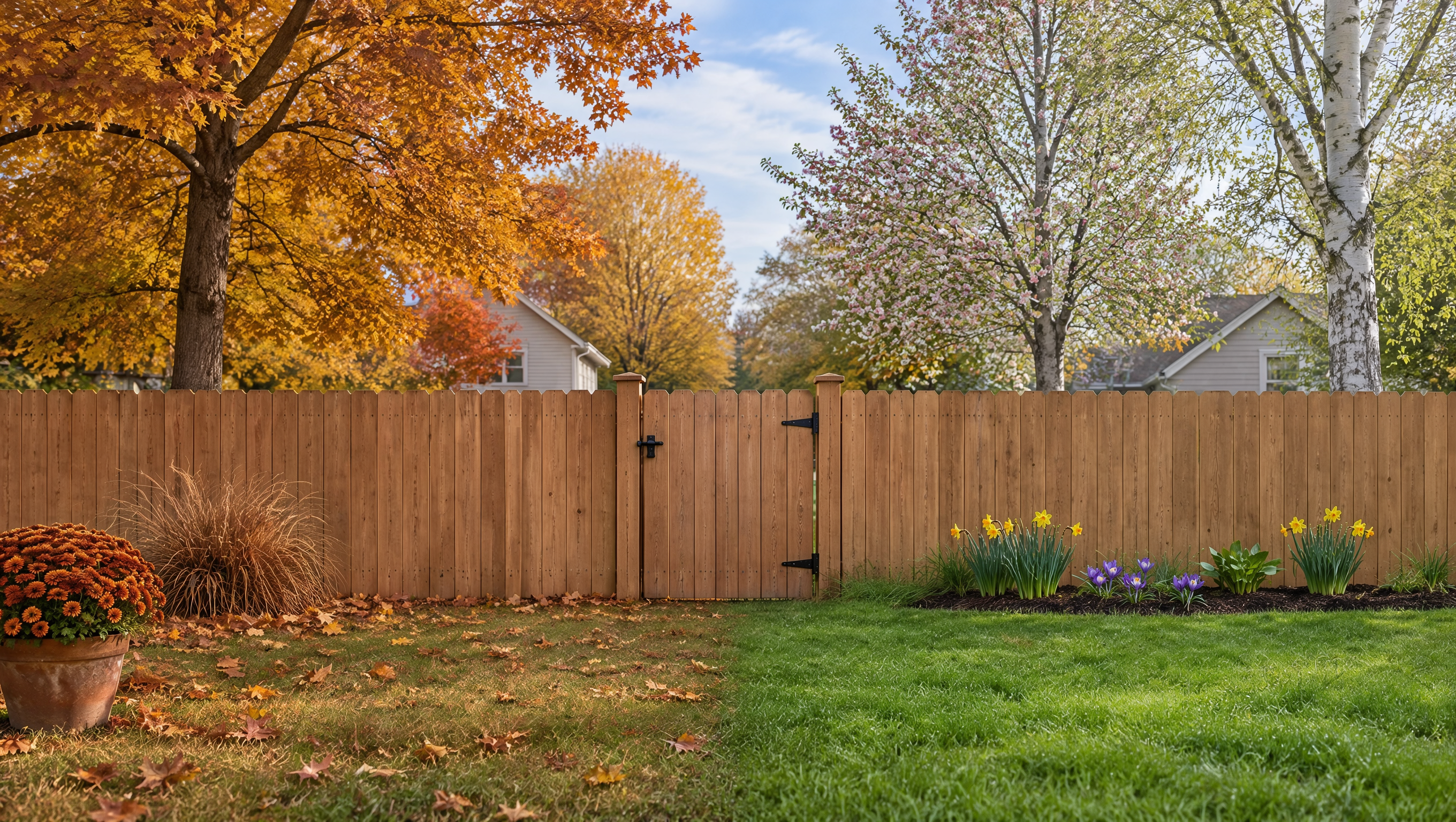
Both fall and spring can be good times to install a fence in Evansville, WI. Fall may offer a clearer yard layout and less interference with summer activities, while spring can provide more time before the next winter. The better season depends on ground conditions, drainage, landscaping, project type, and how soon you need the fence.
Is Fall or Spring Better for Fence Installation?
There is no single best season for every property.
For Evansville homeowners and commercial property owners, the right timing depends on more than temperature.
Consider:
Ground conditions
Rain and drainage
Fence material
Landscaping
Property use
Gate access
Project urgency
Both fall and spring can work well when the site is ready.
The most important factor is whether the ground and weather conditions allow the project to be completed properly.
Why Consider Fall Fence Installation?
Fall can be a practical time to install a fence, especially after summer yard projects and outdoor activities begin slowing down.
Property owners may also have a clearer idea of what worked and what did not during the warmer months.
For example, summer may have revealed a need for:
More backyard privacy
Better pet containment
A wider gate
Pool separation
Improved commercial security
Addressing these needs in fall can have the fence ready before the next outdoor season.
The Yard May Be Easier to Evaluate in Fall
By fall, landscaping is usually fully developed.
This can make it easier to see how the fence should work around:
Trees
Shrubs
Gardens
Patios
Sheds
Driveways
Property owners can also see where privacy is lacking after spending the summer outdoors.
A well-planned fall project can respond to how the yard is actually used.
Fall Can Work Well Before Winter Privacy Needs
Privacy is not only a summer concern.
A fence can continue screening:
Backyards
Patios
Neighboring properties
Service areas
throughout winter.
Installing before winter may also mean the fence is already in place when spring outdoor activities begin.
Fall Can Be Helpful for Pet Containment
If pets need a secure yard, waiting until spring may not be ideal.
A fall installation can create a defined outdoor area before winter.
When planning pet fencing, consider:
Fence height
Bottom gaps
Gate latches
Gate clearance
These details matter regardless of the season.
Fall Ground Conditions Matter
Fall installation does have weather considerations.
Heavy rain can create:
Mud
Standing water
Soft soil
Difficult equipment access
Later in the season, colder temperatures may also lead to frozen ground.
Installation timing should therefore depend on actual site conditions rather than simply assuming all fall weather is suitable.
Freeze-Thaw Conditions Can Affect the Site
As temperatures begin moving above and below freezing, wet soil may shift.
This makes drainage especially important.
Before a fall installation, look for:
Standing water
Erosion
Downspout runoff
Low spots
Stable post conditions are important for any fence.
Existing drainage problems should be identified before installation.
Late Fall Requires More Scheduling Flexibility
The later the project moves into the season, the more weather may influence the schedule.
Potential issues include:
Early snow
Frozen ground
Heavy rain
Mud
Shorter daylight hours
This does not mean late-fall installation is automatically a bad idea.
It simply means the schedule may need more flexibility.
Why Consider Spring Fence Installation?
Spring is another popular time to begin fence projects.
For property owners who spend winter planning, spring can provide an opportunity to start before summer activities increase.
It may be a good fit when the property owner wants to:
Redesign the yard
Replace an old fence
Add privacy
Prepare for pets
Secure a commercial property
Planning during winter can help the project move more smoothly once ground conditions improve.
Spring Provides More Time Before the Next Winter
A spring installation gives the fence several months before another winter season.
This can be useful for property owners who want time to monitor:
Gate operation
Drainage
Post stability
Landscaping around the fence
It also provides time to make adjustments before snow and ice return.
Spring Can Work Well With Larger Yard Projects
Some homeowners plan several outdoor improvements at once.
These may include:
Landscaping
Patios
Pools
Gardens
Driveway work
Spring can be a good time to coordinate fence installation with these projects.
However, the order of work matters.
Installing a fence too early may interfere with landscaping equipment or other construction.
Spring Rain Can Create Challenges
Spring weather is not automatically easier than fall.
Heavy rain and melting snow can leave the ground:
Saturated
Muddy
Soft
Difficult to access
Water collecting around proposed post locations may also reveal drainage problems.
Waiting until the site is reasonably workable may be better than rushing installation just because spring has arrived.
Spring Landscaping Can Affect Access
New plant growth can quickly fill areas along property boundaries.
If a spring project is planned, clear the fence line before shrubs and other vegetation become more difficult to work around.
Trees and roots should also be considered when choosing post locations.
Which Season Is Better for Wood Fencing?
Wood fencing can be installed in either season when site conditions are appropriate.
Planning should focus on:
Post stability
Drainage
Gate placement
Long-term maintenance
Wood may require periodic surface care depending on the material and conditions.
The installation season is only one part of the fence's long-term performance.
Which Season Is Better for Vinyl?
Vinyl can also be installed in fall or spring when ground and weather conditions are suitable.
Before installation, consider:
Wind exposure
Drainage
Panel layout
Gate alignment
Solid vinyl privacy fencing catches more wind than open fencing, so post support remains important regardless of season.
What About Chain Link?
Chain link can be practical for both residential and commercial properties.
It works well for:
Pet containment
Large yards
Equipment areas
Commercial perimeters
Fall or spring can both work.
The better time depends largely on site access, ground conditions, and how soon the property needs containment or security.
Gate Planning Matters in Both Seasons
A fence project should never treat gates as an afterthought.
Before installation, decide:
Where gates should go
How wide they need to be
Who or what uses them
Consider access for:
People
Pets
Riding mowers
Trailers
Service vehicles
Good gate planning can prevent inconvenient changes later.
Think About Winter Gate Clearance
Even for a spring installation, winter conditions should be part of the design.
Gates need enough clearance for:
Snow
Ice
Gravel movement
Frost-related ground changes
A gate that barely clears the ground during installation may become difficult to use later.
Fall May Be Better if the Fence Is Needed Now
If an existing fence is failing, timing may be driven by necessity rather than season.
Waiting until spring may not make sense if the property currently has:
Escaping pets
A gate that will not secure
Missing privacy
Commercial security gaps
If conditions allow proper installation, addressing the problem sooner may be the better approach.
Spring May Be Better for a Major Redesign
If the property will undergo extensive changes, waiting until spring may allow more time for planning.
This may apply when the project includes:
Major landscaping
New patios
A pool
Driveway changes
Large layout changes
The fence should fit the finished property rather than interfere with other planned improvements.
Consider Existing Fence Removal
Replacement projects may require additional time in either season.
Old fence removal can involve:
Boards
Panels
Chain link fabric
Posts
Concrete
Gates
Wet or frozen ground may influence removal work.
The condition of the existing fence should be evaluated before the replacement schedule is finalized.
Commercial Properties Have Different Timing Needs
For businesses, the best season may depend more on operations than on weather alone.
Consider:
Customer traffic
Delivery schedules
Employee access
Security needs
Snow removal routes
A commercial property with an immediate perimeter problem may not want to wait several months.
Other businesses may prefer scheduling during a quieter operational period.
Do Not Ignore Snow Removal Planning
Whether the fence is installed in fall or spring, plan for winter.
Review where snow is normally:
Plowed
Shoveled
Stored
Avoid layouts that place important gates directly in regular snow storage areas.
Fence corners near driveways should also remain visible to snow removal equipment.
Review Applicable Requirements Early
Fence projects may be subject to requirements involving:
Height
Placement
Setbacks
Property lines
Visibility
Pool enclosures
These should be reviewed regardless of installation season.
Resolving requirements early can prevent delays once the project is ready to begin.
Fall vs Spring: A Simple Comparison
Fall may be a good fit when:
The fence is needed before winter
Summer revealed privacy or access problems
Landscaping is already established
The site is still workable
Spring may be a good fit when:
Winter is being used for planning
A larger yard redesign is coming
The project can wait
More time before the next winter is preferred
Neither season is automatically better.
Actual property conditions should guide the decision.
Prepare Before Either Season
Regardless of timing, property owners should:
Confirm property lines
Choose the material
Plan the layout
Finalize gate locations
Check drainage
Clear the fence line
Review applicable requirements
Good preparation usually matters more than choosing between fall and spring alone.
Choose the Season That Fits the Property
The best time to install a fence in Evansville, WI, depends on the condition of the property, weather, ground conditions, landscaping plans, and how soon the fence is needed.
Fall can be a practical option while the ground remains workable, while spring can be ideal for properties undergoing larger outdoor changes.
Dach Fence provides residential and commercial fence installation, repair, replacement, gates, wood fencing, vinyl fencing, chain link fencing, aluminum or ornamental fencing, temporary fencing, and access control when relevant.
If you are deciding between fall and spring fence installation in Evansville, WI, contact Dach Fence for a free estimate and help planning the project around your property and timing needs.
